
Domestic boilers come in three main types: combi, system, and regular. A combi is compact, supplies hot water on demand, and suits small homes with limited simultaneous use. A system boiler uses a sealed system and an insulated cylinder to deliver higher hot-water flow rates and is suitable for medium- to large-sized households. A regular (conventional) boiler uses loft tanks and a hot-water cylinder, ideal for larger properties with multiple taps. Continue for a full comparison and guidance on selecting the right type.
Key Takeaways
- Combi boilers provide instant hot water and central heating from a compact unit, ideal for small homes with limited simultaneous demand for hot water.
- System boilers store hot water in an insulated cylinder, delivering better flow rates for multiple bathrooms without a cold-water tank.
- Regular (conventional) boilers use a loft cold-water tank plus a hot-water cylinder, which is suited to large homes and low mains pressure.
- Choose by assessing hot-water demand, available space for cylinders/tanks, and required kW output for your property size.
- Verify installer qualifications and flue and condensate compatibility, and include commissioning, warranties, and post-installation support in the costs.
Table of Contents
Quick Answer: Which Boiler Suits Your Home?
Which boiler suits a home depends primarily on the property’s size, hot-water demand, and existing pipework. A small flat with low simultaneous hot-water use and limited space benefits from a compact solution that supplies water on demand and avoids tank storage. Larger homes with multiple bathrooms or high simultaneous demand typically require a system that stores hot water or integrates with a separate cylinder to maintain flow to several outlets. Older properties with extensive radiators and gravity-fed setups may suit a regular boiler that complements existing tanks and header systems. Fuel type, installation complexity, and future-proofing for efficiency or renewable integration also influence choice. Budget and maintenance considerations matter: simpler units can lower upfront costs, while systems designed for higher throughput may reduce peak-time shortfalls. An informed decision weighs household patterns, physical constraints, and long-term operating costs rather than defaulting to the newest technology.
What Is a Combi Boiler and When to Pick One?
A combi boiler is a compact, wall-mounted unit that provides hot water on demand and central heating from a single appliance, eliminating the need for a separate hot-water cylinder or cold-water storage tank. It draws water directly from the mains, heats it as required, and supplies both taps and radiators without stored reserves. This design saves space and simplifies installation, making it well-suited to small- to medium-sized homes or flats with limited airing cupboard or loft space.
When to pick one: choose a combi boiler if the household has one bathroom or low simultaneous hot-water demand, values compactness, and prefers efficient, instant hot water. It is also a good choice where avoiding bulky tanks and minimising pipework is important. Combi boilers are less suitable for large properties with multiple bathrooms or high simultaneous hot-water demand, where stored-hot-water systems often deliver steadier flow rates and greater capacity. Read our blog post, How Much Is a Combi Boiler? Costs and Considerations Explained. To learn about the cost factors of a combi boiler.
What Is a System Boiler and Which Homes Suit It?
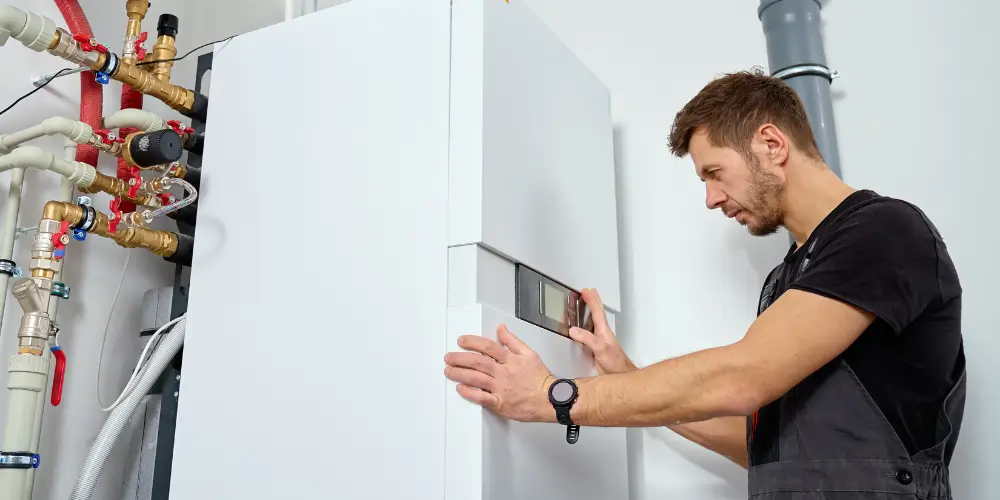
When a household needs hot water on demand without relying on a cold-water tank in the loft, a system boiler provides a sealed, pressurised solution that heats water and stores it in a separate insulated cylinder for use at taps and in multiple bathrooms. It integrates major components into the boiler unit, simplifying installation and reducing loft plumbing. System boilers suit medium to large homes with higher hot-water demand, especially where multiple outlets run simultaneously.
Advantages and considerations include:
- Compact central boiler unit with a separate hot-water cylinder for reliable multi-point supply.
- Faster recovery and better flow rates than combi boilers for homes with frequent simultaneous use.
- Requires space for an insulated cylinder, typically in airing cupboards or plant rooms.
- Easier integration with solar thermal or electric immersion as a backup.
What Is a Regular (Conventional) Boiler and When Is It Right?
Some households prefer an even simpler arrangement than a system boiler, relying on a conventional (regular) boiler that uses a cold-water storage tank in the loft and a separate hot-water cylinder to supply heating and domestic hot water. Regular boilers are traditional and allow multiple outlets to draw hot water simultaneously because the cylinder stores a ready supply. They are well suited to larger properties with older plumbing, homes with low mains pressure, or those already fitted with loft tanks and cylinders where replacing pipework would be disruptive.
Installation can be straightforward if the infrastructure is in place, and component replacements are often inexpensive. However, regular boilers require more loft and airing-cupboard space and have longer heat-up times than modern alternatives. Maintenance includes annual servicing of both boiler and cylinder components, and occasional checks on tanks and expansion components. For households prioritising compatibility with existing systems and reliable simultaneous hot-water use, a conventional boiler remains a practical choice.
Compare Boilers: Hot Water, Heating Performance & Space
Although all boiler types deliver heat and hot water, they differ markedly in flow rate, recovery time, and spatial requirements combi boilers provide instant hot water but limited simultaneous flow, system boilers balance good flow with moderate cylinder space, and regular boilers offer large stored supply at the cost of loft and airing-cupboard room; analyzing peak hot-water demand, heating load, and available installation space clarifies which trade-offs suit a given property. In evaluating options, consider hot-water delivery (instant vs stored), recovery speed for repeated use, and how heating output matches radiators and rooms. Space constraints influence whether a cylinder or loft tank is practical, and distribution needs determine whether a single-point supply suffices or multiple taps require high sustained flow. The right choice aligns typical household routines with physical installation limits and desired convenience.
- Hot-water delivery: instant (combi) vs stored (system/regular)
- Recovery time: rapid vs dependent on cylinder size
- Heating performance: match boiler output to load
- Space impact: cupboard, loft, or no cylinder
Boiler Running Costs, Efficiency and Installation Differences
The choice of boiler has direct implications for running costs, overall efficiency, and the complexity and, consequently, the cost of installation, with fuel type, modulation range, and system design being the primary determinants of household expenditure and installer time. Gas combi boilers typically offer high seasonal efficiency and lower standing losses because they heat water on demand, reducing fuel consumption where hot-water demand is intermittent. System and regular boilers paired with cylinders can incur slightly higher heat losses but may run more efficiently in large homes with simultaneous demand.
Condensing models reclaim latent heat and deliver better fuel economy than non-condensing equivalents; proper flue and condensate installation are essential. Installation differences arise from pipework, cylinder siting, and additional components such as pumps and expansion vessels, which affect labour and material costs. Annual servicing and appropriate controls (thermostats, weather compensation) influence real-world efficiency and running costs more than rated efficiency alone.
How to Choose a Boiler: Rooms, Taps, and Budget Checklist
Which rooms need heating and how many taps will be used simultaneously are the starting points for selecting a boiler. A practical assessment clarifies the required output (kW) and whether a combi, system, or regular boiler is suitable for the property. Consider existing cylinder space, loft or plant room availability, and future changes such as extensions or more bathrooms. Budget planning should include purchase, installation, controls, and likely servicing costs rather than headline price alone.
- Calculate total radiator output and peak hot-water demand to estimate required boiler size.
- Decide if instant hot water (combi) or stored hot water (system/regular) better matches household patterns.
- Factor in energy efficiency and expected running costs to compare long-term value.
- Allocate contingency for installation complexity, flues, or pipework alterations.
This methodical approach helps balance performance, space constraints, and budget, producing a tailored choice without relying on sales-driven recommendations.
Questions to Ask Your Installer + Pre‑Buy Checklist
How should homeowners verify the chosen installer can deliver the planned boiler performance, compliance, and value? Homeowners should request qualifications (Gas Safe or equivalent), proof of insurance, and references for similar installations. Confirm whether the installer follows manufacturer guidance, provides a written quotation with model, efficiency, and warranty details, and will register the boiler for warranty and statutory safety certificates.
Before purchase, verify system compatibility: heat output, flue position, condensate run, and any controls or smart thermostat integration. Ask for a clear timeline, disruption plan, and site survey report. Request itemised costs for labour, parts, commissioning, and any remedial work such as pipe or electrical upgrades.
Ensure commissioning includes performance testing, user demonstration, and documentation: an operation manual, a safety certificate, and a warranty registration. Finally, obtain a cooling‑off policy, cancellation terms, and a post‑installation support contact to handle defects or queries promptly. Here is the guidelines for How Long Does It Take to Fit a New Boiler Safely.
Frequently Asked Questions
Can I Switch My Boiler Type Without Changing Pipework or Radiators?
Yes, often switching boiler type is possible, but compatibility depends on existing pipework, cylinder and system layout; a qualified heating engineer should assess required changes, potential radiator upgrades and any safety or planning considerations before proceeding.
What Maintenance Schedule Should I Follow for Each Boiler Type?
They should follow annual professional servicing; monthly pressure and leak checks; bleed radiators seasonally for regular and system boilers; combi units need occasional condensate trap clearing and annual magnetic filter inspection; prompt repairs as faults arise guarantee longevity.
Are There Government Grants or Incentives for Replacing My Boiler?
Yes, some governments and energy agencies offer grants, rebates, or interest-free loans for boiler replacements, especially for low-income households or for switching to efficient or low-carbon systems; eligibility, amounts, and application processes vary by region.
How Long Do Different Boiler Types Typically Last Before Replacement?
Combi boilers typically last 10–15 years, system boilers about 10–20 years, and regular (conventional) boilers around 15–25 years; longevity depends on maintenance, water quality, usage patterns, and installation quality. Learn in detail: How Long Does a Boiler Last? Key Factors That Impact Boiler Lifespan
Can Smart Thermostats and Controls Work With Every Boiler Type?
Yes most smart thermostats and controls can work with combi, system, and regular boilers, though compatibility depends on wiring, the boiler’s control interface, and whether additional relay or adapter modules are required for proper communication and safety.
Conclusion
In conclusion, the three main boiler types combi, system and regular each serve different household needs. Combi boilers are compact and ideal for smaller homes needing on-demand hot water; system boilers suit properties with multiple bathrooms and require a hot water cylinder; regular boilers work best in older homes with existing tanks and high simultaneous demand. Choosing depends on space, hot-water patterns, budget, and installation constraints; consulting a qualified installer guarantees the right match.