

Fire Alarm Installation London
Book professional fire alarm installation in London for rental properties, HMOs, flats, houses, blocks of flats, shops, offices and commercial premises. Landlord Safety Experts installs smoke alarms, heat alarms, carbon monoxide alarms and fire alarm systems for landlords, homeowners, letting agents and property managers.
Our fire alarm installation service starts from £210 per alarm, including labour and materials for standard installations. We can install new alarms, replace faulty alarms, upgrade old systems and fit interlinked smoke and heat alarms where required.
Starting from £210
- All Prices are updated on October 20, 2026
Our Reviews
Fire Alarm Installation
-
Includes labour and materials
-
Domestic and commercial properties
-
Qualified Engineers
-
10 Years Experience
Fire Alarm Installation for Your Property
Our Fire Alarm Installation Process
- Property details reviewed
- Alarm type confirmed
- Engineer attendance arranged
- Alarm locations checked
- System installed and tested
- Digital paperwork
Domestic Fire Alarm Installation
Domestic fire alarm installation is suitable for houses, flats, maisonettes, HMOs, rental properties and residential accommodation. The correct alarm setup depends on the building layout, number of storeys, escape routes, kitchens, sleeping areas and whether the property is a single household or shared accommodation.
For many rented homes, landlords need suitable smoke alarms on each storey used as living accommodation. Carbon monoxide alarms may also be required in rooms used as living accommodation where there is a fixed combustion appliance, excluding gas cookers. Government guidance says smoke alarms are generally installed on ceilings in circulation spaces such as halls or landings, and CO alarms are generally positioned at head height around 1–3 metres from a potential source of carbon monoxide.
Commercial Fire Alarm Installation
We also install fire alarm systems for commercial premises, offices, shops, communal areas, mixed-use buildings and managed properties. The required system should normally be based on the fire risk assessment, building layout, occupancy type and the level of protection needed.
For commercial and non-domestic premises, fire alarm systems are commonly considered under BS 5839-1. This standard covers design, installation, commissioning and maintenance recommendations for fire detection and alarm systems in non-domestic premises.
Manual Call Points
Sounders and beacons
Detection inescape routes
Detection inhigh-risk rooms
How Much Does Fire Alarm Installation Cost?
Fire alarm installation starts from £210 per alarm for standard installations. The final price depends on the property type, number of alarms required, wiring access, alarm grade, system category, ceiling type, existing electrical condition and whether the alarms need to be interconnected.
For larger properties, HMOs, communal buildings, commercial units or Grade A systems, a site review may be required before confirming the final price.
What Affects Fire Alarm Installation Cost?
The cost of fire alarm installation can change depending on several factors, including:
- Number of alarms required
- Property size and number of floors
- Domestic, HMO, communal or commercial use
- Mains-powered or battery-powered alarms
- Interlinked alarm requirements
- Wireless or hard-wired system
- Access to ceilings and wiring routes
- Existing electrical condition
- Type of alarm system required
- Whether a control panel is needed
Simple smoke alarm installation is usually quicker and lower cost. Larger properties, HMOs, commercial buildings and Grade A fire alarm systems may require more planning because the alarm coverage must match the fire risk, escape routes and building layout.
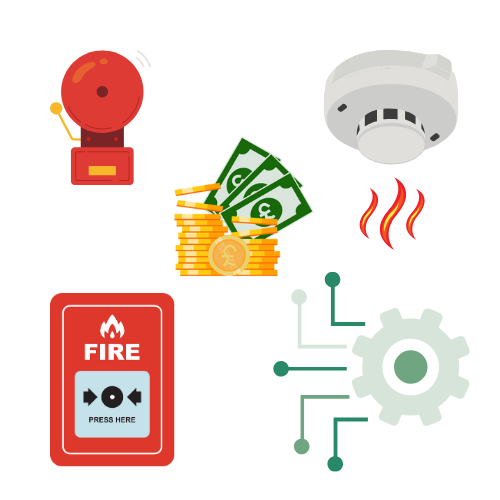
Fire Alarm Categories Explained
- Category M: Manual fire alarm system with no automatic fire detectors.
- Category L1: Automatic detection throughout all areas of the building.
- Category L2: Detection in escape routes plus additional high-risk areas.
- Category L3: Detection in escape routes and rooms opening onto escape routes.
- Category L4: Detection within escape routes such as corridors and stairways.
- Category L5: Custom detection designed for a specific fire safety objective.
- Category P1: Property protection throughout all areas.
- Category P2: Property protection in defined parts of the building.
BS 5839 Fire Alarm Installation
Fire alarm installation should be planned around the correct standard and property type.
For domestic premises, BS 5839-6:2019+A1:2020 gives recommendations for fire detection and fire alarm systems in domestic premises. It covers system planning, design, installation, commissioning and maintenance.
For non-domestic premises, BS 5839-1:2025 provides recommendations for fire detection and fire alarm systems in non-domestic buildings.
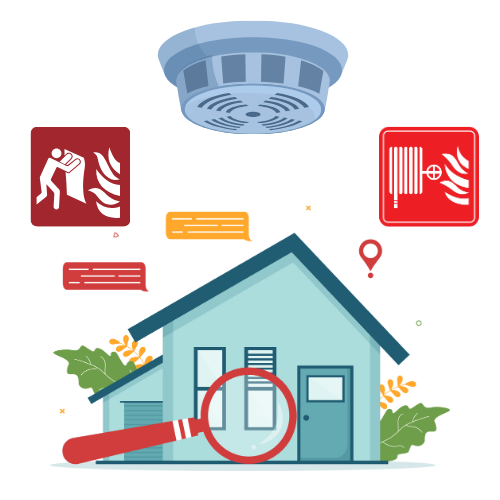
Smoke Alarms, Heat Alarms and CO Alarms
Different alarm types are used in different parts of the property.
Smoke alarms
Smoke alarms are usually installed in circulation areas such as hallways and landings, where they can provide early warning if smoke enters the escape route.
Heat alarms
Heat alarms are commonly used in kitchens and areas where smoke alarms may cause false alarms due to cooking fumes, steam or dust.
Carbon monoxide alarms
Carbon monoxide alarms are used where there is a fixed combustion appliance, excluding gas cookers. They should be positioned according to the manufacturer’s instructions and relevant guidance.
Fire Alarm Installation for Landlords and Agents
Landlord Safety Experts works with landlords, estate agents and property managers across London. We can help arrange alarm installation for single rental properties, HMOs, managed blocks, commercial premises and property portfolios.
We can also help with related fire safety services, including fire risk assessments, fire door checks, emergency lighting checks and fire extinguisher checks.
LD1, LD2 and LD3 Domestic Alarm Coverage
For domestic properties, BS 5839-6 uses LD categories to describe the level of life protection provided by smoke, heat and fire detection alarms. The correct category depends on the property type, layout, occupancy risk and whether the property is a single dwelling, rented home or HMO.
| Category | Typical Coverage |
|---|---|
| LD1 | The highest level of domestic coverage, with detection installed in most areas where a fire could start. |
| LD2 | Detection in escape routes, plus higher-risk rooms such as kitchens, living rooms and principal habitable rooms. |
| LD3 | Minimum life protection, normally covering escape routes such as halls, landings and stairways. |
For rented properties and HMOs, the alarm system should be selected based on the building layout, number of occupants, escape routes, risk level and applicable landlord or fire safety requirements.
Where a property has communal areas, commercial use, multiple occupancy or higher-risk layouts, further fire detection standards may apply. A competent fire safety professional should confirm the correct alarm category before installation.
Need the Correct Fire Alarm System for Your Property?
Not every property needs the same type of fire alarm system. The right installation depends on the building layout, number of floors, occupancy risk and whether the property is domestic, HMO, communal or commercial.
Landlord Safety Experts can help arrange smoke alarms, heat alarms, CO alarms, interlinked alarms, mains-powered alarms and commercial fire alarm systems where required.
Our engineer can attend the property, confirm suitable alarm positions, complete the installation and test the system before handover.
Frequently Asked Questions
Fire Alarm Installation FAQs
Fire alarm installation starts from £210 per alarm for standard installations. The final cost depends on the number of alarms, property layout, wiring, access, alarm type and whether the system needs to be interlinked or designed for a larger commercial building.
Smoke alarm installation starts from £210 per alarm. If multiple alarms are needed or the alarms must be interconnected, the final cost may depend on the wiring route, number of floors and property type.
Yes. Landlords should install at least one smoke alarm on every storey used as living accommodation. The alarm should be installed according to the manufacturer’s instructions and should be checked at the start of a new tenancy.
Smoke alarms are commonly installed on ceilings in circulation spaces such as halls and landings. The exact location should follow the manufacturer’s instructions and the property layout.
Heat alarms are commonly installed in kitchens or areas where smoke alarms may cause false alarms. They detect temperature increase rather than smoke particles.
A carbon monoxide alarm should be installed in every room used as living accommodation that contains a fixed combustion appliance, excluding gas cookers.
LD3 is usually minimum domestic life protection covering escape routes such as halls and landings. LD2 provides additional coverage by protecting escape routes and higher-risk rooms, such as kitchens and principal living rooms.
A Grade A system is a more advanced fire alarm system with separate detectors, sounders and central control equipment. It is commonly used where a higher level of fire detection and control is required.
Yes. We install fire alarm systems for HMOs, including smoke alarms, heat alarms, interlinked alarms and systems based on the required level of coverage.
Yes. We install fire alarm systems for commercial premises, offices, shops, communal areas and managed buildings. Larger systems may require a site review before final pricing.