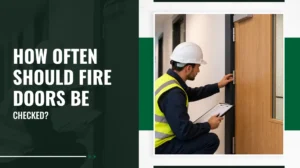

Fire doors are a critical part of a building’s fire protection strategy because they help slow the spread of fire and smoke, protect escape routes and provide occupants with valuable time to evacuate safely. A common question asked by landlords, property managers, employers and responsible persons is how often should fire doors be checked.
In the UK, fire doors should be inspected regularly to ensure they continue to operate correctly and provide the level of protection they were designed for. The frequency of checks depends on the type of building, occupancy level, fire risk and the condition of the doors. However, a detailed fire door inspection is generally recommended at least every six months, with more frequent checks required in higher risk environments.
Key Takeaways
- Fire doors should be inspected regularly, with inspection frequency depending on building type, usage and fire risk.
- In residential buildings over 11 metres in England, communal fire doors require quarterly checks and flat entrance doors require annual checks using best endeavours.
- Common defects include damaged seals, excessive gaps, faulty hinges and defective self-closing devices.
- Responsible persons must ensure fire doors are properly maintained and detailed inspections are carried out by competent individuals.
- Regular fire door checks help protect escape routes, identify safety defects and support compliance with UK fire safety legislation.
Table of Contents
Why Are Fire Door Checks Important?
Fire doors are designed to resist the passage of fire and smoke for a specific period, commonly 30 or 60 minutes depending on their rating. A correctly installed and maintained fire door can help contain a fire within a particular area, allowing occupants more time to escape and helping firefighters control the situation.
A damaged or poorly maintained fire door may fail to perform as intended. For example, a fire door that does not close properly can allow smoke and flames to spread rapidly through corridors, stairways and escape routes.
Regular inspections help identify problems before they become serious safety risks. Common issues found during fire door checks include damaged hinges, missing intumescent seals, gaps around the door leaf, faulty self closing devices and doors that have been wedged open.
For landlords, employers and building owners, maintaining fire doors is also part of meeting legal responsibilities under UK fire safety legislation.
What Are the Legal Requirements for Fire Door Checks in the UK?
The responsibility for maintaining fire safety measures falls under the Regulatory Reform (Fire Safety) Order 2005. The legislation requires the responsible person to ensure that fire safety equipment, systems and protective measures are maintained in an efficient state and in good working order.
This includes fire doors where they form part of the building’s fire safety arrangements.
The responsible person may be a building owner, employer, landlord, facilities manager or another person who has control of the premises. They must ensure that suitable fire safety arrangements are in place, including regular inspection and maintenance of fire resisting doors.
For residential buildings such as blocks of flats and HMOs, fire doors are particularly important because they often protect escape routes and separate individual dwellings from communal areas.
How Often Should Fire Doors Be Checked?
The recommended frequency for fire door inspections depends on the building type and level of risk.
In many buildings, fire doors should receive a detailed inspection at least every six months. This allows defects to be identified and corrected before they affect fire safety performance.
In higher risk environments, more frequent checks may be necessary. Buildings with heavy foot traffic, vulnerable occupants, frequent door usage or increased fire risk may require inspections every three months or more often depending on the circumstances.
Examples of buildings where more frequent checks may be appropriate include:
- Hospitals and healthcare facilities
- Care homes
- Schools and colleges
- High occupancy residential buildings
- Commercial buildings with busy escape routes
- Buildings where fire doors are frequently damaged or misused
A suitable inspection schedule should be based on a fire risk assessment and the conditions within the premises.
How Often Should Fire Doors Be Checked in Flats and HMOs?
Fire door inspections are particularly important in blocks of flats and Houses in Multiple Occupation because many occupants rely on shared escape routes.
Flat entrance fire doors protect communal areas from fire and smoke coming from individual dwellings. Communal fire doors protect staircases, corridors and other escape routes.
In these buildings, fire doors should be checked regularly because they are exposed to frequent use. Problems often occur when residents replace hardware, remove self closers, install unsuitable locks or damage doors through everyday activities.
Landlords and building managers should ensure that fire doors remain compliant and that any defects are repaired promptly.
Regular checks should include:
- Flat entrance fire doors
- Communal corridor fire doors
- Stairwell fire doors
- Plant room doors
- Electrical cupboard doors
- Refuse room doors where applicable
What Is Checked During a Fire Door Inspection?
A professional fire door inspection involves checking multiple components to confirm that the door assembly remains suitable and functional.
The main inspection points include:
Fire Door Labels and Certification
Inspectors check whether the fire door has appropriate markings or identification showing its rating and suitability. Missing labels may require further investigation depending on the circumstances.
Door Gaps
The gaps around a fire door are important because excessive gaps can allow smoke and flames to pass through. Inspectors check the clearance around the door leaf to ensure it remains within acceptable limits.
Intumescent Seals
Intumescent seals expand when exposed to heat, helping to close gaps between the door and frame during a fire. These seals must be present, correctly fitted and free from damage.
Hinges and Hardware
Hinges should be securely fixed and suitable for the fire door. Loose screws, damaged hinges or incorrect replacements can affect the door’s ability to close correctly.
Self Closing Devices
Fire doors must normally close fully without assistance. A faulty closer can leave the door open, preventing it from performing its intended function.
Door Condition
The door leaf, frame, glazing and surrounding areas should be checked for damage. Holes, excessive alterations or physical deterioration can reduce fire resistance.
Obstructions
Fire doors should not be wedged open unless fitted with approved automatic release devices connected to the fire alarm system.
What Are the Common Problems Found During Fire Door Checks?
Many fire door failures occur because of simple maintenance issues rather than problems with the original installation.
Common defects include:
- Fire doors being held open with wedges
- Damaged or missing intumescent strips
- Broken self closing devices
- Incorrect hinges or screws
- Excessive gaps around the door
- Damaged door leaves
- Missing smoke seals
- Unsuitable glazing
- Doors not closing fully
- Locks and hardware that are not fire rated
These issues can significantly reduce the effectiveness of a fire door during a fire.
Who Can Carry Out Fire Door Inspections?
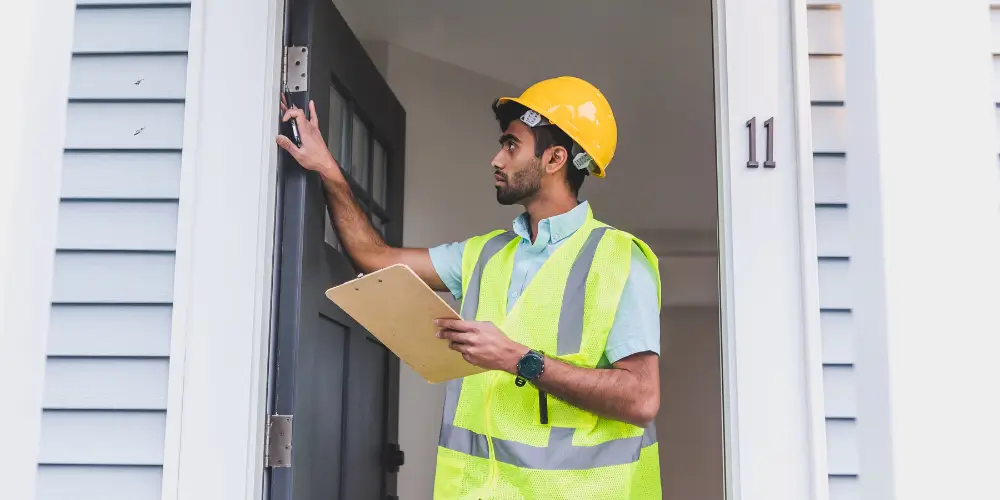
Routine visual checks may be completed by trained building staff or responsible persons who understand what to look for. However, detailed inspections should be carried out by a competent person with appropriate knowledge of fire doors and their components.
A competent inspector should understand fire door ratings, installation requirements, maintenance standards and common defects.
For complex buildings, specialist fire door inspectors may be required to assess compliance and recommend remedial actions.
What Standards Apply to Fire Door Checks?
Fire door inspection and maintenance practices in the UK are supported by several recognised standards and guidance documents.
BS 8214:2016+A1:2020 Timber-based fire door assemblies provides guidance on the specification, installation and maintenance of timber fire doors.
BS 9999 provides guidance on fire safety management and fire protection measures within many non residential buildings.
The Regulatory Reform (Fire Safety) Order 2005 establishes the legal requirement for responsible persons to maintain fire safety measures.
These standards and legal requirements work together to ensure fire doors continue to provide effective protection throughout their service life.
Can Fire Doors Be Checked During a Fire Risk Assessment?
Yes. Fire doors are commonly reviewed during a fire risk assessment because they form an important part of passive fire protection.
A fire risk assessment should identify whether fire doors are suitable, correctly positioned and properly maintained. However, a fire risk assessment does not replace regular fire door inspections.
Fire doors require ongoing monitoring because their condition can change after the assessment has been completed.
What Happens If Fire Doors Are Not Checked Regularly?
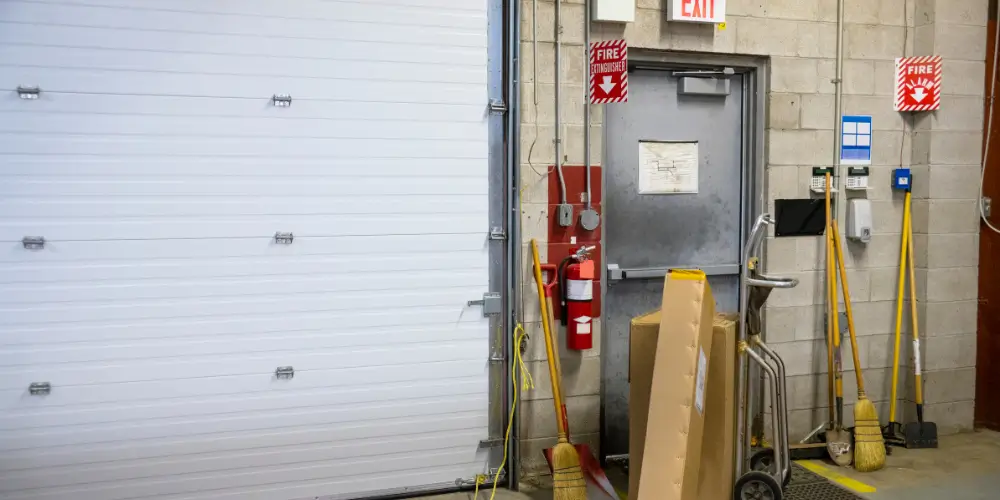
Failing to maintain fire doors can create serious safety risks and may result in enforcement action where legal duties are not being met.
A defective fire door may allow smoke and fire to spread more quickly through a building. This can affect escape routes, increase risks to occupants and make firefighting operations more difficult.
Regular checks help ensure problems are identified early and that repairs can be completed before a fire occurs.
Frequently Asked Questions
How often should fire doors be inspected in the UK?
Fire doors should generally receive a detailed inspection at least every six months. Higher risk buildings may require more frequent inspections depending on occupancy, usage and fire risk.
Who is responsible for checking fire doors?
The responsible person under the Regulatory Reform (Fire Safety) Order 2005 is responsible for ensuring fire safety measures, including fire doors, are properly maintained.
Do fire doors need to be checked every year?
A yearly check alone may not be sufficient for many buildings. Fire doors are commonly inspected every six months, although the required frequency depends on the building risk profile.
How do you know if a fire door is faulty?
Signs of a faulty fire door include damaged seals, excessive gaps, broken closers, missing hardware, visible damage or a door that does not close properly.
Should fire doors always be closed?
Yes. Fire doors should normally remain closed when not in use unless they are fitted with an approved automatic release device linked to the fire alarm system.
Conclusion
Understanding how often should fire doors be checked is essential for anyone responsible for fire safety in a building. While the exact frequency depends on the premises and level of risk, detailed fire door inspections should generally take place at least every six months, with more frequent checks required in higher risk environments.
Fire doors are an important part of passive fire protection and only work effectively when they are correctly installed, maintained and regularly inspected. Routine checks help identify damaged components, faulty hardware and other issues that could prevent a fire door from performing during an emergency.