Topping up boiler pressure keeps the heating efficient and prevents damage. First, the boiler should be cool and powered on but not heating. The user checks the gauge; if it’s below 1 bar, they locate the filling loop, usually beneath the boiler. They then open the valves slowly, watching the gauge rise to about 1.0–1.5 bar, then close them. Any rapid pressure loss, leak, or error code suggests that further guidance will be useful.
Key Takeaways
- Check that the boiler is cool, powered on, and read the pressure gauge without opening any covers; a pressure below 1 bar usually indicates low pressure.
- Locate the filling loop (usually a silver braided hose) and ensure its connections to the boiler and mains water are secure.
- Slowly open the filling loop valves while watching the gauge, letting water in until the pressure reaches about 1.0–1.5 bar when cold.
- Close both valves firmly once the desired pressure is reached, then either remove the loop or leave it as per the manufacturer’s instructions.
- If pressure drops quickly again, you see leaks, or get repeated error codes, stop topping up and call a qualified heating engineer.
Table of Contents
What Boiler Pressure Is and Why It Matters
Boiler pressure refers to the force of the water circulating within a sealed central heating system, measured in bars on the appliance’s pressure gauge. In a healthy system, this pressure gives hot water the push it needs to travel through pipes and radiators, delivering steady heat without strain or noise.
It acts like the system’s pulse: too weak and the home feels cold and unreliable; too strong and components are placed under unnecessary stress. Correct boiler pressure matters because it protects both comfort and equipment. When pressure is within the recommended range, the boiler can run efficiently, use less energy, and avoid frequent cycling on and off.
This reduces wear and the risk of disruptive breakdowns. Balanced pressure also supports consistent temperatures in different rooms, helping occupants shape their own environment instead of surrendering to cold spots, lukewarm radiators, or unexpected interruptions to hot water.

How to Check for Low Boiler Pressure Safely
With an understanding of why pressure matters, the next step is to confirm whether a system is actually running low. A safety‑first approach lets a homeowner stay in control without taking unnecessary risks.
Before any check, they allow the boiler to cool so components are not dangerously hot and internal pressure is settled. They next locate the pressure gauge on the front panel or underneath the casing, ensuring the electrical power is on but controls are not calling for heat.
Standing clear of hot pipes, they visually read the gauge, avoiding the temptation to remove covers or touch internal parts. If the gauge is unclear or fogged, they may gently clean the glass but never dismantle anything. Any unusual noises, leaks, or warning lights prompt them to stop, switch the boiler off, and consult the manual or a professional, preserving both autonomy and safety.
What Ideal Boiler Pressure Looks Like
Clarity around ideal boiler pressure starts with understanding the normal operating range. For most domestic boilers, that range typically sits around 1.0–1.5 bar when the system is cold. This level gives the boiler enough force to circulate water efficiently without putting unnecessary strain on components.
As the heating runs and water expands, pressure often rises to somewhere between 1.8 and 2.0 bar. That increase is expected, as long as it stays within the boiler’s marked “green” zone. Above that, safety mechanisms may intervene, limiting control and comfort.
Ideal pressure is less about chasing a perfect number and more about staying within the manufacturer’s stated range. When pressure remains stable there, the boiler can deliver steady heat, lower stress on parts, and fewer interruptions.
Consistent, correct pressure keeps the system responsive, allowing the household to choose when and how to heat their space without technical obstacles. For more details, read out our blog post What should a boiler pressure be: Understanding ideal levels for optimal performance.
Tools and Checks Before You Top Up Boiler Pressure
Before adding pressure to a heating system, a few basic tools and checks can reduce the risk of mistakes and damage. A flat-head or adjustable screwdriver, a pair of adjustable pliers, and a dry cloth usually cover what most people need. A torch or strong phone light helps them clearly read gauges and spot leaks, keeping them in control rather than guessing.
They first confirm the boiler is cool and switched off, so any adjustment happens without scalding risk. Then they check the system pressure gauge, noting the current reading and the ideal range from the manual. Visual checks follow: any damp patches, green staining, or rust around joints suggest unresolved leaks.
To anchor the sense of security and independence:
Top Up Boiler Pressure With a Filling Loop (Step-By-Step)
Most modern combi and system boilers use a simple filling loop to restore pressure, and the process is straightforward when followed step by step. First, the user verifies the boiler is cool and switched off at the controls, while the mains water supply remains on. They locate the filling loop: a braided hose or rigid pipe with two small valves, usually beneath the boiler.
They confirm the system pressure is below the target (typically around 1–1.5 bar when cold). Both filling valves are initially set to closed. The user then slowly opens the first valve, followed by the second, watching the pressure gauge rise steadily. As soon as the needle reaches the recommended level, both valves are turned firmly back to the closed position.
Finally, they switch the boiler back on, run the heating briefly, and recheck the gauge to verify stable pressure without creeping higher.
Repressurise a Boiler With an Internal Filling Key
Some boilers use an internal filling key instead of an external hose, and repressurising them follows a slightly different procedure. The user first switches off the boiler and lets it cool, ensuring full control and safety. The internal key, usually stored in a slot beneath the boiler, is removed and aligned with the keyed filling point, then pushed in firmly and turned to secure.
With the key engaged, the user locates the attached white plastic knob or valve and slowly turns it to allow water in. They watch the pressure gauge rise towards roughly 1.0–1.5 bar, then close the valve.
| Step | Action |
| 1 | Power off and locate the internal key |
| 2 | Insert the secure key, then open the valve |
| 3 | Close the valve at the target pressure, and remove the key |
Finally, the key is disengaged, removed, and stored, and the boiler is turned back on.
Why Your Boiler Pressure Keeps Dropping
Why does a boiler’s pressure keep dropping even after it has been topped up correctly? Often, the cause lies beyond the simple act of adding water. Understanding the “why” lets a person regain control, instead of feeling tied to a temperamental system.
Common underlying reasons include:
- Hidden water leaks. Even tiny leaks in pipes, radiators, valves, or the boiler itself slowly release pressure. Damp patches, staining, or hissing can be subtle but revealing signs. Check out Why is my boiler dripping water.
- A failing expansion vessel. When the expansion vessel loses air charge or its membrane fails, pressure rises while heating, then falls sharply as the system cools—creating a constant cycle of topping up.
- Automatic air vents and trapped air. Air entering the system can be vented out automatically, taking pressure with it. Repeated gurgling in radiators or radiators warming unevenly often indicates air-related pressure loss.
Common Boiler Pressure Top-Up Mistakes (And How to Avoid Them)
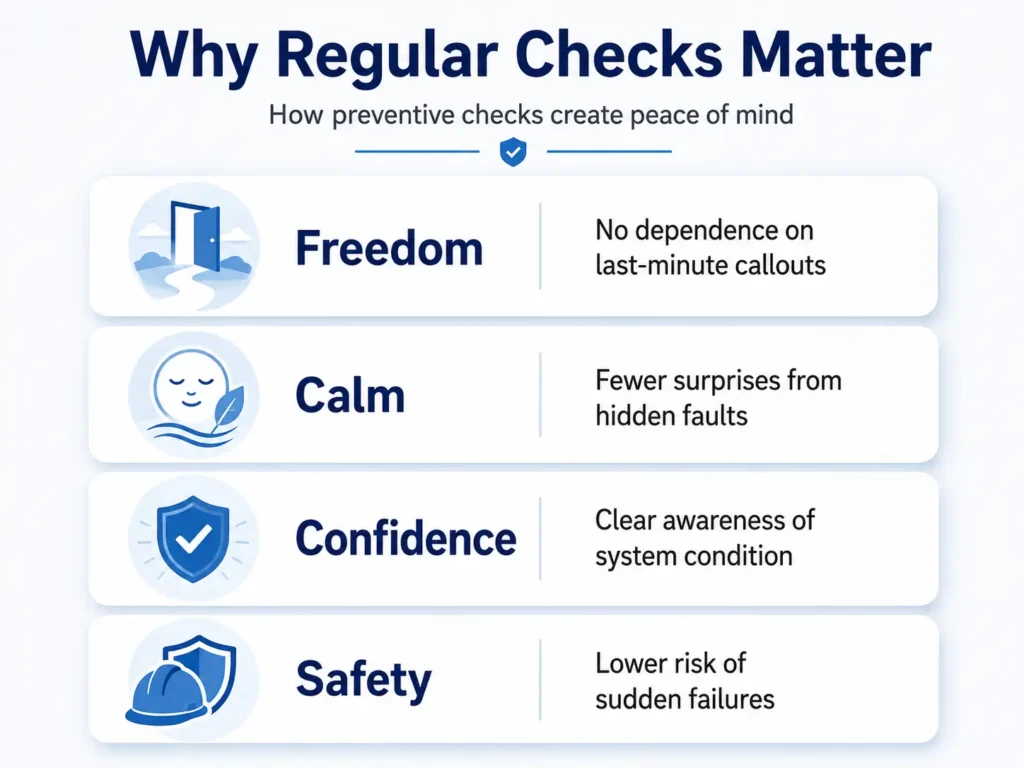
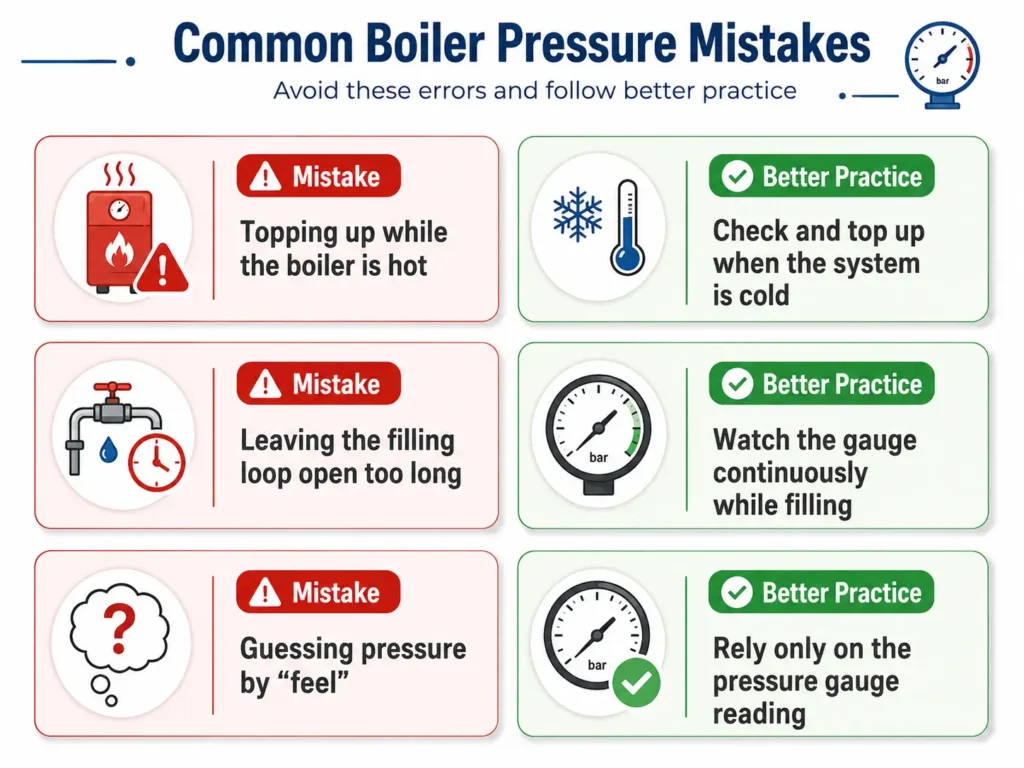
How easily a simple boiler top-up turns into a recurring headache often comes down to a few avoidable mistakes. Many people open the filling loop and get distracted, overshooting the pressure and forcing safety valves to work overtime. Others top up whenever they feel like it, rather than when the gauge actually drops below the recommended “cold” range, slowly masking underlying issues.
Ignoring the pressure gauge while the boiler is hot is another trap. Pressure always rises with heat, so decisions based on a hot reading can lead to chronic overfilling and constant bleeding of radiators.
A quick checklist helps keep things under control:
When to Call a Heating Engineer for Low Boiler Pressure
Recognising when low boiler pressure needs professional attention prevents small issues from turning into costly repairs. While topping up pressure offers a sense of control, some situations demand a qualified heating engineer, protecting both safety and long‑term freedom from breakdowns.
They should stop DIY attempts and call an expert if any of the following appear:
- Rapid pressure loss: If the gauge repeatedly drops below 1 bar within days or hours after topping up, there may be a hidden leak, a failing expansion vessel, or a faulty pressure relief valve.
- Visible leaks or damp patches: Water around the boiler, radiators, or pipework suggests a system leak that can damage property and electrics if ignored.
- Unusual noises or boiler lockouts: Banging, gurgling, or frequent error codes after repressurising indicate deeper faults that require professional diagnostics.
Calling an engineer early preserves safety, warranty rights, and long‑term reliability.
Frequently Asked Questions
Can Low Boiler Pressure Increase My Energy Bills Significantly?
Yes. Low boiler pressure can considerably raise bills because the system runs longer to reach target temperatures. The boiler loses efficiency, cycles more often, and wastes fuel, limiting both comfort and financial freedom.
Is It Safe to Top up Boiler Pressure During a Power Cut?
No, topping up boiler pressure during a power cut is generally unsafe. The system can’t circulate or confirm stable operation, risking overpressure or leaks. One should wait for power restoration or consult a qualified engineer.
How Often Should I Expect to Re-Pressurise a Modern Combi Boiler?
They might re‑pressurise a healthy modern combi boiler only once or twice a year; more frequent topping up hints at system leaks, faulty valves, trapped air, or pressure vessel issues that quietly steal autonomy.
Can Smart Thermostats or Controls Affect My Boiler Pressure Readings?
Smart thermostats do not directly alter boiler pressure; they only command heat cycles. However, frequent cycling, advanced schedules, or error states can make pressure fluctuations more noticeable, prompting users to check gauges and system health more often.
Will topping up the pressure void my boiler warranty or Insurance Cover?
Topping up pressure usually will not void the boiler warranty or insurance, provided the user follows the manufacturer’s manual. Problems arise only if over-pressurising, ignoring leaks, or unauthorised repairs cause damage traced back to misuse.
Conclusion
By understanding what boiler pressure is, how to check it, and the correct methods to top it up, homeowners can keep their heating systems running efficiently and safely. Following the step-by-step guidance for filling loops or internal keys reduces the risk of damage and common mistakes. Recognising persistent pressure loss and knowing when to call a qualified heating engineer guarantees small issues don’t develop into costly repairs or leave the home without reliable heat and hot water.