An Electrical Installation Condition Report (EICR) is a formal inspection and written record evaluating the safety and condition of a property’s fixed electrical installation. It identifies defects, assigns risk codes (C1, C2, C3), and recommends remedial action, including details of the tested circuits and methods. It supports legal compliance, landlord obligations, insurance requirements, and liability protection. Qualified electricians issue it after testing earthing, RCDs, and circuits. Continue for practical guidance on interpretation, timelines, and inspector selection.
Key Takeaways
- An EICR is a formal inspection assessing the safety and condition of a property’s fixed electrical installation against current standards.
- It records defects, assigns risk codes (C1, C2, C3), and recommends remedial actions and priorities.
- Landlords, new occupants, and owners/operators need EICRs for legal compliance, insurance evidence, and reduced liability.
- Typical domestic EICRs take one to three hours, with cost varying by property size and complexity.
- Qualified electricians who follow BS 7671 must perform EICRs and provide a clear, prompt written report on compliance and safety.
Table of Contents
What Is an Electrical Installation Condition Report (EICR)?
An Electrical Installation Condition Report (EICR) is a formal inspection document produced by a qualified electrician that assesses the safety and condition of a building’s fixed electrical installations. It records observed defects, risk categorisations, and recommendations for remedial action. The report explains which circuits and components were tested, the methods used, and any limitations encountered during inspection. Results are presented clearly, using standardised codes to indicate immediate danger, potential future risk, or satisfactory condition. The EICR empowers owners or occupiers to make informed choices about repairs, upgrades, and ongoing maintenance without unnecessary constraints. It also provides documented evidence of due diligence, useful for insurance and compliance. While technical, the document is intended to be accessible: concise summaries accompany detailed findings, enabling quick decision-making. Ultimately, the EICR defines the current electrical safety baseline and guides practical steps to maintain freedom from unexpected hazards. Check out What Does an EICR Report Look Like?
Who Needs an EICR and When to Get One?
Having established what an EICR is and how it documents the electrical condition and risk, attention turns to who should obtain one and when. Owners, landlords, business operators and occupants seeking autonomy over safety benefit from periodic EICRs. Domestic occupiers who value reliable, independent living should consider checks when moving in, after major work, or if wear is suspected. Learn about the Types of EICR.
Landlords must follow regulations and protect tenants; commercial operators require routine assurance to safeguard staff and assets. The report suits anyone wanting freedom from hidden hazards.
| Situation | Who | When |
| Moving into a property | New occupant/owner | Before or soon after the occupation |
| Rental compliance | Landlord | At tenancy start and per local rules |
| Major electrical work | Owner/operator | After completion, before use |
| Signs of fault | Any occupant | Immediately upon suspicion |
An EICR is a tool for proactive control, enabling individuals and organizations to build safety as the foundation for independent living and operations.
EICR Cost and Duration
Costs for an Electrical Installation Condition Report (EICR) vary with property size, complexity, and location, while the duration depends on the scope of the inspection and any identified remedial work. Typical charges range from modest fees for small domestic premises to higher rates for large or commercial sites; travel and urgency can increase costs. An inspector provides a written quote that clarifies what is included in the inspection, reporting and any test measurements so the owner can choose freely.
A straightforward domestic EICR often takes one to three hours, whereas larger properties may require a day or more; scheduling flexibility affects timing. If dangerous deficiencies are found, additional visits or urgent remedial work will extend duration and raise expenses. Transparent pricing and a clear timeline empower property owners to plan repairs, compare providers, and decide whether to proceed immediately or schedule work to suit their personal priorities and budgets. Explore in detail How Long Does an EICR Take? A Complete Guide to Electrical Safety Inspections.
EICR Checks: Circuits, Earthing, RCDs and Tests
After outlining how time and price are affected by property size and remedial needs, attention turns to what is actually checked during an EICR: the condition and continuity of circuits, the integrity of earthing and bonding, the operation and coverage of RCDs, and the suite of electrical tests used to verify safety. The report documents visible wiring condition, correct circuit identification, and whether protective measures match intended use. Earthing and bonding are confirmed to provide fault-current paths and reduce the risk of electric shock. RCDs are checked for correct type, sensitivity and placement to protect relevant circuits and devices. Tests include insulation resistance, continuity, polarity, earth loop impedance and RCD trip time/current. Results guide pragmatic decisions for repairs or upgrades that preserve autonomy and safety.
- Circuit and wiring condition checks guarantee functionality and clarity.
- Earthing/bonding verification secures fault containment.
- RCD and test outcomes determine immediate or planned action.
You can check the EICR Test Checklist: The Complete Landlord Guide No 1 to Electrical Safety.
EICR Grading: C1, C2, C3 and What They Mean
EICR grading classifies observed defects by severity to guide required actions: C1 denotes danger present requiring immediate remedial work, C2 indicates potentially dangerous conditions that need prompt attention, and C3 marks improvements recommended for safety and longevity but not urgent. The report assigns grades so owners and occupants can prioritise interventions and retain autonomy over timing and contractors. C1 demands immediate isolation or repair; C2 calls for planned but prompt correction; C3 suggests enhancements to reduce long‑term risk. Records of grading inform compliance, insurance and future decisions without prescribing specific providers, preserving freedom of choice. Know the basics of EICR Fault Codes.
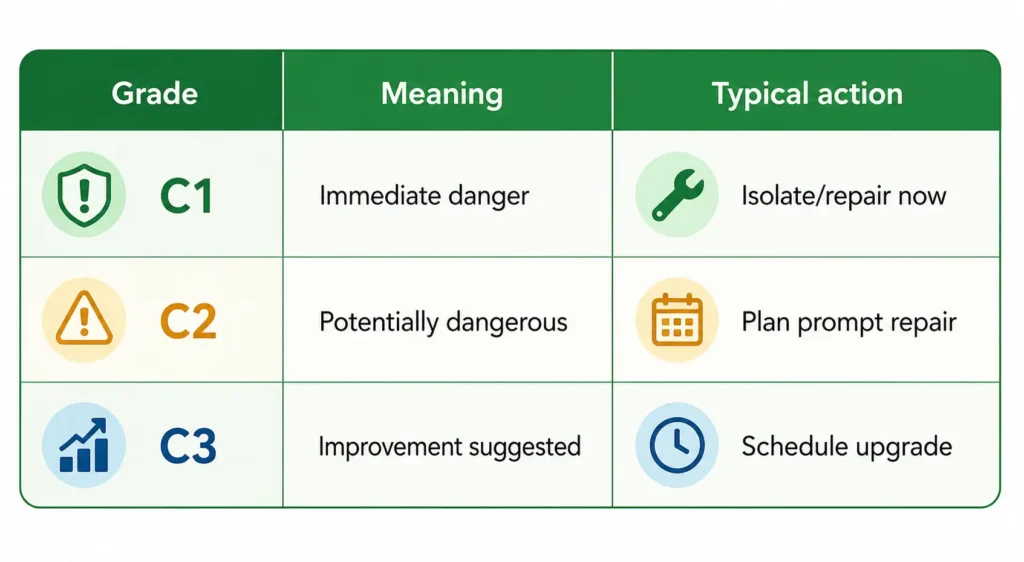
Clear, concise grading empowers responsible decisions while leaving control of methods, timing and contractors to the owner.
Common Defects and How Urgently They Must Be Fixed
When inspectors identify common defects such as missing earth connections, overloaded circuits, inadequate bonding, damaged insulation, or non‑compliant consumer units they assign urgency based on the immediate risk each poses; some faults require isolation and urgent repair, others a prompt scheduled fix, and some only recommended improvement to prevent future hazards. The report classifies issues to guide owners toward autonomous decisions that balance safety and practical use. Immediate dangers (requiring isolation) are prioritised to remove the risk of electrocution or fire. Prompt repairs address defects likely to worsen or impair functionality. Recommendations flag improvements that enhance resilience and compliance over time. If you get an EICR report unsatisfactory, you must take Steps to Re-Test and Obtain a New Satisfactory EICR Certificate.
- C1/C2 level defects should be isolated and repaired immediately to eliminate risk.
- C3/repairable defects: schedule timely professional attention to prevent escalation.
- Observations/recommended improvements consider voluntary upgrades to improve safety margins and freedom of use without urgent compulsion.
EICR: Legal, Safety and Insurance Implications
Why does the electrical inspection report matter beyond safety? The EICR carries legal weight: landlords, employers and property managers may be required by regulation to obtain and retain up-to-date reports. A clear, dated EICR document complies and can protect owners from regulatory fines or enforcement action. It also influences liability in disputes by providing objective evidence about the state of wiring when incidents occur.
Insurance considerations are practical and immediate. Insurers may require a valid EICR for cover on rental or commercial premises; failure to produce one can lead to claim denial or policy cancellation. Conversely, addressing report recommendations promptly helps maintain coverage and can reduce premiums by demonstrating risk management.
For those valuing independence, the EICR enables informed choices: whether to remediate, negotiate terms, or accept responsibility for repairs. It empowers decision-making by converting technical assessment into actionable, legally and financially relevant information. To know about legal requirements, read out the NICEIC Purpose of EICR .
Choosing a Qualified EICR Electrician
Given the legal and insurance stakes associated with an inspection report, selecting a qualified electrician to carry out an Electrical Installation Condition Report is a matter of risk management as well as technical competence. The decision should empower the property owner while minimising liability. A suitable electrician demonstrates formal qualifications, clear accreditation, and up-to-date registration with recognised bodies. They provide transparent quotations and explain scope without jargon, enabling informed choice and autonomy.
- Check credentials: valid NVQ/City & Guilds equivalent, 18th Edition knowledge, and membership in a national register.
- Verify insurance and references: professional indemnity and public liability cover, plus recent client feedback or sample reports.
- Confirm methodology and reporting: adherence to BS 7671 and guidance notes, clear corrective action categories, and prompt digital delivery.
Selecting by these criteria supports freedom of movement and decision-making, ensuring compliance and safety without surrendering control.
Frequently Asked Questions
Can Tenants Request an EICR Independently From Landlords?
Yes. Tenants can request an EICR independently; they may ask landlords or arrange one themselves if rights permit, often seeking safety and autonomy, though legal obligations and costs depend on local tenancy law and lease terms.
Does an EICR Cover Portable Appliance Testing (PAT)?
No, an EICR does not cover PAT testing. It assesses fixed electrical installations; portable appliance testing inspects individual movable devices separately. Tenants or owners seeking PAT must arrange a distinct inspection apart from the EICR.
Are EICR Records Valid Across Different Countries?
No; an EICR’s validity rarely transfers automatically between countries. The person should verify local regulations, accepted standards and required certifications, and may need additional inspections or documentation to satisfy foreign authorities and freedom-seeking operators.
Can Homeowners Perform Their Own EICR Tests?
No, homeowners cannot lawfully perform their own EICR. They prefer freedom but must hire a qualified, registered electrician to carry out and certify tests, ensuring compliance, safety, and acceptance by insurers or authorities.
How Long Should EICR Reports Be Retained for Compliance?
EICR reports should generally be retained for at least five years to satisfy many regulations; landlords and responsible parties may choose longer retention to protect rights and demonstrate compliance, preserving records securely and sharing them when required.
Conclusion
An Electrical Installation Condition Report (EICR) provides a professional assessment of an installation’s safety, identifying defects, grading their severity and recommending remedial action. It is essential for landlords, property managers and homeowners to guarantee compliance with regulations, maintain insurance validity and protect occupants from shock and fire risks. Timely testing by a qualified electrician, prompt rectification of C1/C2 faults and proper record-keeping preserve safety, minimise liability and support ongoing electrical maintenance planning.