
A 6‑way consumer unit fitted with RCBOs gives each circuit combined overcurrent and earth‑leakage protection, reducing nuisance trips and improving fault isolation. It suits many UK homes with moderate circuit needs, offering compact installation, clearer fault diagnosis and easier maintenance. Compliance with BS 7671 and Part P is required, along with correct earthing, load calculations, and certified installation. Homeowners get better safety, selective isolation and future flexibility. Further sections explain planning, technical choices and hiring an installer.
Key Takeaways
- A 6-way consumer unit with RCBOs gives individual overcurrent and earth-fault protection for up to six separate domestic circuits.
- RCBOs reduce nuisance tripping and limit disruption by isolating only the affected circuit, preserving other services.
- Ensure RCBO ratings (In, trip curve B/C/D, and mA sensitivity) match measured load calculations to avoid overload trips.
- Installation must comply with BS 7671 and Part P, be performed or certified by a registered installer, with test certificates provided.
- Check spare ways, enclosure IP rating, terminal sizes, and breaker breaking capacity to suit existing earthing and future expansion.
Table of Contents
Is a 6‑Way RCBO Consumer Unit Right for My Home?
Could a 6‑way RCBO consumer unit be the best choice for a particular home? A concise assessment suits those who prize autonomy. The detached observer recommends weighing household demands: number of circuits required, layout simplicity, and future adaptability. A six-circuit arrangement provides distinct protection for each circuit, reducing mutual disruption and enabling selective isolation during maintenance or modification.
Space constraints and board location influence practicality; compact units favor modest dwellings while still supporting separate supplies for high-use areas. Installation complexity and cost should be balanced against the value of independent control and minimised downtime. Prospective owners who seek freedom appreciate the ability to reconfigure circuits without affecting unrelated areas. Compatibility with existing wiring and anticipated additions is critical: a plan that anticipates change preserves independence. Ultimately, the choice leans on how much operational separation and resilience the household values, set against budget and physical constraints, rather than on blanket recommendations.
What an RCBO Does and Why It Improves Safety
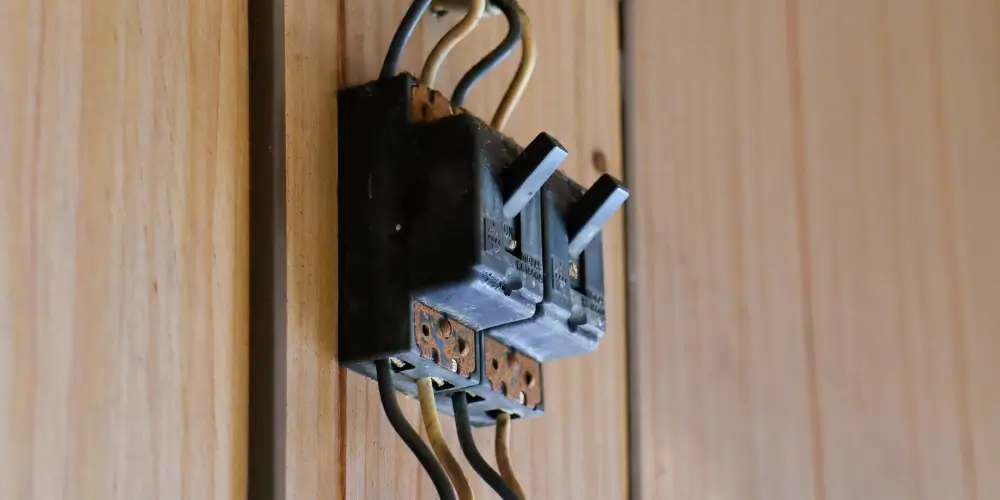
When combining overcurrent protection with earth-fault detection, an RCBO (Residual Current Breaker with Overcurrent Protection) both trips on overloads/short circuits and isolates circuits when dangerous leakage to earth is detected; it protects conductors from overheating and prevents sustained faults by interrupting excessive current, while simultaneously monitoring differential current to spot insulation failure or accidental contact with live parts. This dual function reduces reliance on separate MCBs and RCDs, offering individualised circuit protection that preserves other circuits when one trips.
An RCBO’s faster, targeted response lowers the risk of electric shock and fire, giving occupants greater autonomy to use multiple appliances safely. By limiting fault impact to a single circuit, it simplifies troubleshooting and restoration, supporting minimal disruption. For those valuing self-reliance, RCBOs combine compactness with precise protection, enabling flexible distribution of safeguarded circuits without compromising safety or freedom to configure a home’s electrical layout.
Why a 6‑Way Consumer Unit Suits Many UK Homes
Although compact, a 6‑way consumer unit provides a balanced mix of circuits for many UK homes, typically accommodating lighting, sockets, a boiler, a shower, and a spare ring or radial, while remaining straightforward to install and maintain. It suits occupants who value autonomy: fewer, clearly delineated circuits simplify the isolation and restart of supplies without relying on external help. Space-saving enclosures fit smaller utility cupboards while still providing space for individual RCBOs, enhancing fault visibility and selective protection. Installation time and material costs are often lower than larger units, appealing to those seeking efficient upgrades.
Maintenance and future adjustments remain manageable; adding a new circuit or replacing a device is less disruptive than working within crowded panels. For modestly sized properties, a 6‑way layout balances protection, cost and flexibility, supporting everyday freedom to rearrange loads or troubleshoot. It is a pragmatic choice where thorough discrimination and simple expandability meet typical domestic needs without unnecessary complexity.
Planning Circuits: How to Assign RCBO Protection
Assigning RCBO protection requires mapping each circuit’s function, load, and fault-risk to an appropriate device so that individual faults can be isolated without disrupting unrelated supplies. The planner considers essential circuits (heating, refrigeration, communication) for dedicated RCBOs, high-risk or wet locations (kitchen, bathroom, outdoor sockets) for selective sensitivity, and shared lighting or low-load outlets where grouping may be acceptable.
Load calculations inform RCBO rating selection to prevent nuisance trips while preserving safety; discrimination between upstream and downstream devices is checked to maintain continuity. Future flexibility is valued, so spare ways and clear labelling are included in the plan to allow homeowner changes without major rewiring.
Earth fault characteristics of appliances and diversity of simultaneous use guide assignment priorities. The approach balances protection, convenience, and independence, ensuring that a single fault isolates only its circuit, preserving the rest of the dwelling’s power and the occupant’s freedom to adapt systems over time.
Installation Checklist for 6‑Way RCBO Consumer Units
A concise installation checklist for a 6‑way RCBO consumer unit outlines the sequential tasks and verifications required to confirm safe, compliant, and reliable operation. It specifies site preparation, enclosure mounting, earthing/neutral terminations, individual RCBO installation, and final testing. The checklist assumes the installer values autonomy and clear responsibility for each step, enabling confident, independent completion while respecting safety boundaries.
- Verify site suitability and isolate incoming supply before work begins.
- Mount consumer unit securely, confirm correct orientation and clearances.
- Terminate earth and neutral conductors, confirm segregation and continuity.
- Fit and label six RCBOs to planned circuits, torque terminals to manufacturer values.
- Perform insulation resistance, RCD trip, and functional tests; record results.
The list guides methodical progress without prescribing operator certification procedures. It encourages the installer to document outcomes, preserve access for future changes, and retain records for homeowner freedom to manage their installation responsibly. How to Fit a Consumer Unit Safely, Legal Requirements, Key Steps, and Common Mistakes Explained
UK Regulations and Compliance for RCBO Consumer Units
When installing a 6‑way RCBO consumer unit in the UK, compliance with BS 7671 (IET Wiring Regulations), Building Regulations Part P, and relevant electrical safety standards is essential; these set requirements for circuit protection, discrimination, earthing, bonding, and documentation, and determine which installations must be notified or carried out by a competent person. Guidance requires the correct selection and application of RCBOs to provide both overcurrent and residual-current protection, coordination to avoid nuisance tripping, and verification testing, with the results recorded in an Electrical Installation Certificate or Minor Works Certificate.
Installations in dwellings may need Part P notification unless completed by a registered competent person via a competent person scheme. Earthing arrangements and bonding must match the property’s existing system and meet protective conductor sizing rules. Periodic inspection and testing intervals should be followed, with any remedial actions documented. Clear labelling, circuit schedules, and preserved documentation support safe future changes, enabling occupants to maintain autonomy while remaining within legal obligations.
Choosing the Right 6‑Way RCBO Model (Features to Compare)
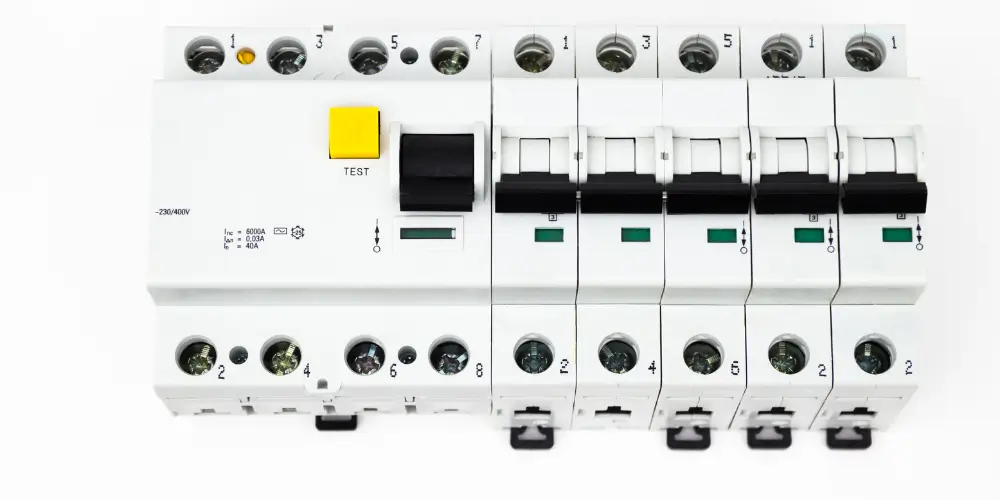
Although multiple factors influence suitability, selecting a 6‑way RCBO model hinges on comparing key performance, safety, and installation features to match the installation’s protective and operational requirements. The discussion focuses on objective attributes: fault current interruption, sensitivity to earth leakage, coordination with upstream protection, and mechanical robustness. Capacity and physical dimensions determine fit in the consumer unit and future flexibility. Ease of wiring, terminal capacity, and clear labeling reduce installation time and risk. Warranty, manufacturer reputation, and availability of spare parts support long‑term freedom from unexpected replacements. Environmental ratings and compliance marks confirm suitability for domestic settings.
- Rated current (In) and breaking capacity (Icn/Icu)
- Earth leakage sensitivity (mA) and trip characteristics (B/C/D)
- Pole configuration, terminal size, and mounting footprint
- Conformity marks (BS EN) and IP/temperature ratings
- Manufacturer support, firmware/upgradability, and warranty
Questions to Ask and Tips for Hiring a Qualified Installer
Why hire a certified installer rather than an informal handyman? A certified installer offers compliance with UK wiring regulations, registered certification, and documented testing vital for safety, insurance, and resale value. Questions to ask include: Are you registered with a competent person scheme (e.g., NICEIC, NAPIT)? Can you provide references and photos of past similar 6‑way RCBO consumer unit installations? Will you issue Building Regulations compliance certificates and test reports? What warranty and liability cover do you provide?
Tips for hiring: verify credentials independently, confirm experience with RCBO selection and load balancing, and request a clear written quote outlining parts, labour, and expected timelines. Discuss isolation, labeling, and future expansion to preserve autonomy over circuits. Prefer installers who explain choices plainly and empower the homeowner to make informed decisions. A qualified installer reduces risk, guarantees legal compliance and leaves the homeowner free to use and adapt the electrical system safely.
Frequently Asked Questions
Can I Upgrade My Existing Consumer Unit to a 6‑Way RCBO Myself?
He can, but he should not unless fully qualified; consumer unit work requires competence, correct parts, and compliance with UK wiring rules. A competent electrician preserves safety, legal standing, and personal freedom to use electrical systems confidently.
How Much Space Does a 6‑Way RCBO Unit Require in a Meter Cupboard?
A 6‑way RCBO consumer unit typically needs about 300–400mm width and 150–200mm depth clearance inside the meter cupboard, plus 100–150mm working space in front; exact dimensions depend on model and wiring routes.
Will RCBOS Reduce My Home Insurance Premiums?
They rarely guarantee lower premiums; insurers may view RCBOs favorably, but reductions depend on policy terms, overall risk mitigation and insurer discretion. The homeowner should proactively provide evidence and negotiate based on demonstrated safety improvements.
Do RCBOS Require Routine Maintenance or Testing by the Homeowner?
Yes. The homeowner should perform regular basic checks: monthly visual inspections and monthly test-button presses, recording results. Qualified electricians must carry out periodic professional testing and maintenance to ensure RCD/RCBO reliability and compliance with safety standards.
Can a 6‑Way RCBO Unit Be Expanded Later if I Need More Circuits?
Yes it can be expanded only if spare enclosure space, spare DIN rail, and capacity exist; otherwise, a larger consumer unit or an additional subcircuit with a qualified electrician is needed to guarantee that RPZ, load, and incoming supply limits are respected.
Conclusion
A 6‑way consumer unit with RCBOs offers balanced protection, combining individual circuit fault isolation with enhanced safety for modern UK homes. It suits many typical dwellings when circuits are planned logically and installed to current regulations. Selecting quality RCBOs and using a competent, registered installer guarantees compliance and reliable performance. With careful planning, adherence to wiring regulations, and appropriate testing and documentation, homeowners gain clearer fault diagnosis and improved electrical safety.