
Are Fire Doors A Legal Requirement for landlords? In many jurisdictions, fire doors are legally required where the building type, occupancy or layout creates a need for compartmentation or protected escape routes. Requirements vary by country, state, and local code, and commonly apply to HMOs, flats, purpose-built blocks, and communal areas rather than to single private lets. Landlords must install, maintain, and document rated doors, seals, and hardware in accordance with relevant standards. Further practical steps, inspection pointers and cost considerations follow for those managing properties.
Key Takeaways
- Fire-door requirements depend on property type and local law; multi-occupancy buildings commonly require them, while single private lets often do not.
- In the UK, HMOs, flats, and communal areas usually legally need fire doors meeting FD30/FD60 standards.
- In the US, Canada, Australia, and the EU, requirements vary by state/province/territory and building code enforcement.
- Landlords are typically responsible for installing, maintaining, and documenting compliance with fire door requirements in regulated properties.
- Regular inspections, certified repairs, and retained records are essential to demonstrate legal compliance and tenant safety.
Table of Contents
What This Guide Answers and Who It’s For
What questions does this guide resolve, and who benefits from it? Are Fire Doors A Legal Requirement is one of the main questions this guide answers for property owners and managers. It clarifies the responsibilities, practical steps, and risks associated with fire doors. It also outlines what landlords need to know about installation, maintenance, inspection and documentation, while showing how compliant measures help protect occupants and assets. Readers seeking control over their properties, landlords, independent property stewards and self-managing investors gain clear, practical information to make informed choices without relying on intermediaries.
The tone remains pragmatic and empowering: precise obligations, cost considerations, and safety implications are presented so that readers can decide the level of engagement they wish to pursue. The guide avoids legal minutiae reserved for jurisdiction-specific sections, instead focusing on universal principles and best practices that enable landlords to act decisively. It equips those who value freedom to implement sensible fire-door strategies that balance safety, autonomy, and cost-effectiveness.
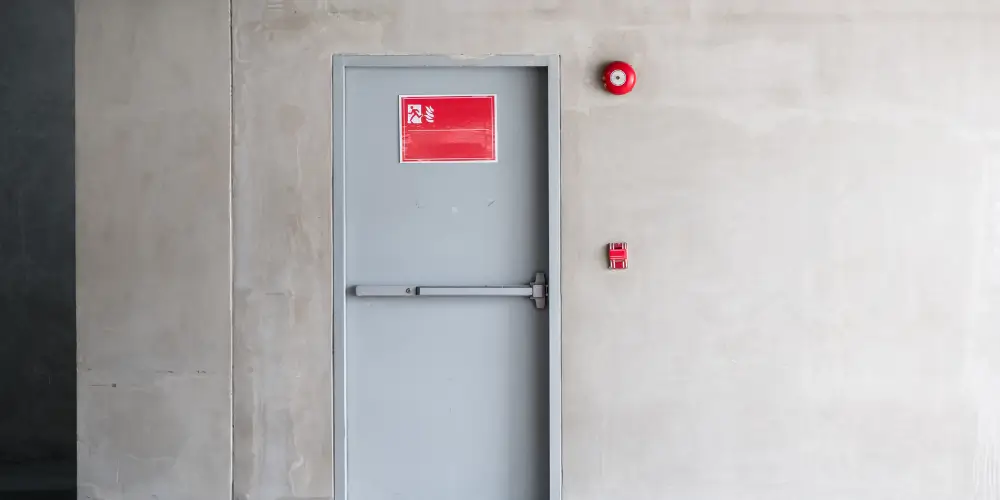
Are Fire Doors Legally Required for Landlords? Quick Answer by Nation
How different are the legal requirements for fire doors across countries? A concise overview shows variation: some nations mandate fire doors in specific rental types, others set general building codes or rely on performance-based standards. Landlords should check national and local laws; freedom-minded owners often prefer compliance that balances safety and autonomy.
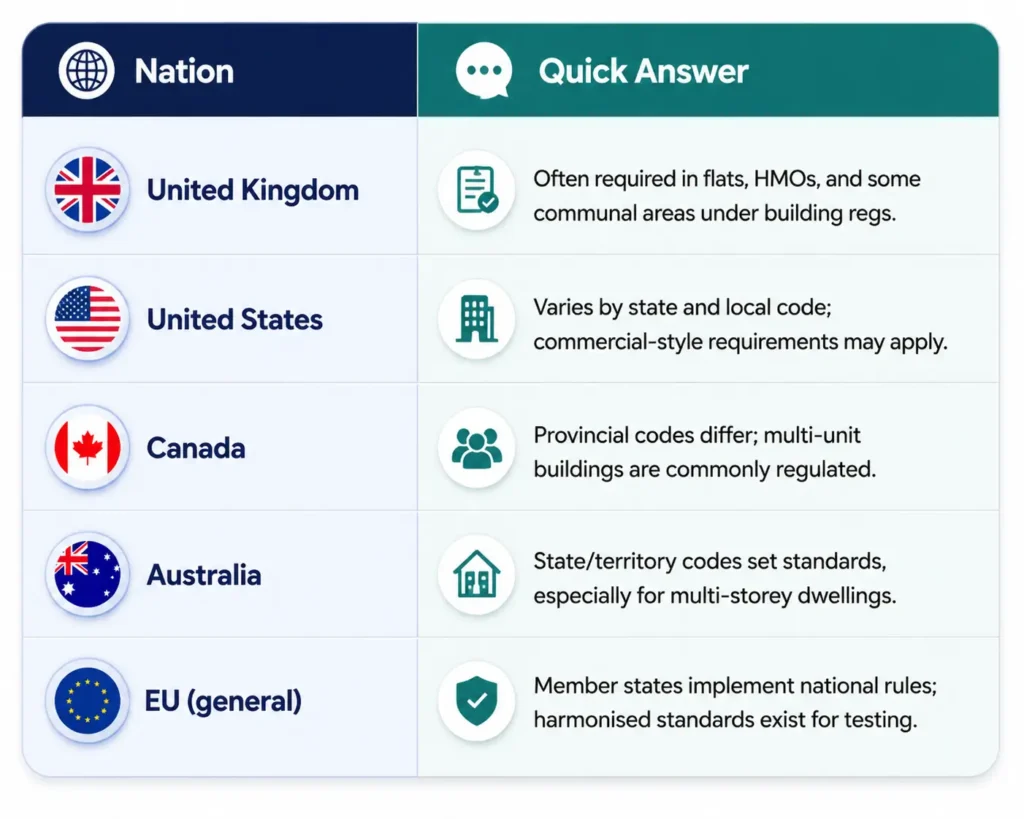
This snapshot empowers landlords to pursue compliant choices without unnecessary constraint: verify jurisdictional guidance, document decisions, and prioritise practical measures that respect tenant and owner freedoms.
Which Rental Properties Must Have Fire Doors (HMOs, Flats, Purpose‑Built Blocks)?
Having outlined national variations in fire‑door obligations, attention turns to which types of rental properties most commonly require them. Landlords should note that houses in multiple occupation (HMOs) typically face the strictest rules: shared common areas, multiple occupancies, and escape-route requirements often mandate fire‑resisting doors on bedroom and communal-room entrances. Purpose‑built blocks of flats generally require fire doors between individual flats and communal corridors, plus doors to stairwells and service risers, to protect vertical escape routes.
Converted houses containing flats may trigger similar duties where separate households exist and shared means of escape are present. Single private lets with independent escape rarely require compartmentation beyond normal means of escape, though local regulations or leasehold conditions can alter obligations. Determination depends on the building’s use, layout, occupancy density, and applicable national or local standards. Owners seeking autonomy should review specific statutory guidance and building classifications to confirm whether fire‑resisting doors are legally required for their rental type.
Who’s Responsible for Installing, Maintaining and Certifying Fire Doors?
Who bears responsibility for fire doors depends on the tenancy type, ownership structure and applicable statutory duties: typically, landlords are responsible for installing and maintaining fire doors in rented properties, particularly HMOs and flats with shared escape routes, while freeholders or managing agents often shoulder duties for communal doors in purpose‑built blocks; tenants may be liable only where damage or alteration by them is proven.
Responsibility is allocated by law, lease terms, or tenancy agreements; obligations include regular inspection, repair, and the arrangement of competent work. Certifying a door often falls to the party commissioning the installation or to a managing agent, who uses qualified contractors to provide evidence of compliance. Practical expectations can be summarised:
- Landlords: install, inspect and repair doors within private rented units and HMOs.
- Freeholders/agents: maintain communal and communal‑escape doors in blocks.
- Tenants: liable for damage from misuse; must report faults promptly.
- Contractors/certifiers: provide professional assessment and documentation when engaged.
Clear agreements and timely action preserve safety and occupants’ freedom to live without undue risk.
Fire Door Standards and Ratings Landlords Must Know (FD30, FD60, Certification)
Fire door standards define minimum performance requirements for containment time, construction, and hardware, and landlords must understand ratings such as FD30 and FD60, as well as the role of certification in ensuring legal compliance and occupant safety. FD30 doors are designed to resist fire for 30 minutes; FD60 doors for 60 minutes. Ratings reflect that tested assemblies, leaf, frame, seals, and hardware must match the certified configuration.
Certification by a recognised body or third‑party scheme demonstrates that components and installation meet the declared standard and aids legal defensibility. Materials, intumescent strips, glazing,g and ironmongery must be compatible with the rating; substitutions can void certification. Landlords seeking autonomy should prioritise certified products and documented evidence to reduce liability and protect tenants.
While building regulations and tenancy law set expectations, adherence to established fire door standards and maintenance of the certified build specification are the practical measures that preserve safety, compliance, and the landlord’s freedom to manage the property with confidence.
How to Check a Fire Door Is Compliant: Surveys, Paperwork and Common Faults
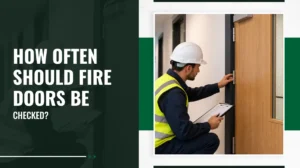
With certification and the correct components in place, landlords must verify that installed doors continue to meet their rated specifications through regular checks. A competent surveyor inspects door leaves, frames, seals, intumescent strips and self-closing devices against original certification and current standards. Paperwork,k installation certificates, maintenance logs and any third‑party labelling should be retained and cross‑checked. Common faults include missing or damaged seals, incorrect gaps, non‑compliant hardware, and painted‑over intumescent material.
- Inspect: measure gaps, check seals, and confirm label presence and readability.
- Review: compare on‑site conditions with installation certificates and previous reports.
- Test: operate closers, hinges and locks; verify smooth, full closure from open positions.
- Record: log findings, corrective actions and dates to free future audits and evidence of due diligence.
Where faults are found, prompt documented rectification preserves safety and legal defensibility while allowing landlords to maintain autonomy over property standards.
Fire Door Costs and Timelines: Install, Upgrade and Ongoing Maintenance
Estimate budgets and schedules realistically: landlords face variable costs and lead times for installing, upgrading, and maintaining fire doors depending on door type, required certification, labour rates, and scope of work. Typical replacement costs range from modest single-door swaps to higher costs for bespoke or certified units; upgrading may involve new frames, ironmongery, seals, and intumescent strips, each adding time and expense.
Lead times depend on stock, certification turnaround and contractor availability; urgent works can cost more. Ongoing maintenance carries predictable annual or biannual service costs for inspections, adjustments and part replacements. Budgeting contingency for unexpected repairs preserves flexibility and avoids rushed decisions that compromise safety. Prioritising high-risk locations first optimises spend and timing.
Transparent records of costs and service dates support future planning and demonstrate diligence. Landlords aiming for freedom in portfolio management benefit from realistic schedules and phased programmes that minimise tenant disruption while ensuring compliant, durable fire door provision.
Practical Compliance Checklist and Where to Get Professional Help
Although compliance can feel technical, a concise, practical checklist helps landlords translate regulations into clear, actionable tasks: it frames responsibilities, preserves tenants’ safety, and protects the landlord’s autonomy.
- Inspect: Confirm fire doors are fitted, self-closing, and free from gaps, damage, or unauthorised alterations.
- Document: Record inspection dates, findings, photos, and remedial actions; retain for audits and tenant queries.
- Repair or Replace: Engage certified installers when seals, hinges, closers, or intumescent strips fail to meet standards.
- Maintain: Schedule periodic checks, client reminders, and immediate fixes after incidents.
For professional help, seek accredited fire door inspectors, locksmiths specialised in fire-rated hardware, and registered contractors experienced with local building control. Legal advice or a brief compliance audit can clarify obligations and reduce exposure. Clear records and reliable experts enable landlords to meet rules efficiently while maintaining the freedom to manage properties with confidence.
Frequently Asked Questions
Can Tenants Request Fire Door Replacements at Landlord Expense?
Yes, tenants can request fire door replacements at the landlord’s expense if statutory duties or lease terms require safe premises; landlords may be obliged to comply, though responsibility depends on local law, lease specifics, and safety inspection findings.
Do Internal Doors in Converted Lofts Need Fire-Rated Doors?
Yes, internal doors in converted lofts often require fire-rated doors where the loft creates new rooms or escape routes; the owner must follow building regulations and local codes, ensuring safety while respecting occupants’ autonomy and property rights.
Are Fire Doors Required for Short-Term Holiday Lets?
They aren’t universally mandatory; requirements depend on jurisdiction, building type and occupancy. Hosts should check local fire safety regulations, insurance conditions and risk assessments; prudence favors installing certified fire doors where escape routes or shared spaces exist.
Can Decorative Glass Panels Invalidate Fire Door Certification?
Decorative glass panels can invalidate fire door certification if they compromise integrity or aren’t fire-rated; inspectors treat unauthorised alterations as failures. Owners seeking freedom should use certified fire-rated glazing and documented approvals to preserve compliance and safety.
Do Smoke Alarms Affect Fire Door Legal Obligations?
Yes. The presence of smoke alarms does not remove fire door obligations; they complement each other. The landlord remains responsible for providing and maintaining compliant fire doors and alarms to protect occupants and meet applicable safety regulations and best practices.
Conclusion
In conclusion, Are Fire Doors A Legal Requirement is an important question for landlords, and the answer depends on property type, building size and local regulations. Houses in multiple occupation, flats and purpose-built blocks often need fire doors meeting FD30 or FD60 standards, with responsibilities for installation, maintenance and certification shared between landlords and managing agents. Regular inspections, documented evidence and timely remedial works reduce liability and improve safety. Professional surveys and accredited contractors help ensure compliance, support budget planning, and facilitate ongoing record-keeping.