Replacing a Fuse in the Breaker Box should always begin with a proper safety check. A homeowner should first confirm whether a fuse is blown or a breaker has tripped by visually inspecting the unit and performing a quick continuity check with a multimeter. Before starting, switch off the main power, wear nonconductive footwear and gloves, ensure the area is well-lit, and maintain a clear exit path. Use an insulated screwdriver to carefully remove the panel, then replace the blown fuse with the same type and amperage rating. Once fitted, restore power and test the circuit. If the problem continues, further troubleshooting may be needed to find the cause.
Key Takeaways
- Confirm whether you have fuses (fuse box) or circuit breakers; breakers are reset, fuses must be replaced.
- Turn off the main power and verify circuits are de-energized with a voltage tester before touching the panel.
- Inspect the blown fuse for a broken filament or dark window, and note its exact amperage rating.
- Replace only with a matching-type, same-amperage fuse, seating it firmly and inspecting the holder for damage.
- Restore power, test the circuit, and call a licensed electrician if the problem recurs or if you notice any signs of damage.
Table of Contents
How to Tell If a Fuse Is Blown (Vs a Tripped Breaker)
How can one distinguish a blown fuse from a tripped breaker? The observer notes physical differences: a blown fuse often shows a visible break in its filament or a darkened window if so equipped; a tripped breaker sits between on and off, frequently with the handle in a neutral or slightly off position. Testing confirms the diagnosis: a multimeter reads no continuity across a blown fuse, whereas a breaker shows continuity when reset. Contextual clues help: a blown fuse usually accompanies a sudden loss on a single circuit, sometimes after an overload; a tripped breaker often protects against ground faults or overloads affecting multiple outlets or a larger branch circuit. Replacing a fuse requires matching the amperage and type; resetting a breaker requires moving the toggle fully off, then back on. The tone favors autonomy: clear assessment and correct replacement restore control without unnecessary dependence on others.
Safety Checklist Before Opening a Fuse Box
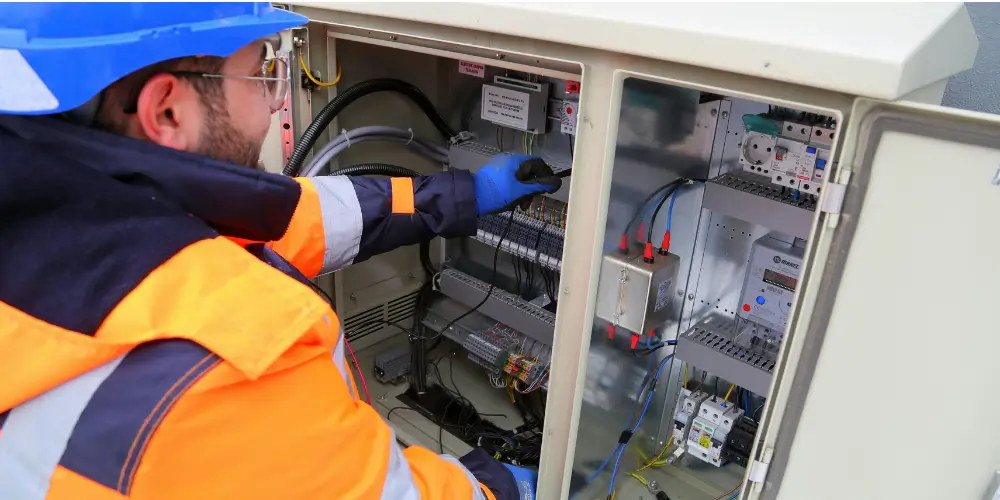
Before opening the fuse box, a concise safety checklist should be completed to reduce risk.: The reader is reminded that calm, informed action preserves autonomy and prevents harm. Inspect the area visually for water, damage, or signs of overheating. Guarantee adequate lighting and an unobstructed path to exit if a quick retreat is needed. Verify that others in the household are aware and will not operate appliances during the procedure.
- Confirm power source awareness know where the main disconnect is and whether meters or alternative feeds are present.
- Wear nonconductive footwear and remove jewelry or metallic accessories that could bridge circuits.
- Keep a phone nearby and post a visible notice to prevent others from accidentally re-energising it.
Do not attempt internal work if unsure about wiring, multiple feed sources, or compromised insulation; instead, seek professional assistance to maintain personal freedom without unnecessary risk. Understand EICR Fuse Box Requirements: What UK Property Owners Must Know
Tools and Spare Fuses to Keep on Hand
A small kit of reliable tools and a selection of matching spare fuses guarantee a swift, safe replacement when a fuse blows. The section lists compact essentials: insulated screwdriver, voltage tester, needle-nose pliers, replacement fuses in clearly labeled containers, dielectric gloves, and a flashlight. Items are chosen to facilitate independent, confident action without dependence on immediate external help.
A compact, well-organised kit reduces downtime and preserves autonomy. Labels indicate circuits and last-replacement dates. The kit is stored near the breaker box but out of children’s reach. Regular inspections verify tools remain functional and fuses are intact.
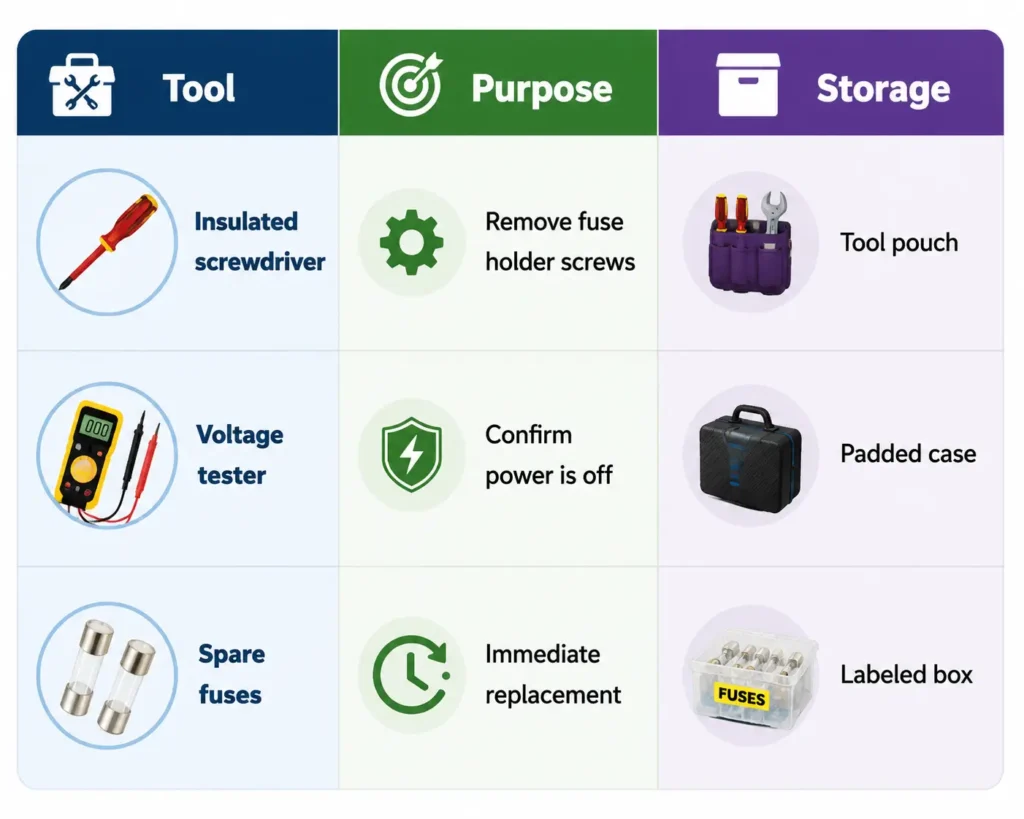
These preparations support safe, prompt fuse swaps while respecting the user’s desire for practical freedom and self-reliance.
Choose the Right Fuse: Type and Amp Rating
Select the correct fuse type and amperage rating based on the circuit’s design and the appliance’s load to ensure protection and prevent damage. One must determine whether the circuit requires a fast‑blow, slow‑blow (time‑delay), or cartridge fuse, and match the fuse amperage rating to the circuit’s continuous load and wire capacity. Choosing undersized fuses causes nuisance trips; oversized fuses remove protection and risk fire. Consult the panel labeling, appliance nameplates, and circuit schematics. When in doubt, verify conductor gauge and intended load before selecting a replacement. For those who value autonomy, making informed choices preserves safety without surrendering control.
- Match fuse type to the transient characteristics of the load (motors vs electronics).
- Confirm the amp rating aligns with the wire gauge and maximum continuous current.
- Prefer manufacturer or code‑approved equivalents; avoid improvised alternatives.
Record the chosen fuse type and rating for future reference and comply with local electrical codes.
How to Replace a Blown Fuse: Step‑by‑Step
Turn off power at the main breaker and verify the affected circuit is de‑energized before handling the fuse. The person approaches the panel with clarity: remove the panel cover, identify the blown fuse, note its type and amp rating, and prepare an identical replacement. Wearing insulated gloves, they unscrew or pull the fuse straight out, inspect the holder for corrosion, and insert the new fuse firmly. Replace the cover, restore power at the main breaker, and test the circuit for normal operation. If the fuse fits poorly or the holder appears damaged, stop and arrange repairs to preserve freedom of choice in future maintenance.
| Step | Action | Note |
| 1 | Power off & verify | Confirm with the tester |
| 2 | Remove cover | Keep screws safe |
| 3 | Swap fuse | Match type/amp |
| 4 | Restore & test | Observe load behavior |
If a Replacement Fuse Blows Immediately: Quick Actions and Checks
If a newly installed fuse blows immediately, treat it as a sign of a persistent fault rather than a faulty fuse alone. The person assesses live circuits cautiously and assumes power is still present; immediate restoration attempts are avoided. Initial checks focus on obvious causes: incorrect fuse rating, exposed wiring, or a shorted appliance. If uncertainty remains, service is interrupted until a safe inspection can occur.
- Verify the replacement fuse matches the panel’s amperage and type; mismatches invite repeated failures.
- Isolate and unplug devices on the affected circuit to determine whether an appliance fault causes the blow.
- Inspect visible wiring and connections for charring, loose terminals, or signs of water intrusion before attempting another fuse.
If these quick actions do not reveal the issue, the individual documents observations and contacts a qualified electrician. Freedom-minded readers are encouraged to take initiative but prioritise safety and professional help when circuit behavior suggests deeper faults.
Reset a Tripped Breaker or Replace the Fuse? Quick Guide
Replacing a Fuse in the Breaker Box requires the homeowner to first confirm that the blown fuse is not caused by an incorrect rating, a shorted appliance, or visible wiring damage. The next step is to decide whether the issue needs a tripped circuit breaker reset or a fuse replacement. A breaker trip often points to a temporary overload, while a blown fuse may suggest a more direct fault. Before taking action, reduce the electrical load by unplugging devices and switching off nonessential circuits, then reset the breaker if appropriate. If the fuse has blown, replace it only with the correct type and amp rating. Do not use a substitute fuse. If the breaker trips again immediately or the fuse blows again, avoid repeated attempts and contact a licensed electrician.
| Symptom | Likely Cause | Action |
| Single surge trip | Temporary overload | Reduce load, reset breaker |
| Immediate re-trip | Short circuit | Stop, inspect devices |
| Blown fuse | Direct fault | Replace with the correct fuse |
| Repeated issue | Persistent fault | Isolate the circuit and test |
When to Call a Licensed Electrician
Recognise that some electrical problems exceed routine homeowner fixes and require a licensed electrician. A measured approach values safety and autonomy: knowing when to step back preserves freedom and prevents harm. If fuses repeatedly blow, circuits show scorching, or unfamiliar wiring is present, professional intervention is prudent. Licensed electricians carry tools, permits, and training to resolve complex faults, update panels for capacity, and guarantee code compliance.
- Repeated fuse failures or persistent trips that resist basic fixes
- Signs of overheating, burning smells, charred outlets, or hot panels
- Alterations to service lines, meter work, or unclear/old wiring
Choosing a licensed professional protects personal liberty by avoiding legal or safety ramifications from DIY mistakes. An electrician can diagnose hidden issues, recommend upgrades for future needs, and provide documented work that preserves property value and insurance coverage. When uncertainty or risk appears, calling a licensed electrician is a deliberate action to safeguard independence and the home.
Frequently Asked Questions
Can I Temporarily Replace Fuses With Higher-Amp Ratings?
No, they should not. He recognises temporary urges for freedom but understands that replacing fuses with higher-amp fuses risks overheating, fire, and equipment damage. Safer alternatives include replacing the fuse properly or consulting a qualified electrician immediately.
Are Fuses Interchangeable Between Different Panel Brands?
No, fuses are not universally interchangeable between panel brands. The person should match type, size, interrupting rating, and approval listings for that specific panel to maintain safety and legal compliance while preserving electrical freedom.
How Long Do Fuses Typically Last Under Normal Use?
Under normal use, fuses typically last many years, often 5 to 20 years, until they blow from a surge or overload. The individual assumes responsibility for inspecting and replacing them when signs of wear or repeated trips appear.
Can a Surge Protector Prevent Fuse Blows?
Yes, a surge protector can reduce the likelihood of fuse blows by diverting or clamping voltage spikes, though it cannot prevent blows caused by overloads or wiring faults; responsibility for protection ultimately rests with the user.
Do Insurance Policies Require Professional Fuse Replacement Records?
No, most insurers do not universally require professional fuse-replacement records, though some policies or claims may favor documented professional work; homeowners who value autonomy should check their specific policy terms and retain receipts or photos when self-servicing.
Conclusion
Replacing a Fuse in the Breaker Box should be treated as a careful and methodical task. The homeowner should first confirm that the fuse is blown, follow all safety checks, use the correct fuse type and amperage rating, and keep the required tools and spare fuses ready. If the replacement fuse blows immediately, or if there is any uncertainty during the process, stop further attempts and contact a licensed electrician. Prioritising safety and using the correct component help reduce risk and keep the electrical system reliable and code-compliant.