The question Is PAT Testing a Legal Requirement often comes up for landlords and businesses in the UK. PAT testing is not a specific legal requirement, but landlords and businesses still carry statutory duties to ensure electrical safety and manage risk. Regulations such as the Electricity at Work Regulations 1989 and the Health and Safety at Work Act require appliances to be safe and properly maintained. Landlords must assess rented properties and supplied appliances, while employers must ensure safe equipment for staff. Practical records, inspections, testing, and proportionate maintenance can help demonstrate compliance, and the guidance that follows explains how to apply these duties.
Key Takeaways
- PAT testing itself is not specifically mandated by UK law, but landlords and businesses must ensure electrical equipment is safe.
- Duties under the Electricity at Work Regulations 1989 and the Health and Safety at Work Act require the management of electrical risks.
- Regular visual inspections and risk-based testing are expected, with PAT testing a common practical compliance method.
- Landlords should assess supplied appliances, document checks, and advise tenants on safe use of their own devices.
- Competent testers, test records, and proportionate remedial action demonstrate compliance with legal obligations.
Table of Contents
Short Answer: Do You Legally Have to Do PAT Testing?
Is PAT testing legally required? The short answer: not universally mandated as a specific statutory duty, yet obligations exist that effectively compel reasonable electrical safety measures. The detached perspective notes that landlords and business operators must manage risks and guarantee equipment safety under general duties to protect occupants, staff, and customers. Freedom-minded readers will appreciate the emphasis on responsibility rather than prescription: entities retain discretion over how they demonstrate safety, whether through formal PAT regimes, in-house checks, or professional inspections. Practicality guides choices: frequency, competence, and record-keeping should align with risk profile and context. Where electrified devices pose foreseeable hazards, doing nothing is imprudent and could breach broader legal duties and insurance conditions. Ultimately, the imperative is pragmatic: implement proportionate testing and maintenance to mitigate risk and preserve autonomy, choosing methods that satisfy safety expectations without unnecessary constraint.

Which UK Laws Affect PAT Testing?
Which statutes and regulations shape PAT testing obligations in the UK? The legal framework does not mandate PAT testing per se but sets out duties related to electrical equipment safety. Responsibility lies with duty-holders, who must manage risk, inspect and maintain equipment, and keep records where appropriate.
Key legal influences include:
- The Electricity at Work Regulations 1989 impose duties on employers and those in control of premises to prevent electrical danger, underpinning testing and maintenance decisions.
- The Health and Safety at Work etc. Act 1974: requires employers and occupiers to guarantee safe systems of work, informing policies on equipment safety and periodic checks.
- The Management of Health and Safety at Work Regulations 1999 mandates risk assessments and arrangements for inspection and maintenance, which can lead to PAT being used as a practical compliance measure.
These laws create obligations to assess, manage, and document electrical safety; PAT testing is one accepted tool for demonstrating compliance while preserving operational freedom.
When Is PAT Testing Expected for Rented Properties?
Having established the statutory duties that require landlords and occupiers to manage electrical risk, the question Is PAT Testing a Legal Requirement becomes especially important for rented properties. Expectations for PAT testing follow from those obligations and from practical risk management. Landlords are expected to assess the property and the appliances provided, deciding whether PAT testing is proportionate to the risk. In furnished lets, regular visual inspections and periodic testing of supplied items, such as cookers, heaters, white goods, and portable equipment, are commonly advised to demonstrate due diligence.
Where tenants supply their own appliances, landlords should advise on safe use and may limit liability by including clear clauses in tenancy agreements while still addressing obvious hazards. Frequency and scope are guided by risk factors: appliance type, usage intensity, environment, and previous fault history. Records of inspections and tests, when carried out, support compliance and enable flexible, liberty-respecting management rather than rigid, one-size-fits-all mandates. Here is the procedure, importance and benefits of PAT testing explained.
When Should Workplaces and Businesses Arrange PAT Testing?
When should businesses schedule PAT testing to manage electrical risk effectively? Organisations should arrange tests whenever equipment, usage patterns or locations change, and when risk increases. A detached approach focuses on practical triggers rather than rigid mandates, allowing businesses to balance safety and operational freedom. Planning around known events reduces disruption and meets duty-of-care obligations without overregulation.
- After purchasing or receiving used electrical equipment, verify integrity before routine use.
- When equipment is relocated, exposed to harsher environments, or used in new tasks that alter risk.
- Prior to major events, seasonal peaks, or reopening phases, to confirm safe deployment.
Decision-makers benefit from documenting triggers and outcomes, enabling flexible schedules that reflect actual risk. Records support compliance and inform future choices, preserving autonomy while protecting people and property. This pragmatic stance helps businesses exercise freedom responsibly, aligning safety assessment with workflow realities without unnecessary constraints.
How Often Should PAT Testing and Inspections Be Done?
Frequency of PAT testing and inspections should be determined by risk, equipment type, and usage rather than by fixed intervals alone. High-use, portable items in public or commercial settings such as kettles, power tools, and extension leads typically need more frequent checks, often every 3–6 months, while low-risk, static equipment like servers or fixed lighting may require testing at longer intervals, such as annually or less. Employers and landlords should assess the environment, user competence, maintenance history, and consequences of failure to set bespoke schedules. Visual inspections can and should be done more regularly by users, supplemented by formal tests from competent persons when risk increases or faults are suspected. Records of inspections, test results, and remedial actions support informed frequency adjustments and demonstrate responsible property or workplace management. Flexibility in planning allows those responsible to balance safety, cost, and autonomy while responding to changing use patterns and emerging risks.
What Checks Count Instead of PAT Testing?
Which routine checks can substitute for full PAT testing depends on risk and equipment type. Visual inspections, user checks and scheduled maintenance often suffice where risk is low and appliances are simple. The responsible party should assess hazards, consider the environment and usage, and apply proportionate measures rather than blanket testing. Emphasis rests on empowering occupants and owners to act sensibly and freely while managing electrical safety.
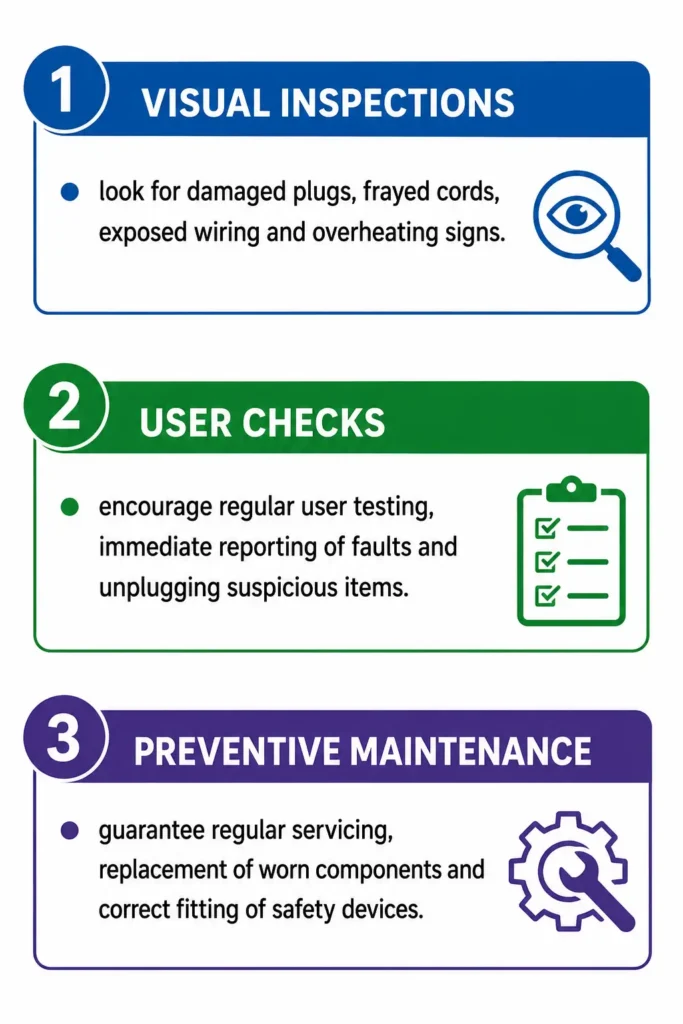
These alternatives support autonomy by allowing choice in safety approaches while meeting duty-of-care expectations. Where doubt remains, a competent electrician’s opinion or formal PAT test can be sought to confirm the adequacy of the chosen checks.
What Records and Evidence Protect You Legally?
Having opted for visual inspections, user checks or maintenance in lieu of full PAT testing, landlords and businesses should document the rationale and outcomes to demonstrate compliance with the duty of care. Records should include dates, specific observations, identities of persons performing checks, and any remedial actions taken. Photographs and brief annotated notes provide objective evidence; signed declarations from tenants or staff confirming routine user checks add corroboration. Where appliances are serviced, retain invoices and service reports detailing defects found and repairs completed. Risk assessments explaining why PAT testing was not pursued, referencing appliance type, usage patterns and competent person judgments, strengthen a defensible position. Centralised logs, backed up digitally and timestamped, enable quick retrieval if questioned. Consistent, proportionate record-keeping that mirrors the organisation’s size and risk appetite demonstrates responsible stewardship while preserving autonomy in managing assets. Clear, accessible records reduce legal exposure and support a culture of accountable freedom.
Practical Next Steps: Hiring Testers, Costs and a Simple Checklist
Begin by identifying the organisation’s needs: determine the number and type of appliances, the competency required (visual-only checks versus full PAT testing), and the preferred timescale for completion. The organisation then sources testers who hold recognised qualifications, public liability insurance and clear references. Freelance testers, specialist firms or in-house training each offer different freedoms: freelancers can be flexible, firms provide consistency, and in-house training reduces recurring costs. Obtain written quotes that break down per-item and call-out fees, and compare sample reports to guarantee clarity and actionable outcomes.
- Request evidence of competence, insurance and recent client references.
- Compare transparent pricing, retest intervals and sample reports.
- Agree on scope, access windows and a concise reporting template.
Finally, maintain a simple checklist: appliance inventory, test dates, responsible person and remedial actions. This keeps compliance efficient, empowers decision-making and preserves operational autonomy.
Frequently Asked Questions
Can Tenants Request a Copy of the Landlord’s PAT Test Records?
Yes. The tenant may request PAT test records; the landlord should provide evidence of electrical safety on request. The tenant can insist on transparency, preserve autonomy, and escalate to authorities or seek legal remedies if refused.
Do Landlords Need PAT Testing for Furnished Properties With Personal Appliances?
They generally should: landlords remain responsible for electrical safety in furnished properties, including personal appliances provided for tenants. Regular inspection and PAT testing where risk exists protect freedoms from harm and reduce liability exposure.
Are PAT Testers Required to Hold Specific Certifications or Insurance?
No specific statutory certification is mandated, but a PAT tester typically holds recognised training (City & Guilds, equivalent) and public liability insurance; prudent operators maintain competence records and appropriate insurance to manage risk and satisfy clients.
Does PAT Testing Cover Hard-Wired Appliances Like Ovens or Boilers?
Yes, PAT testing generally excludes permanently hard-wired appliances like ovens or boilers; those fall under fixed electrical installation inspection (e.g., periodic EICR). The tester notes risks but typically does not perform portable appliance PAT on them.
Can PAT Testing Be Performed Remotely or via Self-Testing Devices?
No, remote PAT testing or fully automated self-testing devices cannot legitimately replace physical inspections; the tester notes, while some dataloggers and guided apps assist records and basic checks, competent in-person assessment remains essential for safety.
Conclusion
Is PAT Testing a Legal Requirement is a common question for landlords and businesses. PAT testing is not an absolute legal requirement, yet landlords and businesses must ensure electrical safety under regulations such as the Electricity at Work Regulations and the Housing Health and Safety Rating System. Practical expectations vary. Landlords should arrange checks between tenancies and periodically, while employers and businesses must assess risk and test based on use, environment, and equipment type. Records, visual checks, and formal inspections all contribute to compliance. A competent tester, clear evidence, and a simple testing schedule tailored to the premises and appliance risk can help show responsible electrical safety management.