An Electrical Installation Condition Report (EICR) typically costs £120–£150 for a small flat, £200–£300 for a larger house, and £250–£400 for a small commercial property. Prices vary by property size, wiring age and complexity, and regional labour rates, with major cities usually charging more. Older or heavily altered installations often cost extra due to longer testing. Understanding these factors helps people gauge fair quotes and anticipate the factors that influence the final price.
Key Takeaways
- EICR cost depends mainly on property size, type, wiring complexity, and regional labour rates.
- Typical domestic EICR prices range from about £120–£150 for small flats to £200–£300 for larger houses.
- Commercial and landlord EICRs are usually higher, with small business premises often costing around £250–£400.
- Older, altered, or visibly deteriorated installations usually take longer to inspect, increasing labour time and overall EICR cost.
- Preparing clear access to consumer units, sockets, and previous reports helps reduce inspection time and keeps EICR costs more predictable.
Table of Contents
EICR Basics: What It Is and Why It Matters
Although often overlooked, an Electrical Installation Condition Report (EICR) is a formal assessment of a property’s fixed electrical wiring, designed to identify defects, deterioration, and potential safety risks. It examines circuits, consumer units, earthing and bonding, and visible accessories, testing whether they meet current safety standards and can safely handle everyday demand.
An EICR matters because it exposes hidden hazards that silently limit a person’s options: damaged cables behind walls, overloaded circuits, or outdated fuse boards that could cause shock or fire. By revealing these weaknesses in black and white, the report lets owners decide what to upgrade, keep, or remove.
For landlords, it supports legal compliance and protects tenants. When does EICR become law in the UK?
For homeowners, it underpins insurance, resale confidence, and the ability to modify or extend installations without guesswork. In every case, it turns electrical safety from uncertainty into informed, independent choice.
How Much Does an EICR Cost?
How much an Electrical Installation Condition Report (EICR) costs depends mainly on the type, size, and complexity of the property, as well as the region and the condition of the existing installation. For many domestic properties, prices typically start around £120–£150 for a small flat and rise to £200–£300 or more for larger houses or homes with multiple consumer units.
Landlords and business owners usually face higher costs. Small commercial premises might expect £250–£400, while larger or more complex sites can move into four figures, especially where extensive distribution boards or specialised equipment are involved.
Location also affects pricing: major cities and high‑cost regions often carry a noticeable premium. Older or obviously altered installations may command higher fees because the testing takes longer. Ultimately, the cost reflects time on site, professional competence, and the level of risk the inspector is being asked to evaluate.
What’s Included in an EICR Quote
An EICR quote typically outlines both the scope of testing and the practical arrangements for the visit. It lets the owner see exactly what will be checked, how long the electrician will be on site, and what documentation will be provided afterwards. This clarity helps people plan around the inspection with minimum disruption and maximum control over their schedule.
Most quotes will highlight:
- Inspection and testing tasks – Visual checks, dead and live testing, verification of earthing and bonding, plus identification of any safety defects or non‑compliances with current wiring regulations.
- Report and classification of findings – A written EICR detailing observations, coded outcomes (such as C1, C2, C3, FI), and a clear statement on whether the installation is satisfactory.
- Access, timing, and exclusions – Estimated duration, areas to be accessed, any special conditions, and what is not covered (for example, appliance PAT testing or remedial work costs).
How Property Size and Type Affect EICR Cost
Because an EICR involves checking every circuit and accessible part of an installation, the size and type of property have a direct impact on cost. Larger homes, HMOs, and commercial premises usually contain more circuits, more distribution boards, and more outlets to test. Each additional circuit demands time for inspection, testing, and documentation, so fees rise in line with complexity rather than just floor area.
Property type also shapes pricing. Compact studio flats or one‑bedroom apartments often sit at the lower end of the cost scale, while multi‑storey properties and mixed‑use buildings typically command higher charges due to extended testing routes and access needs.
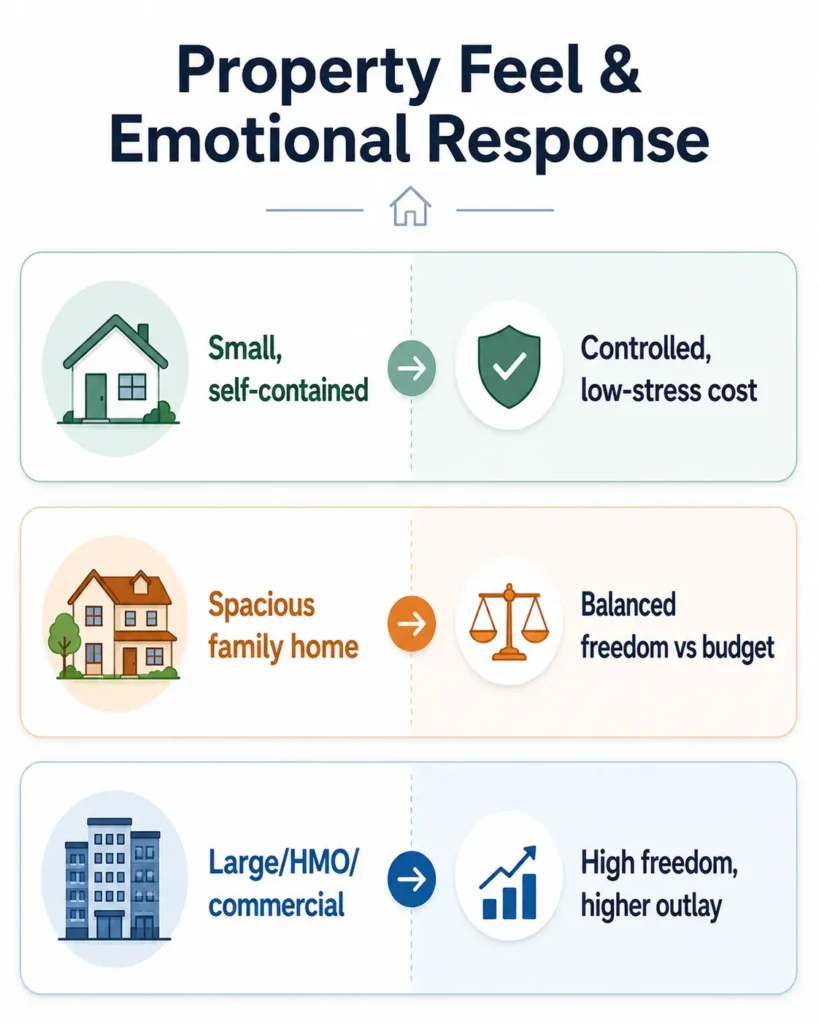
Understanding this link helps owners budget without surrendering safety or independence.
How Wiring Age and Condition Change EICR Pricing
Property layout is only part of the pricing picture; the age and condition of the wiring also weigh heavily on EICR costs. Older systems, especially those installed before modern safety standards, often demand more testing time and remedial recommendations. Degraded insulation, outdated fuse boxes, and improvised add‑ons all increase the complexity of the inspection and, in turn, the fee.
Homeowners who value independence and minimal restrictions tend to modify their electrics over time. While this can support flexible living, it can also create hidden risks that an EICR must uncover methodically.
- Pre‑1970s wiring often lacks protective devices and may require deeper investigation, pushing up labour time.
- Mixed‑age installations with multiple alterations force the inspector to trace circuits carefully, adding to cost.
- Visible deterioration, brittle cables, scorch marks, and loose accessories signal likely code failures, leading to more thorough, higher‑priced reporting.
Location and Regional EICR Cost Differences
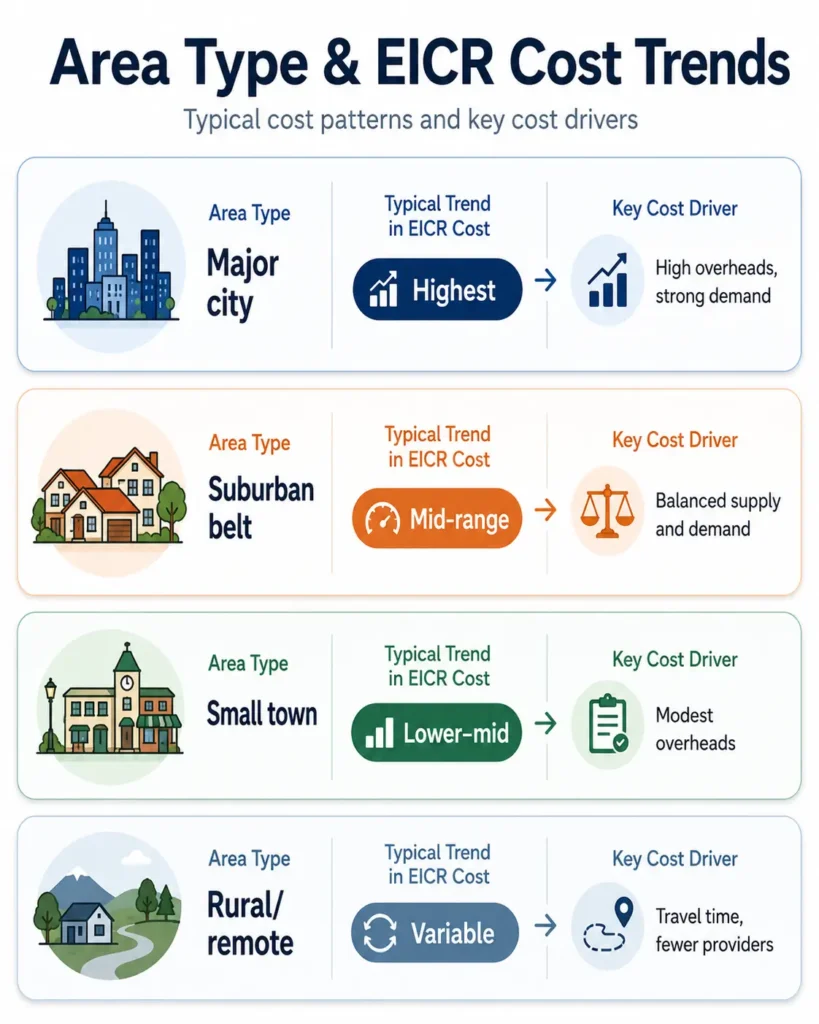
Location also plays a decisive role in Electrical Installation Condition Report (EICR) pricing, as labour rates, travel time, and local demand vary sharply between regions. Urban centres, where electricians face higher overheads and congestion, usually command higher fees than small towns. Remote or rural areas may appear cheaper, yet added call‑out distances and limited competition can quickly erase any savings.
Those wishing to stay flexible on price often compare nearby regions rather than accepting the rate in a single postcode. Regional patterns typically look like this:
How an Electrician’s Qualifications Affect EICR Cost
While hourly rates and call‑out fees are visible on a quote, an electrician’s qualifications often sit in the background quietly shaping the final EICR cost. Higher‑qualified electricians typically charge more, yet they can provide greater peace of mind, fewer repeat visits, and cleaner paperwork when it is time to prove compliance and protect one’s autonomy over a property.
Electricians with NICEIC registration or similar recognised accreditation can give landlords stronger confidence in the report, especially when understanding the NICEIC purpose of EICR and why proper inspection standards matter for legal compliance, insurance records and tenant safety.
- Formal certifications and memberships . Electricians accredited by recognised bodies, or holding advanced inspection and testing qualifications, usually charge a premium because their reports carry more weight with insurers, agents, and local authorities.
- Depth of experience: An electrician who has inspected hundreds of varied installations tends to diagnose issues faster and more accurately, reducing the risk of disruptive surprises later.
- Specialist competence Those authorised for complex or commercial systems may cost more, but their expertise helps owners keep control of risk, liability, and future upgrade choices.

How Often You Need an EICR (And How to Budget)
Beyond choosing who carries out the inspection, owners must also understand how often an EICR is needed and how to spread the cost sensibly over time. In most cases, a domestic installation is inspected every 5 years, or at a change of occupancy.
Rented homes, HMOs, and short‑term lets usually follow a stricter 5‑year cycle, sometimes sooner if recommended by the previous report. Commercial and industrial premises may require intervals of 3–5 years, depending on risk and regulatory demands.
To budget with maximum flexibility, many owners treat the EICR as a predictable, recurring cost rather than a surprise bill. They estimate the likely fee, divide it across the inspection interval, and set aside that amount monthly or quarterly. This turns a large, occasional payment into a manageable, regular expense, preserving financial freedom while ensuring the electrics remain compliant, insurable, and ready for future plans. For more detailed information on the frequency, visit our blog post How often should an EICR be done?
How to Save on Your EICR Without Cutting Corners
Smart savings on an EICR start long before an electrician arrives. A property owner who values independence can cut costs by planning, not by stripping out safety.
Preparation, smart scheduling, and clear information keep the inspection streamlined and transparent, while still meeting legal and insurance demands.
- Prepare the installation in advance. Clearing access to consumer units, sockets, and visible wiring reduces labour time. Having previous reports and certificates ready lets the electrician focus on testing, not searching.
- Request itemised, like‑for‑like quotes. Comparing fixed-price quotes based on property size and circuit count prevents hidden extras. Itemisation separates inspection, remedial work, and re‑testing, preserving the owner’s right to choose who does repairs.
- Combine EICR with planned maintenance.e Coordinating the EICR with other electrical work, such as adding circuits or upgrading the board, can lower call‑out costs and minimise disruption, while keeping the installation future‑proof and compliant.
Frequently Asked Questions
Can I Stay in the Property While the EICR Inspection Is Carried Out?
Yes, occupants can generally stay. The electrician may briefly cut power to circuits, move belongings, and access all rooms. People seeking freedom of movement should coordinate timings, clear routes, secure pets, and expect some noise and temporary disruption.
What Happens if My Property Fails the EICR and I Can’T Afford Repairs?
They’re not forced out immediately; the report highlights urgent defects and recommended timescales. They can seek phased repairs, payment plans, grants, or landlord support, prioritising C1/C2 issues while negotiating extensions with insurers, councils, or letting agents.
How Long Does an EICR Certificate Remain Valid When Selling a Property?
An EICR usually remains valid for five years, though validity depends on the report date, condition, and legal requirements. When selling, buyers or lenders may demand a more recent EICR, limiting the usefulness of outdated certificates despite their technical validity.
Are EICR Costs Tax-Deductible for Landlords or Business Premises Owners?
EICR costs are usually tax-deductible as repairs/maintenance for landlords and business premises owners, reducing taxable profit. However, treatment can vary by jurisdiction and circumstances, so they should confirm deductibility with a qualified tax adviser or accountant.
How Do I Verify That My EICR Report Is Genuine and Not Falsified?
They verify authenticity by checking the electrician’s NICEIC/NAPIT registration, cross‑referencing report details with visible wiring, dates, and unique certificate numbers, and requesting photos or test data, invoices, and ID. Suspicious shortcuts justify demanding clarification or commissioning another inspection.
Conclusion
Understanding EICR costs helps property owners plan responsibly and stay compliant. By considering factors such as property size, wiring age, location, and the electrician’s qualifications, they can better interpret quotes and avoid unexpected expenses. Regular inspections not only enhance safety but also prevent costly faults from developing over time. With careful budgeting and sensible cost‑saving measures, it is possible to secure a thorough, professional EICR without compromising on electrical safety standards.