A British Gas boiler service typically costs £70–£120 for a standard annual check, with upgraded packages costing £120–£200. A Gas Safe engineer will carry out safety and combustion checks, visual inspections, cleaning of burners and heat exchangers, and record the service. Extra charges apply for parts, call‑outs or emergency visits; repairs can range from small parts (£30–£150) to major failures (£500+). Further sections outline cover plans, comparisons and how to avoid surprise fees.
Key Takeaways
- British Gas service prices typically range from £70 to £200, depending on the package.
- Expect a Gas Safe engineer to perform safety checks, combustion tests, cleaning, and a printed service record.
- Additional repair parts cost £30–£1,200+, and labour or emergency call-outs add significant fees.
- Compare British Gas cover plans by premiums, inclusions, response times, and exclusions before committing.
- Before booking, confirm boiler make/model, warranty status, clear access, and request a full price breakdown.
Typical British Gas Boiler Service Prices: What You’ll Pay
Typical British Gas boiler service prices vary by package, location and the engineer’s qualifications; most standard annual services fall between £70 and £120. A basic service covers routine inspections and safety checks, while upgraded packages that include parts, priority call-outs, or extended diagnostics command higher fees, often £120–£200. Regional differences reflect travel time and local labour costs; urban centres typically see premium pricing compared with rural areas.
Membership plans or boiler care agreements spread costs over time and may reduce per-visit expenditure, but entail ongoing commitments. Emergency or out-of-hours visits incur substantial surcharges. Price quotes should specify which checks are included, whether parts and call-outs are covered and if Gas Safe registration is confirmed.
Comparing fixed-price offers with hourly or ad hoc billing helps avoid unexpected expenses. Consumers benefit from requesting written estimates, confirming any guarantee terms and checking reviews to align cost with expected service quality.
Learn: Why booking a British Gas boiler service is essential for home heating.
What a Standard British Gas Boiler Service Includes
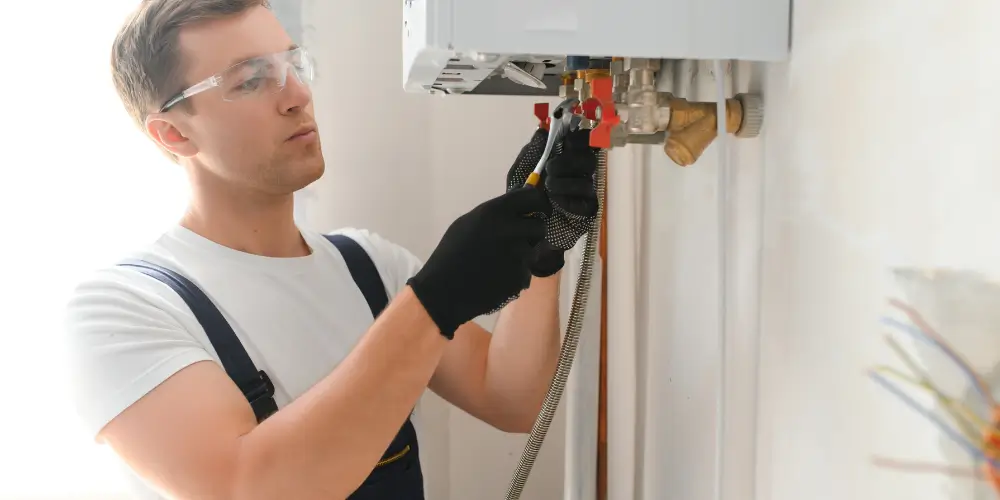
A standard British Gas boiler service covers a systematic safety and performance inspection carried out by a Gas Safe–registered engineer. The engineer follows a checklist to confirm safe operation, efficient combustion, and correct settings, documenting findings and advising on any concerns.
Typical tasks focus on basic maintenance and safety verification rather than repairs.
- Visual and operational checks: examination of the boiler, flue, controls, and visible pipework for leaks, corrosion, correct operation, and secure mounting. Learn why your boiler is dripping water.
- Combustion and efficiency tests: measurement of flue gases and pressure to guarantee safe combustion and identify efficiency issues. Know what should a boiler pressure be.
- Component inspection and cleaning: cleaning pilot assemblies, burners, and accessible heat exchanger surfaces; checking seals, valves, and electrical connections.
- Safety device verification and documentation: testing of safety cut-offs, thermostats, and pressure relief; completion of a service record with recommendations.
The service aims to prolong boiler life, maintain warranty conditions, and provide clear guidance on next steps if faults are found.
Common Extra Charges and Typical Repair Costs
How much extra might a homeowner expect to pay if a service uncovers issues?
Typical add-on charges fall into parts, labour, and call-out or diagnostic fees. Small parts seals, pressure relief valves, and thermostats often cost £30–£150 including fitting. Mid-range repairs such as pump replacements, diverter valves, or fan assemblies typically range from £150 to £400. Major component failures, such as heat exchangers or PCB (control board) replacements, can reach £500–£1,200 or more, sometimes prompting consideration of replacement rather than repair.
Labour is frequently charged hourly or as a fixed repair rate; expect £60–£120 per hour depending on region and engineer certification. Call-out or diagnostic fees may be applied if a problem is intermittent or requires return visits. VAT and disposal of old parts add modestly to totals. Homeowners should request written estimates before work and ask whether parts carry warranties and if any temporary fixes are being proposed, to avoid unexpected follow-up costs.
British Gas Cover Plans: Upfront Cost vs Long‑Term Value
When weighing whether British Gas cover plans are worth the price, homeowners should compare the upfront premiums against likely future repair and maintenance costs. The assessment centers on predictable spending, convenience, and risk tolerance rather than emotional appeal.
Coverage can reduce surprise bills but carries an ongoing cost that must be justified by avoided repairs or included services.
- Premiums versus average repair cost: calculate the typical annual policy expense and compare it with recent local repair averages to determine whether a break-even point is realistic.
- Inclusions and exclusions: identify which faults, parts, and call-outs are covered to estimate true value, not just headline price.
- Reliability and response time: factor in the premium placed on quick emergency service and authorised parts replacement.
- Flexibility and contract terms: consider cooling-off periods, cancellation fees, and whether short-term savings outweigh the costs of longer-term commitments.
A measured comparison helps determine if a plan is economically sensible for a specific household.
Seven Factors That Raise or Lower Your Service Cost
Choosing between paying premiums for ongoing cover and facing ad-hoc repair bills depends partly on the expected frequency and severity of service needs; cost variability for a single boiler service, however, stems from a set of specific factors. Seven primary elements influence the final price: boiler age and model complexity, accessibility and location, required parts or upgrades, warranty status, engineer qualifications or certification, time of service (emergency or out-of-hours), and regional labour rates. Each factor can raise or lower labour time and parts costs, altering estimates.
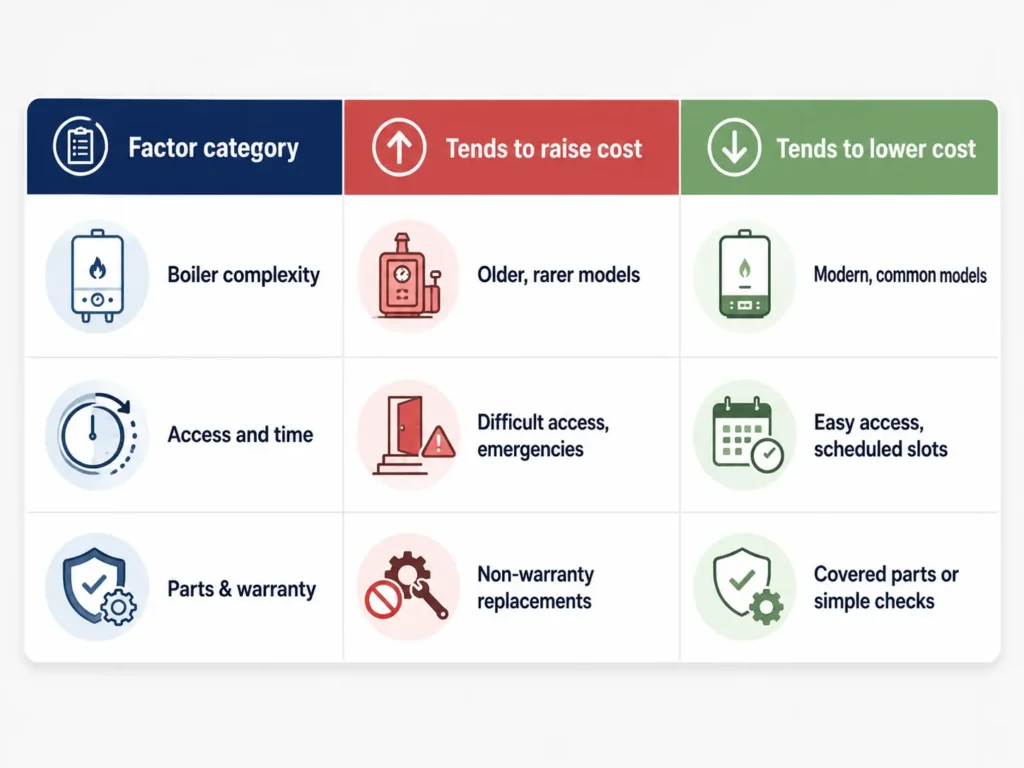
Understanding these factors helps anticipate quotes and decide between single services or ongoing cover.
British Gas vs Local Engineers: Price and Service Comparison
Why compare British Gas with local engineers? A clear comparison helps homeowners weigh cost, expertise and convenience.
British Gas Safe Engineer often offers standardised pricing, guaranteed parts sourcing and national coverage; local engineers typically present lower call-out fees, flexible scheduling and potentially quicker response in the immediate area.
Consider these concise points:
- Price: British Gas tends to charge higher fixed rates for servicing and call-outs; local engineers may undercut those costs, but prices vary by trade and region.
- Expertise and accreditation: British Gas provides uniform training and warranties; many local engineers hold Gas Safe registration and manufacturer certifications verify credentials.
- Service scope: National firms supply standard packages and consumer protections; independents can offer bespoke solutions and direct technician continuity.
- Availability and response: British Gas schedules via national systems; local engineers can be more adaptable for emergency visits or follow-up work.
Decisions hinge on trust, documented guarantees, and comparative quotes rather than on assumptions about a brand alone.
Should You Book a One‑Off Engineer or Buy Cover?
After weighing the costs, credentials, and response times of British Gas and local engineers, the next question is whether to call a one‑off engineer for a single service or invest in ongoing cover. A one‑off visit suits owners seeking a single safety check or those selling a property; it avoids regular premiums and gives flexibility to choose a trusted local technician.
Conversely, cover plans bundle annual services, priority repairs, and parts replacement, offering predictable budgeting and faster response times for breakdowns, which can reduce stress during the cold months. Deciding hinges on the boiler’s age, household risk tolerance, and financial habits. Newer appliances under warranty may only need occasional checks; older boilers often benefit from cover that mitigates the higher probability of failures.
Compare annual costs, excess charges and exclusions carefully: some policies exclude certain parts or require a specific service history. Ultimately, selecting between a one‑off engineer and ongoing cover is a balance of immediate cost, long‑term risk and the value placed on convenience and rapid repair response.
How to Prepare for a Service to Avoid Surprise Charges
Before the engineer arrives, homeowners should complete a few quick checks and gather essential information to prevent unexpected fees: a brief, structured preparation reduces the chance of surprise charges by clarifying scope and enabling efficient diagnostics.
Key actions focus on access, documentation, and basic observations.
- Confirm boiler model, age, and any fault codes visible on the display; note past service dates and receipts.
- Guarantee clear, safe access to the boiler and surrounding pipework; move items that obstruct inspection and provide a well-lit space.
- Run the heating briefly to reproduce issues and record unusual noises, smells, or pressure readings; this helps the engineer target the problem faster.
- Check warranties, manufacturer guides, and policy exclusions; know whether parts or labour are covered to avoid paying for items that should be included.
These steps align expectations, shorten on-site time, and help homeowners discuss potential costs before work begins.

Quick Checklist and Next Steps (Book, Compare, or Call an Engineer)
Several practical options remain for arranging service once preparation is complete: homeowners can book a trusted engineer directly, compare quotes from multiple providers, or call a specialist for immediate advice.
A concise checklist helps streamline the decision: verify Gas Safe registration, note boiler make and model, record recent fault symptoms, and confirm warranty or service plan status. When booking, request a clear price breakdown including call-out, labour and parts, and ask whether safety checks and a service report are included.
When comparing, use at least three quotes and match like-for-like services and guarantees rather than the lowest price alone. If uncertain, calling an engineer for a short diagnostic can clarify likely costs before committing.
Prepare availability windows and payment methods in advance to speed scheduling. After service, keep the receipt and service record for warranty and resale value. These steps reduce surprises and support an informed, cost-effective choice.
Frequently Asked Questions
Can a Service Uncover Health Hazards Like Carbon Monoxide Leaks?
Yes. A qualified service can detect signs of carbon monoxide leakage through flue, combustion and ventilation checks, and carbon monoxide detector tests; it cannot guarantee absence at all times, so continuous alarms and prompt action remain essential.
How Long Does It Take to Get British Gas Engineer Availability?
Typically a British Gas engineer’s availability is within 24–72 hours for routine appointments; urgent or emergency call-outs can be same day. Customers may experience longer waits during peak periods or bank holidays, depending on demand.
Are Parts Fitted During Service Covered by My Home Insurance?
Generally, no: parts fitted during a routine boiler service are usually not covered by standard home insurance. He should check his specific policy or any boiler/homecare plan for parts and labour cover, and confirm exclusions and claim limits.
Will a Service Affect My Boiler Manufacturer Warranty Status?
Yes. A service can affect warranty status: the manufacturer usually requires regular, documented servicing by a qualified engineer. Failure to follow those terms or provide proof may void the warranty, so records and approved technicians are essential.
Do Service Records Transfer if I Sell My Property?
Yes. Service records typically transfer with the property; the new owner inherits documented maintenance history, which supports warranty and resale value. Maintaining up-to-date, certified records helps validate continuous servicing and eases future warranty claims.
Conclusion
To conclude, understanding British Gas boiler service costs helps homeowners weigh upfront fees, what standard inspections include, and common extra charges. Comparing cover plans against one‑off engineer visits clarifies long‑term value, while considering factors that affect price, age, location, and required repairs aids budgeting. Preparing for a service reduces surprise costs. Ultimately, an informed comparison between British Gas and local engineers enables a cost‑effective choice aligned with individual risk tolerance and the boiler’s condition.