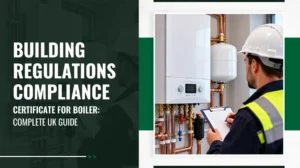

A building regulations compliance certificate for a boiler confirms that a new boiler installation or certain heating work has been completed in accordance with relevant Building Regulations requirements. It provides evidence that the installation meets the required standards for safety, efficiency and compliance.
When a new boiler is installed in a property, many homeowners and landlords assume that the boiler warranty or Gas Safety Certificate is the only documentation required. However, these documents serve different purposes. A Gas Safety Certificate confirms that gas appliances have been checked for safety, while a Building Regulations Compliance Certificate confirms that specific installation work has been notified and complies with Building Regulations.
Understanding when a certificate is required, who issues it and why it matters is important for homeowners, landlords and property professionals.
Key Takeaways
- A Building Regulations Compliance Certificate for a boiler confirms that the installation work has been notified and completed in line with relevant Building Regulations.
- It is different from a Gas Safety Certificate, as it confirms installation compliance rather than the safety condition of an appliance during a check.
- New boiler installations and certain heating system upgrades usually require notification through an approved competent person scheme.
- The certificate provides important evidence for property sales, future upgrades and compliance records.
- Boiler installations must meet relevant requirements, including Building Regulations Part L for energy efficiency and Part J for combustion appliances.
- Homeowners and landlords should keep boiler certificates, manuals, warranties and service records together for future reference.
- If a certificate is missing, a replacement may usually be requested through the relevant competent person scheme.
- Using a qualified and registered installer helps ensure boiler work is completed safely and legally.
Table of Contents
What Is a Building Regulations Compliance Certificate for a Boiler?
A Building Regulations Compliance Certificate is an official document confirming that certain building work has been completed in line with Building Regulations.
For boiler installations, the certificate normally confirms that the work has been carried out by a competent installer and that the installation meets relevant requirements, including safety and energy efficiency standards.
In England and Wales, boiler installations that involve controlled building work usually need to be notified to the local authority. Competent person schemes allow registered installers to self certify their work and notify the relevant authority on behalf of the property owner.
Once the installation has been registered, a compliance certificate is issued to confirm that the work has been notified.

Why Do You Need a Building Regulations Compliance Certificate for a Boiler?
A boiler installation certificate provides evidence that the installation has been completed correctly and legally.
The certificate can be important for several reasons:
- It demonstrates compliance with Building Regulations
- It provides proof that the installation was completed by a competent installer
- It may be required when selling or remortgaging a property
- It provides a record of major heating system upgrades
- It supports future maintenance and property records
Without the correct certification, property owners may experience difficulties when proving that heating work was carried out correctly.
Is a Building Regulations Certificate the Same as a Gas Safety Certificate?
No. A Building Regulations Compliance Certificate and a Gas Safety Certificate are different documents.
A Gas Safety Certificate confirms that a gas appliance has been inspected and is safe to use at the time of the check. It is usually issued after an annual gas safety check for rental properties.
A Building Regulations Compliance Certificate confirms that a new installation or relevant building work has been notified and complies with applicable regulations.
For example, after installing a new gas boiler:
- The Gas Safe engineer may complete commissioning and safety checks.
- The installation may need to be notified under Building Regulations.
- A compliance certificate is then issued after notification.
Both documents can be important, but they confirm different aspects of compliance.
When Is a Building Regulations Compliance Certificate Required for a Boiler?
A certificate is generally required when a new boiler is installed or when significant heating system work is carried out that falls under Building Regulations.
Examples include:
- Installing a new boiler
- Replacing an old boiler with a new heating appliance
- Installing a new heating system
- Making changes to heating controls
- Altering certain parts of the heating installation
The exact requirements depend on the type of work completed and the location of the property.
Minor repairs or servicing of an existing boiler usually do not require a Building Regulations Compliance Certificate.
Who Issues a Boiler Building Regulations Compliance Certificate?
In most cases, the certificate is issued following notification through a competent person scheme.
Many heating engineers and boiler installers are registered with schemes that allow them to self certify their work. Examples include Gas Safe registered installers who are authorised to notify certain types of heating work.
After completing the installation, the installer submits details of the work. The relevant certification body then issues the Building Regulations Compliance Certificate to the property owner.
The certificate is not normally created by the homeowner or landlord. It is linked to the installation notification made by the competent installer.
How Long Does It Take to Receive a Boiler Compliance Certificate?
The time taken to receive a Building Regulations Compliance Certificate can vary depending on the installer and certification scheme.
In many cases, the certificate is sent to the property owner within a few weeks after the installation has been registered.
If a certificate has not arrived, the first step is usually to contact the installer and confirm that the installation was properly notified.
Keeping this certificate with other property documents is recommended because it may be needed years later.
What Information Is Included on a Boiler Compliance Certificate?
A Building Regulations Compliance Certificate normally includes details such as:
- Property address
- Installation date
- Installer details
- Competent person scheme information
- Type of work completed
- Certificate or notification reference number
The information provides a record that the installation was notified and completed through the correct process.
What Happens If You Do Not Have a Boiler Compliance Certificate?
If a boiler installation should have been notified but no certificate exists, it can create issues in the future.
Possible problems include:
- Difficulty proving compliance during a property sale
- Delays during conveyancing
- Additional checks being requested
- Potential requirement for retrospective approval
A missing certificate does not automatically mean the boiler installation is unsafe, but it means there is no clear documentary evidence that the required notification process was completed.
Can You Get a Replacement Boiler Compliance Certificate?
Yes. If a certificate has been lost, a replacement may usually be requested.
The process depends on which competent person scheme was used and whether the original installation records are available.
A property owner may need information such as:
- Property address
- Installation date
- Installer details
- Certificate reference number if available
If the original installer cannot be contacted, the relevant certification body may be able to help locate the record.
Do Landlords Need a Boiler Building Regulations Certificate?
Landlords should keep records of heating installations and relevant compliance documents.
While landlords have specific legal duties relating to gas safety checks, maintaining records of boiler installations and improvements helps demonstrate that heating systems have been installed correctly.
For rental properties, landlords must also ensure that gas appliances are checked annually by a Gas Safe registered engineer and that tenants receive the required gas safety information.
What Regulations Apply to Boiler Installations?
Boiler installations in England and Wales must comply with relevant Building Regulations requirements.
Important areas include:
Building Regulations Part L
Part L covers conservation of fuel and power. It includes requirements relating to energy efficiency, heating system performance and controls.
Building Regulations Part J
Part J covers combustion appliances and fuel storage systems. It includes requirements relating to safe installation, ventilation, discharge of combustion products and protection from combustion risks.
Gas Safety Regulations
Gas appliances must be installed and maintained safely by appropriately qualified professionals in accordance with gas safety requirements.
These regulations work together to ensure boilers are safe, efficient and suitable for the property.

How Can You Check If Your Boiler Installation Was Registered?
If you are unsure whether a boiler installation has been registered, you can check through the relevant competent person scheme.
You may need details such as:
- Property address
- Approximate installation date
- Installer information
Homeowners buying a property should request copies of available certificates and installation documents as part of the purchase process.
Why Should You Keep Your Boiler Compliance Certificate?
A boiler compliance certificate is an important property document and should be stored safely.
It can help when:
- Selling a property
- Carrying out future heating upgrades
- Demonstrating compliance history
- Maintaining accurate building records
Keeping certificates together with boiler manuals, warranties and service records provides a complete history of the heating system.
Frequently Asked Questions
What is a Building Regulations Compliance Certificate for a boiler?
A Building Regulations Compliance Certificate confirms that a boiler installation or relevant heating work has been notified and completed according to Building Regulations requirements.
Is a Building Regulations Certificate required for replacing a boiler?
Yes, a replacement boiler installation normally requires notification under Building Regulations, and a compliance certificate is usually issued after the work is registered.
Is a boiler compliance certificate the same as a Gas Safety Certificate?
No. A Gas Safety Certificate confirms an appliance has been checked for safety, while a Building Regulations Compliance Certificate confirms installation compliance.
Who provides the boiler compliance certificate?
The certificate is issued after the installer notifies the work through an approved competent person scheme.
How long does a boiler compliance certificate last?
A Building Regulations Compliance Certificate does not expire. It remains a record that the installation was notified and completed at the stated date.
Conclusion
A building regulations compliance certificate for a boiler provides important evidence that a boiler installation has been notified and completed in accordance with relevant Building Regulations requirements.
It is different from a Gas Safety Certificate because it confirms compliance of the installation work rather than simply confirming that an appliance is safe at the time of inspection.
Homeowners and landlords should ensure that new boiler installations are completed by competent installers and that the correct certification is received and stored safely. Having the right documentation helps demonstrate compliance, supports property transactions and provides confidence that heating work has been completed correctly.