
Why Do My Electrics Keep Tripping? Frequent trips usually indicate overloads, short circuits, or earth‑leakage faults in a circuit, an appliance, or the consumer unit. Overloads happen when too many high‑draw devices run on one circuit; short circuits occur from damaged insulation or loose connections and trip instantly. RCDs react to earth leakage, often from faulty appliances, moisture, or ageing cables. Safe isolation and stepwise testing can locate the culprit. Continue for clear steps, causes, and when to call a professional.
Key Takeaways
- Overloads: too many devices on a single circuit can cause repeated trips; redistribute loads or add dedicated circuits for high-draw appliances.
- Short circuits: damaged insulation or loose connections cause immediate trips and require immediate inspection and repair.
- Earth leakage/RCD trips: faulty appliances or wiring that leak current to earth will trip RCDs/RCBOs, requiring the device to be isolated.
- Intermittent faults: heat, moisture, or aging components can cause delayed or sporadic trips and need systematic testing.
- Upgrade and professional help: outdated panels, insufficient capacity, or persistent faults warrant a licensed electrician and possible system upgrades.
Table of Contents
Identify the Trip Source: Breaker, RCD, or Appliance?
Where exactly is the fault: the main breaker, an RCD/RCBO, or a specific appliance? A systematic approach helps isolate the source of the trip. First, note which device trips: the main breaker cuts power to the whole property, whereas individual MCBs affect one circuit and RCDs/RCBOs respond to earth leakage. Observe whether specific appliances or circuits become powerless when a particular protective device trips. Reset the device and see if it trips immediately, only under load, or after a delay. If an RCD/RCBO trips, suspect a leakage path; if an MCB trips without earth-fault indication, suspect overload or a phase-to-neutral/phase-to-phase fault. Swap appliances between circuits to test whether the fault follows the device. Keep records of patterns: time, appliance use, and environmental conditions (moisture, recent work). When patterns point to a circuit or protective device rather than an appliance, consult a qualified electrician for safe diagnosis and corrective action.
Common Causes of a Tripping Breaker (Overloads, Short Circuits)
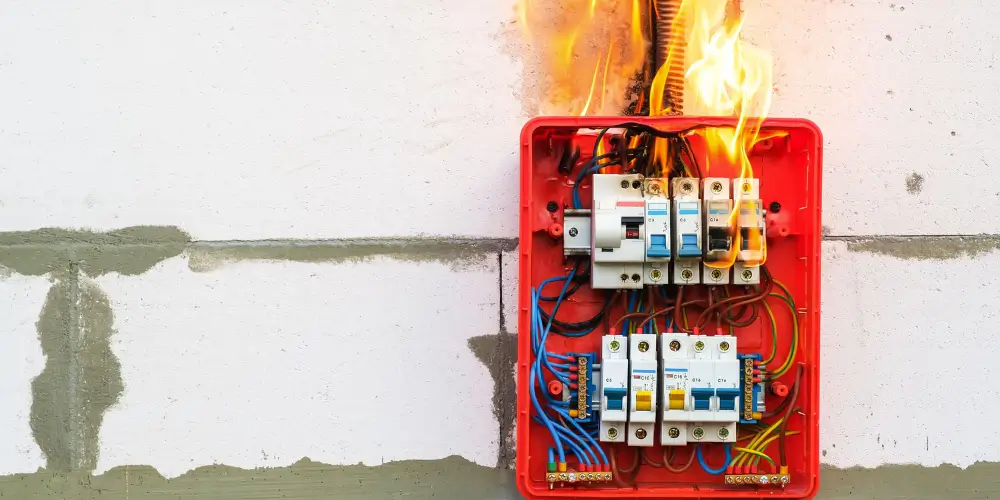
Having isolated whether the trip originates from the main breaker, an RCD/RCBO, or a circuit breaker, attention turns to the most common mechanical and wiring faults that cause breakers to trip: overloads and short circuits. Overloads occur when too many devices draw current on a single circuit, heating wiring and forcing the breaker to open to prevent damage. Typical signs include gradual socket warming, frequent trips during heavy use, and restoration after reducing the load. Short circuits are abrupt connections between live and neutral or earth, producing a large fault current that trips the circuit breaker immediately; they often stem from damaged insulation, loose connections, or faults inside appliances. Unlike overloads, shorts may be accompanied by burning smells, visible sparking, or scorched outlets. Proper diagnosis distinguishes intermittent overload patterns from instantaneous short-circuit events. Both conditions warrant corrective action: redistribute loads, replace damaged wiring, secure terminals, and consult a qualified electrician for repairs to guarantee compliance and safety.
How to Isolate a Faulty Appliance Safely (Step‑by‑Step)
Start by turning off and unplugging all suspect appliances on the affected circuit, then reset the breaker or RCD to see if the trips persist; if the breaker stays closed, reconnect appliances one at a time to identify the faulty unit. The methodical process reduces guesswork and keeps risk low. Observe each appliance for immediate trips, unusual smells, noise or heat. Record results and stop when the fault repeats.
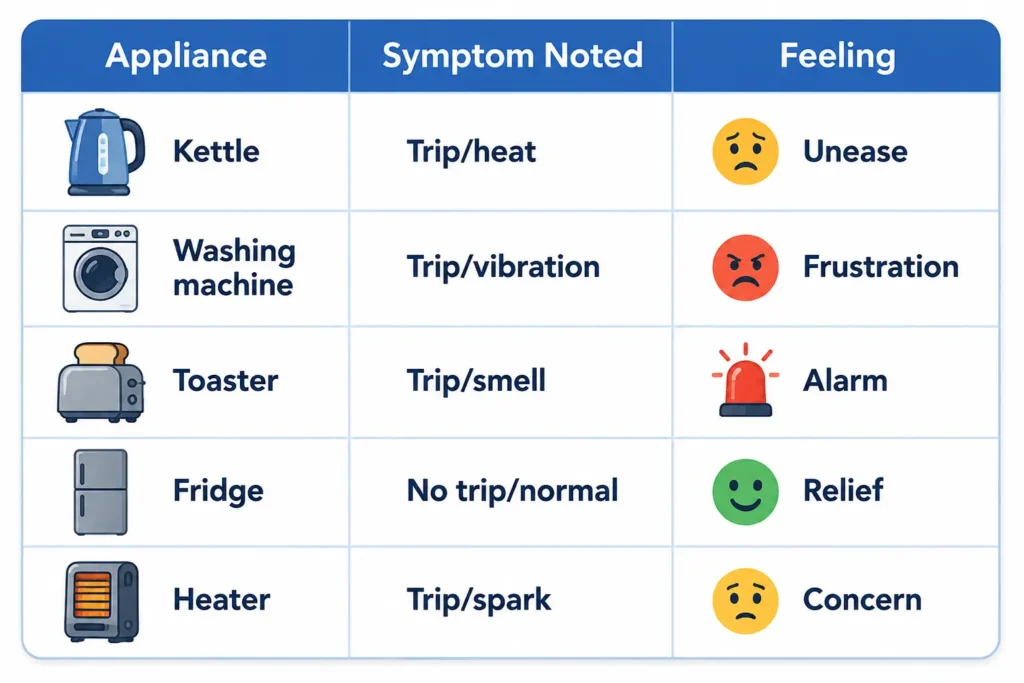
If a specific device causes a trip, unplug it and avoid further use. For unclear cases or signs of damage, seek a qualified electrician. Documentation helps a professional diagnose issues more quickly and prevent repeat incidents.
Why RCDs Trip: What Frequent Trips Mean
Although designed to prevent electric shock and fire, an RCD will trip whenever it detects an imbalance between live and neutral currents, signaling leakage to earth that can arise from worn insulation, moisture ingress, damaged cords, faulty internal components or intermittent contact. Frequent RCD trips indicate a persistent or recurring source of leakage rather than an isolated event. This may manifest as nuisance tripping when multiple appliances are used, suggesting cumulative leakage within a circuit, or as regular trips tied to a specific device or time of day.
Why Do My Electrics Keep Tripping? Repeated operation also points to a potentially deteriorating protective device: an RCD can become overly sensitive or fail internally. Consistent tripping should prompt systematic isolation: determine whether a single appliance, a socket group, or a circuit is triggering the fault. Records of trip patterns (when, what was running) help professionals pinpoint causes. Because repetitive tripping impairs protection and signals risk, timely investigation and repair by a competent electrician are advised.
Wiring Faults, Moisture, Pests, and Ageing Cables
Persistent RCD trips often trace back to faults in the fixed wiring rather than individual appliances; damaged insulation, loose connections, or degraded cable sheaths create leakage paths that will repeatedly unbalance a circuit. Moisture ingress into junction boxes, conduit and cable cores, often from roof leaks, condensation or damp basements, lowers insulation resistance and can cause intermittent earth faults. Rodents and insects chew sheaths or nest in voids, exposing conductors and creating short or leakage paths that manifest as unpredictable trips. Over decades, thermal cycling, UV exposure and mechanical wear harden and crack insulation; armoured and non-armoured cables both deteriorate, increasing fault likelihood. Connections at consumer units and accessories can oxidise or loosen, producing resistive heating and arcing faults. These wiring-origin problems tend to affect multiple outlets or zones, are less predictable than single-appliance faults, and often require systematic inspection and testing by a qualified electrician to identify location and remedial action.
Safe DIY Troubleshooting Steps to Try Now
Begin by de-energising the affected circuit at the consumer unit and visually inspecting accessible outlets, switches and appliance cords for signs of damage, moisture or burn marks; this minimises risk and often reveals obvious faults. Next, isolate the problem by unplugging all devices on that circuit, then re-energise and reset the breaker or RCD. If it holds, plug appliances back in one at a time to identify the load causing the trip. Swap suspected appliances to a different known-good circuit to confirm whether the appliance or the wiring is at fault. Tighten loose socket faceplates and check that wiring connections under removable plates are secure only after turning the power off. Test the RCD function using its built-in test button to verify it operates. Replace blown fuses in plug-in devices where applicable. Keep a simple log of when trips occur and which actions were taken; this information aids a qualified electrician if further investigation is needed.
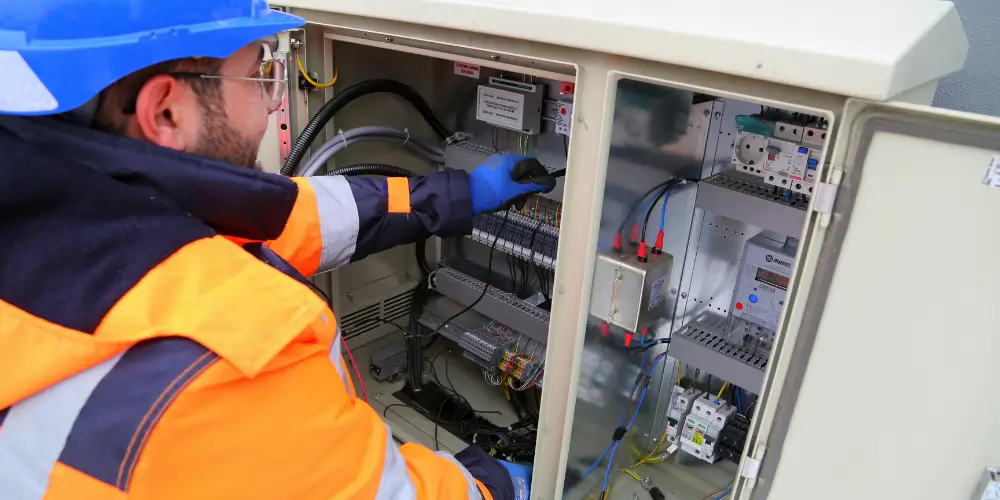
Emergency Signs: When to Stop and Call an Electrician
If breakers or RCDs trip alongside burning smells, visible sparks, smoke, or scorch marks, power must remain off and a qualified electrician contacted immediately. Other urgent signs include repeated trips after a reset, persistently warm or buzzing outlets, and charred or discolored socket plates. Sudden loss of power, a metallic taste, tingling sensations from appliances, or frequent neutral-to-earth faults indicate hazardous wiring or degraded insulation. Water contact with electrical fittings due to leaks or flooding increases risk and requires isolation and professional assessment.
Why Do My Electrics Keep Tripping? Circuit breakers that fail to reset or emit unusual noises point to internal damage. Where older wiring, overloaded consumer units, or DIY alterations are suspected, further use is unsafe until it has been inspected. Medical equipment failure or compromised safety devices in the home also demand immediate expert attention. In all these scenarios, avoiding further attempts at repair and securing the area until a licensed electrician evaluates the system is essential to prevent fire, electrocution, or equipment damage.
Practical Fixes, Prevention Tips, and When to Upgrade
Addressing frequent trips combines targeted fixes, routine prevention, and timely upgrades to reduce hazards and restore reliable power. Practical fixes begin with isolating the faulty circuit: unplug nonessential appliances, reset the breaker, and test devices one at a time to identify overloads or short circuits. Replace damaged cords and faulty plugs; tighten loose terminal connections; and swap out worn fuses or breakers with correctly rated replacements. Preventive measures reduce recurrence: distribute loads across circuits, avoid daisy-chaining extension cords, and keep appliances maintained and dry. Consider upgrades when persistent trips occur despite repairs, the panel is old, or household demand has increased.
- Replace outdated fuse boxes or single-pole breakers with modern RCD/MCB systems for improved protection.
- Install dedicated circuits for high-draw appliances (oven, dryer, HVAC).
- Schedule periodic inspections by a licensed electrician to catch deterioration early.
- Add surge protection and label circuits to simplify troubleshooting.
Prioritise safety: if uncertainty remains, seek professional assessment rather than guessing.
Frequently Asked Questions
Can a Specific Appliance Brand Cause Repeated Trips More Than Others?
Yes. They say certain appliance brands can be associated with repeated trips if their models have consistent design faults, poor insulation, or inadequate overload protection; however, wiring, installation, and usage typically account for most recurrent circuit trips.
Do Smart Home Devices or EV Chargers Require Special Breaker Types?
Yes. He notes that many smart home devices run on standard circuits, but high-power EV chargers usually require dedicated circuits and specific breakers (e.g., higher amperage, GFCI/AFDD where required) installed per local code and electrician guidance.
How Do Solar Panels or Battery Systems Affect Household Tripping?
Solar panels and battery systems can introduce imbalances, backfeeds, harmonics or DC leakage that trip breakers or RCDs; installers guarantee proper inverter settings, isolation devices, and coordinated protection to minimise nuisance trips and meet electrical codes.
Can Electromagnetic Interference From Nearby Equipment Trip Breakers?
Yes. He notes electromagnetic interference (EMI) can indirectly cause nuisance trips: sensitive electronic breakers or residual-current devices may misoperate due to conducted or radiated noise, poor grounding, or faulty equipment coupling, prompting protective shutdowns.
Will Insurance Cover Damage From Recurring Electrical Trips?
Coverage depends on policy details and cause: insurers may cover damage if trips result from sudden, accidental peril or covered equipment failure, but deny claims for wear, neglect, or code violations; documentation and electrician reports strengthen claims.
Conclusion
Why Do My Electrics Keep Tripping? Electrical trips most often signal overloads, short circuits, faulty appliances, RCD sensitivity, or degraded wiring. Identifying whether the breaker, RCD, or an appliance is tripping helps narrow down the fault. Safe isolation and stepwise testing can reveal culprit devices, but persistent, unexplained, or dangerous symptoms, such as sparks, burning smells, or repeated RCD trips, require immediate professional attention. Regular maintenance, timely appliance replacement, moisture control, and upgrading old wiring reduce trips and improve safety and reliability.