
A Type 2 fire risk assessment is a focused, proportionate evaluation for buildings of moderate complexity or changing occupancy. It records ignition sources, combustible materials, means of escape and basic fire‑fighting measures, then prioritises practical remedial actions and review timelines. It is typically required for multi‑tenant residential blocks, mixed‑use premises, small hotels, care homes with lower‑dependency residents and workplaces with frequent layout or process changes. Further sections outline who may perform it, typical findings and next steps.
Key Takeaways
- A Type 2 Fire Risk Assessment is a streamlined, proportionate evaluation for buildings with uncomplicated layouts and low to moderate fire risk.
- It catalogs ignition sources, combustible materials, escape routes, and firefighting and detection provisions.
- It’s required for moderate-complexity premises like multi-tenant residential blocks, small hotels, mixed-use sites, and low-dependency care homes.
- Competent assessors trained in fire safety must conduct it, with dutyholders verifying qualifications and impartiality.
- Deliverables include an executive summary, prioritised remedial actions with deadlines, photographic evidence, and review timelines.
Table of Contents
What Is a Type 2 Fire Risk Assessment and Do You Need One?
What exactly constitutes a Type 2 fire risk assessment and when is it required? A Type 2 assessment is a streamlined, practical evaluation aimed at premises with uncomplicated layouts and low occupancy risk. It catalogs ignition sources, combustible materials, means of escape, detection and alarm provisions, and basic fire-fighting equipment. It emphasises proportional measures over exhaustive technical analysis, balancing safety with minimal intrusion.
The assessor identifies hazards, evaluates likelihood and potential consequences, and recommends sensible, achievable controls that preserve operational freedom while reducing risk. Documentation is concise: clear findings, prioritised actions, and review timelines. For occupants and owners who value autonomy, a Type 2 approach supports independent decision-making by presenting straightforward options rather than prescriptive mandates.
It enables informed choices about mitigation investments and routine responsibilities. The scope excludes complex structural fire dynamics, detailed engineering controls, and high-risk assemblies, focusing instead on pragmatic, easily implemented safeguards that maintain freedom of use without compromising basic safety.
When Is a Type 2 Fire Risk Assessment Required?
When is a Type 2 fire risk assessment appropriate? A Type 2 assessment is required when buildings present moderate complexity and changeable occupancy patterns that basic checks cannot reliably cover. Examples include multi-tenant residential blocks, mixed-use premises with shared escape routes, small hotels, care homes with lower-dependency residents, and workplaces where processes or layouts alter frequently. It suits situations where evacuation strategy needs clearer definition, compartmentation and means of escape demand verification, and fire safety management must account for varying numbers of vulnerable or transient occupants.
Regulators, insurers, and prudent dutyholders will request this level when life safety depends on planned evacuation procedures, when previous assessments identified deficiencies, or when significant refurbishment, extension, or change of use occurs. The assessment becomes particularly important where passive and active systems interact, and a documented, systematic appraisal of structure, detection, alarm, and escape provisions is necessary to enable occupants to maintain autonomy and safe egress.
Who Can Legally Carry Out a Type 2 Fire Risk Assessment?
Who may legally conduct a Type 2 fire risk assessment depends on jurisdictional legislation and the specific duties assigned to the premises’ responsible person or dutyholder. Typically, competent persons with appropriate training, qualifications and practical experience undertake these assessments. Competence may be demonstrated by recognised certifications, relevant fire safety training courses, or membership in professional bodies; some jurisdictions permit in-house staff if they can prove sufficient expertise. Where law requires independent assessment, accredited fire safety consultants or third-party assessors must be engaged.
Liability and accountability rest with the dutyholder, who must verify the assessor’s credentials and impartiality. Contractors offering assessment services should provide clear scopes, evidence of competence and professional indemnity insurance. Remote or automated tools can assist but do not replace qualified judgment where regulations demand human oversight. Ultimately, choosing an assessor balances legal compliance, technical competency and the dutyholder’s freedom to select qualified personnel or accredited external providers.
What a Type 2 Fire Risk Assessment Covers: Checklist of Deliverables
After confirming the assessor’s competence and legal standing, the report must clearly list the tangible outputs produced by a Type 2 fire risk assessment. The checklist of deliverables typically includes: an executive summary outlining key findings and immediate actions; a site description and scope defining areas inspected and exclusions; hazard identification and risk scoring for ignition sources, fuel loads, and occupant vulnerability; means of warning and escape analysis, including evacuation times and egress capacity; passive and active fire protection status, with compartmentation and detection/alarm system condition;
recommendations ranked by priority, cost estimate ranges, and responsible parties; a remedial action plan with deadlines and verification methods; photographic evidence and annotated plans showing critical locations; statutory compliance matrix referencing relevant regulations and guidance; training and maintenance requirements; and a clear record of limitations, assumptions, and signature of the assessor. These deliverables enable owners to act decisively and preserve freedom of operation.
How Type 2 Differs From Types 1–4: Quick Comparison
How does a Type 2 fire risk assessment stand apart from Types 1, 3 and 4? A Type 2 assessment focuses on occupied buildings with moderate complexity: it balances practical hazard control with occupant evacuation freedom, unlike Type 1’s simple domestic focus, Type 3’s high-risk industrial scrutiny, or Type 4’s complex mixed-use emphasis. It prioritises clear evacuation routes, communal safety measures, and manageable technical recommendations that preserve building usability.
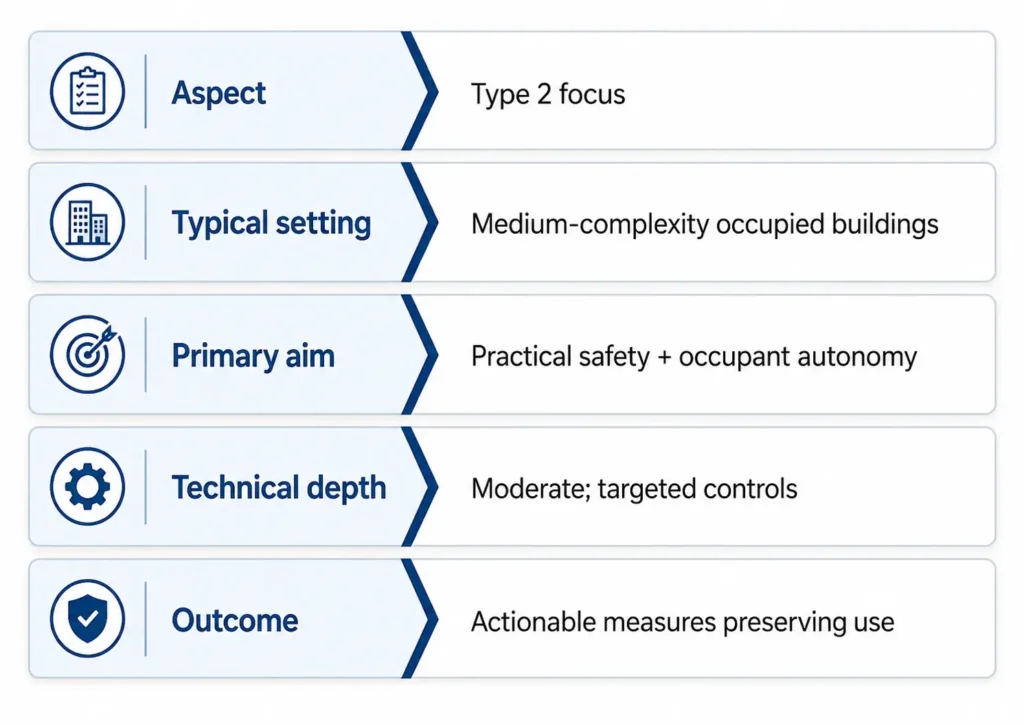
In contrast to other types, Type 2 avoids exhaustive engineering redesigns while offering more than a basic checklist. It suits managers who value safety without onerous constraints, delivering straightforward controls, clarified responsibilities, and proportionate improvement actions that maintain freedom of movement and function.
How to Commission a Type 2 Assessment: Steps, Timeline and Cost
When commissioning a Type 2 fire risk assessment, a responsible manager should first define the building scope, objectives, and any site-specific constraints, then procure a suitably qualified assessor through clear terms of reference; this guarantees that the appointment, access arrangements, data provision, and expected deliverables are agreed before the survey begins. The commissioning process then follows discrete steps: brief issuance, bid evaluation, contract award, pre-survey data exchange and on-site inspection.
Timelines vary by building size and complexity; simple mid-rise structures typically require one to two weeks from contract to draft report; larger or operationally complex sites may extend to four to six weeks. Cost depends on floor area, vertical complexity, access restrictions and specialist input; expect a modest building to incur a baseline fee, with premium charges for night work, confined spaces or heritage fabric. Payment terms should align with deliverables: deposit, interim milestone and final sign-off. Clear governance and flexibility enable swift, reliable completion without compromising autonomy.
Typical Findings, Recommended Remediations and Risk Priorities
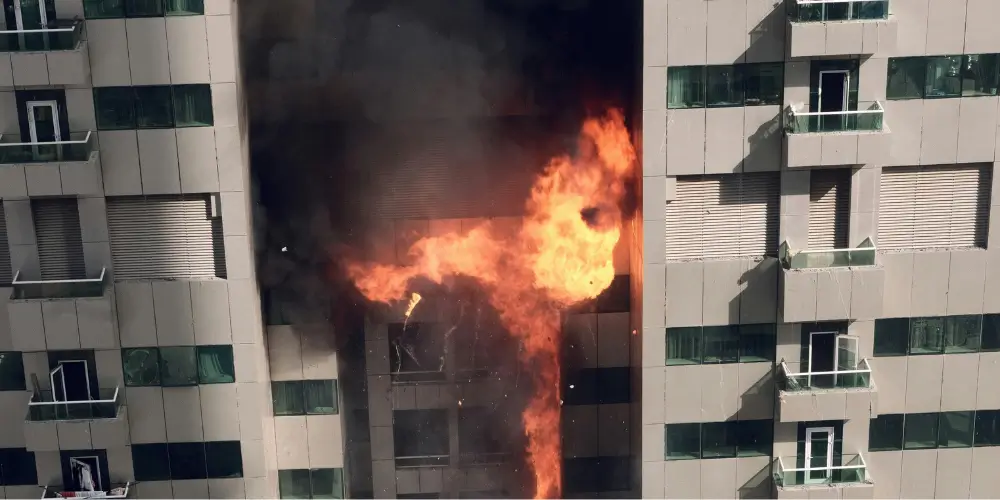
Many Type 2 assessments reveal a consistent set of deficiencies faulty compartmentation, inadequate escape route signage or lighting, poorly maintained fire doors, obstructed egress paths, and lapses in detection or suppression system coverage each of which carries distinct likelihood and consequence profiles. Inspectors commonly note penetration breaches, missing or non-compliant fire-stopping, and degraded seals that compromise compartment integrity. Remediations prioritise reinstating barriers, repairing or replacing doors, and restoring detection and suppression functionality. Secondary findings include combustible storage in escape routes and unserviced emergency lighting; remedies focus on housekeeping, clear signage, and scheduled maintenance.
Risk priorities are set by combining probability and impact: immediate rectification for issues likely to cause rapid fire spread or prevent evacuation; planned remediation for moderate risks; and monitoring for low-impact items. Cost, operational disruption, and legal obligations inform sequencing. Recommendations favor practical, rights-respecting measures that enable occupants to retain autonomy while restoring acceptable safety margins.
Using Type 2 Findings to Update Your Building’s Fire Strategy
The Type 2 assessment’s documented deficiencies should directly inform revisions to the building’s fire strategy, aligning corrective actions, evacuation protocols, and resourcing with identified vulnerabilities.
The assessor’s clear findings become the basis for targeted changes: prioritised remedial works, adjusted compartmentation plans, and recalibrated detection and suppression coverage. Evacuation procedures are refined to reflect occupant mobility, travel distances, and identified egress bottlenecks, enabling occupants greater autonomy within safer parameters. Resourcing aligns with risk levels, reallocating trained staff, firefighting equipment, and maintenance budgets where they yield the most freedom-preserving benefit.
Policy updates specify timelines, responsibilities, and measurable outcomes, allowing leaders to act confidently and transparently. Regular review cycles are scheduled, using follow-up inspections to confirm effectiveness and to adapt strategy as building use evolves. Documentation and communication channels guarantee occupants understand changes, fostering a culture where safety supports, rather than restricts, everyday independence.
Frequently Asked Questions
How Long Is a Type 2 Assessment Report Valid Before Reassessment?
A Type 2 assessment report typically remains valid for up to three years, though reassessment may be required sooner if significant changes, incidents, or regulatory updates occur; the responsible party retains freedom to reassess whenever prudent.
Will Insurance Premiums Decrease After a Type 2 Assessment?
A Type 2 assessment can lower insurance premiums if it uncovers and mitigates risks, demonstrating reduced exposure; insurers may offer discounts, but changes depend on policy terms, insurer discretion, and documented risk reduction evidence.
Are Tenants Notified When a Type 2 Assessment Is Conducted?
Yes. Tenants are typically notified before a Type 2 assessment, ensuring access and safety; communications emphasise tenant autonomy, outlining inspection scope, timing, and any temporary restrictions while preserving tenants’ freedom to ask questions and refuse nonessential intrusions.
Can a Type 2 Assessment Delay Building Occupation or Permits?
Yes. They may delay occupation or permits if recommendations require remediation before safe use; the responsible party can contest findings, expedite works, or seek conditional occupancy, balancing safety obligations with the desire for timely access and minimal interference.
Do Type 2 Assessors Provide Training for On-Site Staff?
Yes. The assessor often offers training for on-site staff, covering fire prevention, evacuation procedures, and use of safety equipment. They empower occupants with practical skills while respecting autonomy and encouraging responsible, informed decision-making.
Conclusion
A Type 2 fire risk assessment provides a detailed, compartment-level examination of fire hazards, detection, suppression and evacuation measures in multi-occupancy or complex premises. It is required where shared facilities or varying occupancies create interactions beyond a single responsible person’s control. Qualified fire safety professionals or competent assessors must conduct it. The assessment’s recommendations inform remediation priorities, compliance actions and updates to the building’s overall fire strategy to reduce risk and improve occupant safety.