Rewiring a house typically costs $3,000–$15,000, with most modest single-family homes or the entire home being updated. Labour is falling between $5,000 and $10,000. Prices depend on home size, accessibility of existing wiring, local code requirements, and whether only problem areas are the largest expense, followed by materials and any wall repairs. Understanding how home size, layout, and upgrade choices affect cost helps homeowners plan a safer, more predictable project with fewer financial surprises.
Key Takeaways
- Full-house rewiring typically ranges from $3,000 to $15,000, driven mainly by home size, labour hours, and code-required upgrades.
- Expect about $4–$8 per square foot, with compact homes costing $4,000–$8,000 and larger homes exceeding $18,000.
- Hidden issues such as unsafe DIY wiring, inaccessible cavities, and needed wall repairs can significantly increase the total project cost.
- You can reduce expenses by planning clearly, doing non-technical prep, bundling work with other renovations, and phasing rewiring by priority areas.
- Choose an experienced electrician who provides detailed written estimates, separate labour and materials, explains safety choices, and offers a realistic, predictable timeline.
Table of Contents
What Does It Cost to Rewire a House?
Although the exact price varies widely, rewiring a house typically costs between $3,000 and $15,000, depending on the size of the home, accessibility of existing wiring, and the extent of upgrades required. For many owners, that range represents the cost of shedding old limitations, outdated wiring, flickering lights, and overloaded circuits and gaining the freedom to use power without anxiety.
Most whole‑home projects in modest single‑family houses land in the $5,000 to $10,000 range, while larger or older properties with complex layouts tend toward the upper end. Partial rewiring in just a few rooms can be far less, giving budget‑conscious homeowners room to phase work over time.
These figures usually reflect a complete removal of unsafe wiring, installation of new circuits, and modernisation of outlets and switches.
Key Cost Drivers: Labour, Materials, and Access
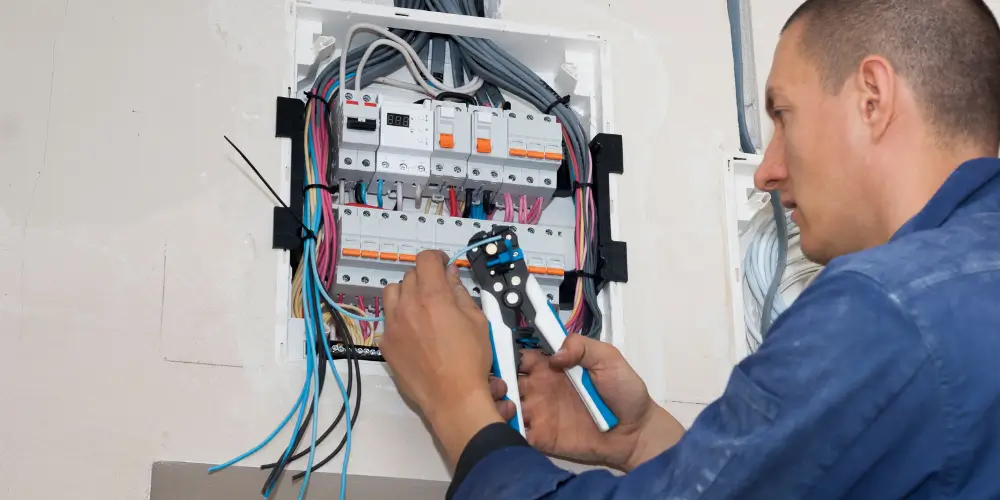
Several core factors consistently shape the final price of a rewiring project: the electrician’s labour, the quality and quantity of materials, and how easy it is to access existing wiring. Labour typically claims the largest share, reflecting the electrician’s skill, licensing, and time on site. Complex layouts, strict local codes, and coordination with inspectors can all increase the number of hours billed.
Material costs depend on wire type, breaker panel upgrades, added circuits, and modern safety devices such as AFCI or GFCI protection. Choosing higher‑grade components can raise upfront cost but often delivers greater long‑term reliability and flexibility.
Access plays a decisive role. Open basements, crawlspaces, and attics keep costs lower, while finished walls, tight spaces, or historic details demand more careful, time‑consuming work.
- Relief in knowing the main drivers before committing
- Confidence to question vague, lump‑sum quotes
- Determination to prioritise safety without overspending
- A sense of control over a major house upgrade
Rewiring Costs by Home Size (With Price Ranges)
When planning a full rewire, estimating costs based on home size is a practical starting point before getting job‑specific quotes. Most electricians price projects by square footage, then adjust for layout and complexity, so homeowners can quickly see whether a rewire fits their budget or demands phasing. For a compact 800–1,000 sq. ft. home, full rewiring typically runs $4,000–$8,000. A mid‑size 1,200–1,800 sq. ft. home usually falls between $6,000 and $12,000.
Larger 2,000–2,500 sq. ft. homes often range from $8,000 to $16,000, while very large or custom homes above 3,000 sq. ft. can easily exceed $18,000–$25,000. Per‑square‑foot pricing typically ranges from $4–$8, but more intricate homes may push beyond that. These ranges help owners compare quotes, decide between full and partial rewires, and choose whether to tackle the work all at once or in stages that match their financial comfort.
How Your Home’s Age and Condition Affect Rewiring Costs
Because a home’s wiring evolves over decades, its age and overall condition often drive rewiring costs as much as square footage does.
Older homes may contain knob‑and‑tube or aluminium wiring, outdated panels, and brittle insulation, all of which demand more labour, materials, and strategic planning. Newer structures usually require fewer corrections, but poor workmanship or DIY “shortcuts” can quickly erase that advantage. Wear, moisture damage, and prior renovations also raise costs.
Each patched wall, hidden junction box, or overloaded circuit adds investigative time and careful repair. When structural elements are fragile plaster walls, original trim, or historic details, electricians must work slowly to preserve them, increasing labour hours.
Homeowners weighing these realities often feel a tension between safety and independence:
- Freedom from worrying about overloaded, buzzing circuits
- Freedom to run modern tech without tripping breakers
- Freedom to expand or remodel confidently
- Freedom to sleep knowing the system is truly sound
Hidden Rewiring Expenses Homeowners Often Miss
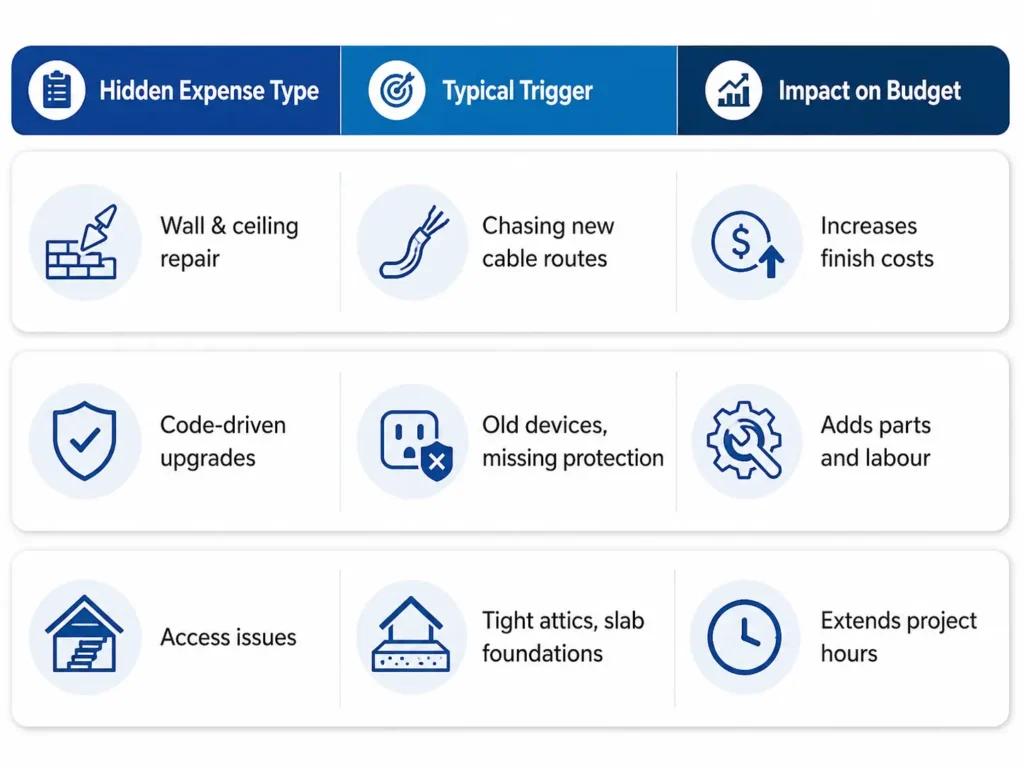
Although homeowners often focus on permits, panels, and per‑square‑foot estimates, many of the most impactful rewiring costs emerge only once walls are opened and work begins. Hidden junction boxes, brittle insulation, or unsafe DIY fixes can force extra labour and materials, limiting how far the budget actually stretches. Those who value flexibility in how they live and use their space benefit from anticipating these surprises instead of reacting under pressure.
Unexpected repairs frequently appear in the form of plaster patching, repainting, or upgrading outdated smoke detectors and GFCI protection to satisfy today’s codes. Furniture moving, cleanup, and longer project timelines can also add to the bill.
Whole-House vs Room-by-Room Rewiring Costs
Whole‑house rewiring and room‑by‑room upgrades follow the same basic principles but create very different cost profiles and disruptions. A full rewiring typically delivers the best price per square foot, since electricians open walls once, run new circuits efficiently, and complete inspections in a single sequence.
However, it demands a higher upfront investment and often requires the occupants to vacate key areas, if not the entire home, during intense phases of work. Room‑by‑room rewiring spreads expenses over time and lets residents phase projects around their lives and budgets.
Yet repeated mobilisation, multiple permits, and recurring patching can push the total bill higher than that of a single extensive project. Homeowners weighing these paths often balance money against movement, comfort, and control:
- Desire to stay in the home without major disruption
- Need to align upgrades with cash flow and priorities
- Urge to future‑proof the entire electrical system
- Preference for flexible, staged decision‑making
How to Save on Rewiring Costs Without Cutting Corners
While rewiring is a major investment, homeowners can reduce costs considerably by planning strategically rather than compromising safety or code compliance. They gain the most control over the budget by starting with a clear electrical plan: mapping outlets, lighting, and future loads so changes aren’t made mid-project, when they’re most expensive.
They can also lower labour time by doing non-technical prep work themselves moving furniture, clearing access to walls, lifting carpets, and arranging easy attic or crawlspace entry. Scheduling the job during a contractor’s slower season may further cut labour rates.
Another cost saver is bundling tasks. If walls are opened, combining rewiring with low-voltage cabling or additional circuits avoids paying twice for similar access work. Selecting standard devices, fixtures, and finishes rather than premium or speciality items keeps material costs lean without reducing safety.
Finally, addressing known problem areas first helps spread expenses while still moving toward a fully modern, code-compliant system.

How to Choose the Right Electrician for a House Rewire
How can homeowners guarantee the person handling a full rewire is truly qualified for such a complex job? The answer starts with credentials. A licensed, insured electrician who specialises in whole‑house rewires reduces risk and protects both property and personal freedom. Certification, up‑to‑date training, and familiarity with local electrical codes are non‑negotiable.
Beyond paperwork, a homeowner should examine experience and transparency. Detailed written estimates, clear explanations of methods, and willingness to answer tough questions signal integrity. References and online reviews reveal whether the electrician respects timelines, cleanliness, and the household’s daily rhythm.
To feel confident and in control, many homeowners look for an electrician who:
- Listens carefully instead of pushing rushed decisions
- Explains safety choices in plain, empowering language
- Treats the home as a sanctuary, not a worksite shortcut
- Honours the homeowner’s vision for a safer, more independent living space
Planning Your House Rewire Timeline and Budget
Once the right electrician is selected, the next step is mapping out a realistic schedule and financial plan for the rewire. A clear timeline lets the homeowner protect daily routines, limit disruption, and avoid rushed, costly decisions. They typically begin by confirming how many days workers will be inside the home, which rooms will be offline, and when power shutoffs will occur.
Next comes a detailed cost breakdown. The homeowner requests a written quote separating labour, materials, permits, and potential repairs to walls or ceilings. They also set a contingency, usually 10–20%, to stay in control if unexpected issues surface behind the walls.
Staging the project in phases can keep parts of the home usable and spread costs over time. Aligning the rewire with other renovations may reduce total expense. With clear goals, a firm schedule, and a defined budget, the homeowner keeps choices flexible and the project predictable.
Frequently Asked Questions
Do I Have to Move Out While My Home Is Being Rewired?
They don’t always have to move out, but many choose to. Safety, dust, noise, and power shutdowns can disrupt daily freedom, so temporary relocation or staggered-room rewiring often feels more liberating and manageable.
Will Rewiring Lower My Home Insurance Premiums or Improve Coverage Options?
Yes, rewiring can sometimes lower premiums and expand coverage, because upgraded systems reduce fire risk. Insurers may offer better terms, but changes vary by company, so homeowners should confirm potential discounts and documentation requirements before committing.
How Disruptive Is Rewiring to Walls, Ceilings, and Existing Finishes?
Rewiring can be moderately disruptive, often necessitating selective openings in walls and ceilings. An electrician usually cuts small access holes, fishes wires through cavities, then patches and repaints, allowing most finishes and architectural character to remain largely intact.
Can I Combine a Rewire With Other Renovations to Save Time and Money?
Yes, they can. Coordinating electrical work with planned renovations often reduces duplicated labour, speeds progress, and minimises disruption. Scheduling demolition, rewiring, and rebuilding together lets them open walls once, streamline inspections, and reclaim their space faster.
What Safety Signs Indicate My House Needs Rewiring Urgently?
Urgent signs include frequent breaker trips, buzzing outlets, burning odours, flickering or dimming lights, warm switch plates, discoloured sockets, or visible damaged wiring. These signals warn freedom‑minded occupants to act fast before electrical failure or fire.
Conclusion
Rewiring a house is a significant but worthwhile investment in safety, performance, and future resale value. By understanding the main cost drivers, home size, age, accessibility, and materials, homeowners can create a realistic budget and timeline. Accounting for hidden expenses, comparing whole-house versus room-by-room approaches, and carefully vetting electricians all help control costs. With thoughtful planning and smart savings strategies, a home rewire can be completed efficiently without compromising quality or electrical safety.