A fire alarm beeping can be distressing and is often caused by issues such as a low battery, dust and debris buildup, electrical failures, sensor malfunctions, or aging wiring. Commonly, a quick beep at regular intervals suggests a low battery, which is easily fixed by replacement. Accumulation of dust or extreme environmental conditions like humidity and temperature fluctuations can also trigger false alarms, necessitating regular maintenance and careful placement away from kitchens and bathrooms. If beeps are erratic or continuous, they could indicate more serious electrical or sensor problems that might necessitate a more thorough evaluation. Understanding “why is my fire alarm beeping” helps you apply the right solution to ensure safety and peace of mind.
Key Takeaways
- Low battery: Replace batteries annually to stop regular interval beeping.
- Dust and debris: Clean sensors regularly to prevent false alarms from airborne particles.
- Electrical issues: Check for power surges or low voltage causing random beeping patterns.
- Sensor or wiring malfunctions: Inspect for damaged wires or blocked sensors causing continuous or sporadic beeping.
- End of lifespan: Replace fire alarms every 8 to 10 years to avoid frequent false alerts.
Table of Contents
How do I stop my fire alarm from beeping?
A beeping fire alarm can be both bothersome and concerning, indicating a need for immediate action. To effectively stop your fire alarm from beeping, first identify the cause. If the beeping is not due to a low battery, which is a common reason but not the only one, consider other factors such as dust accumulation or environmental interference.
Start by cleaning the alarm. Use a vacuum hose to remove dust from the sensors, as debris can cause false alarms or continuous beeping. Ensure the alarm is not in an area with high humidity or extreme temperatures, as these conditions can cause it to beep. If the device is located near the kitchen or bathroom, consider relocating it to avoid steam and cooking fumes, which can cause similar issues.
If cleaning and relocating the alarm does not stop the beeping, check if it needs resetting. Most alarms have a reset button. Press and hold this button for about 15-20 seconds. If the beeping continues, consult the manual for model-specific instructions or contact the manufacturer’s support for assistance. These steps should resolve the issue, restoring peace and guaranteeing continued safety.
Low Battery Warning: The Most Common Reason a Fire Alarm Beeps
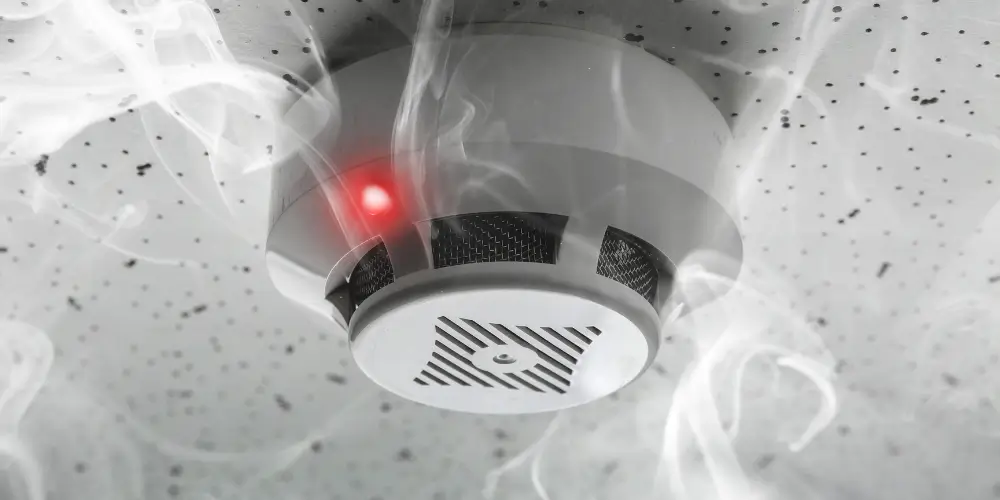
One of the most frequent causes of a fire alarm’s persistent beeping is a low battery. This warning is designed to ensure your safety by alerting you that the available power is insufficient to ensure proper operation in the event of a fire. When the battery reaches a critically low level, the alarm emits a short, sharp beep at regular intervals, typically once every minute, as a prompt for replacement.
To resolve this issue, first confirm that your alarm is signaling a low battery by checking the device’s manual for specific beep patterns associated with low battery. Next, replace the old battery with a new one, preferably an alkaline type recommended by the manufacturer for peak performance. When replacing the battery, also take the opportunity to press the test button to verify the alarm is fully operational.
Moreover, consider establishing a routine schedule to check and replace the batteries in your fire alarm systems. Experts recommend doing this at least once a year or according to the manufacturer’s guidelines. Regular maintenance not only prevents the inconvenience of unexpected beeping but also greatly enhances your home’s safety protocols.
How Dust and Debris Can Cause Beeping
In addition to low-battery issues, the accumulation of dust and debris inside the fire alarm casing can also trigger intermittent beeping. Over time, airborne particles such as dust, pollen, and even tiny insects can infiltrate the alarm’s sensors, leading to false alarms or continuous beeping. This occurs because smoke detectors are designed to be highly sensitive to small airborne particles that resemble the composition of smoke.
When these sensors are obstructed by dust or debris, they may misinterpret this as smoke, consequently activating the alarm. To address this issue, it is crucial to regularly clean your smoke detectors. Start by using a vacuum cleaner with a brush attachment to gently remove dust from the alarm’s exterior and interior surfaces, focusing on the sensor area. For more thorough cleaning, you can use a soft, dry cloth to wipe down the inside components. However, avoid using water or cleaning solutions, as they can damage the sensors.
Furthermore, verify that the area around the smoke alarm is free of cobwebs and dust buildup that can cause sensor blockages. Regular maintenance checks, ideally every six months, can greatly reduce the likelihood of dust-related beeping.
End of Lifespan Alerts in Modern Smoke Alarms
Beyond dust and debris, modern smoke alarms include features that alert users when the device has reached the end of its functional lifespan. Typically, this is signaled by a consistent chirping or beeping sound, not to be confused with the alarm triggered by smoke or fire hazards. Unlike battery replacement beeps, these alerts indicate that the entire unit needs to be replaced.
Smoke alarms are essential for early detection in emergencies, but they don’t last forever. The technology within them degrades over time, reducing their effectiveness and reliability. Here are some key points to take into account:
- Manufacturers’ Recommendations: Most manufacturers suggest replacing smoke alarms every 10 years, regardless of their apparent functionality.
- Consistent Beeping: If your alarm starts beeping regularly for no clear reason, it may be signaling that it’s time to get a new one.
- Model-Specific Alerts: Some models include a specific end-of-life signal, distinct from a low-battery or error alert, as detailed in the user manual.
It’s important to recognise these beeps as crucial safety warnings rather than mere nuisances. Ensuring your smoke alarms are up to date greatly enhances your home’s safety.
How Temperature and Humidity Can Trigger Fire Alarm Beeping
Temperature fluctuations and varying humidity levels can greatly impact the functionality of fire alarms, leading to unwarranted beeping. High humidity can cause condensation inside the alarm sensor, which photoelectric smoke detectors might mistake for smoke particles. Similarly, extreme temperatures can affect the delicate electronic components inside the alarm, causing it to malfunction or beep erratically.
In high-temperature environments, the expansion of air and other components within the detector can trigger the alarm. Conversely, in cold conditions, the contraction of these components can disrupt connections, leading to false alarms. Both scenarios suggest that maintaining an ambient temperature and avoiding rapid temperature changes can help minimize these issues.
Regular monitoring of the environment where fire alarms are installed is essential. For instance, installing fire alarms away from bathrooms, kitchens, or other high-humidity areas can prevent unnecessary triggers. Furthermore, ensuring that the installation area maintains stable temperature conditions can considerably reduce false alarms. If persistent issues are noted, consulting with a professional to recalibrate or replace the fire alarm may be necessary, especially if the unit is frequently exposed to environmental stressors.
Why One Unit Can Trigger Others
Understanding the mechanics behind interconnected fire alarms sheds light on why the activation of one unit can set off others throughout a building. This feature is essential for guaranteeing that all occupants, regardless of their location within the premises, are alerted to potential danger simultaneously, enhancing safety and providing vital evacuation time.
Interconnected fire alarms are designed to communicate with one another via wired or wireless signals. When one alarm detects smoke, heat, or other indicators of fire, it triggers an alarm condition. This signal is then transmitted to all connected units, causing them all to sound an alarm. This interconnected system is especially beneficial in large or multi-story buildings, where fire can spread quickly and go undetected in remote areas without it.
Key reasons for interconnected alarms include:
- Enhanced Safety: Immediate notification throughout the building increases evacuation time.
- Comprehensive Coverage: Guarantees no area is left without an alarm, reducing the risk of undetected fires.
- Synchronized Response: Helps in coordinating a unified emergency response, which can be critical in large structures.
Understanding these systems helps maintain them effectively and ensures they function as intended during emergencies.
When a Beeping Fire Alarm Indicates a Fault in the System
Amid the usual operations of a fire alarm system, intermittent or continuous beeping that is not associated with an actual fire often signals a fault in the system. This typology of alarm behavior may be perplexing and warrants immediate attention to identify and rectify the underlying issues.
Faults in fire alarm systems can stem from various sources, ranging from electrical malfunctions to physical damage. Below is a table that highlights common fault types and their typical indicators:
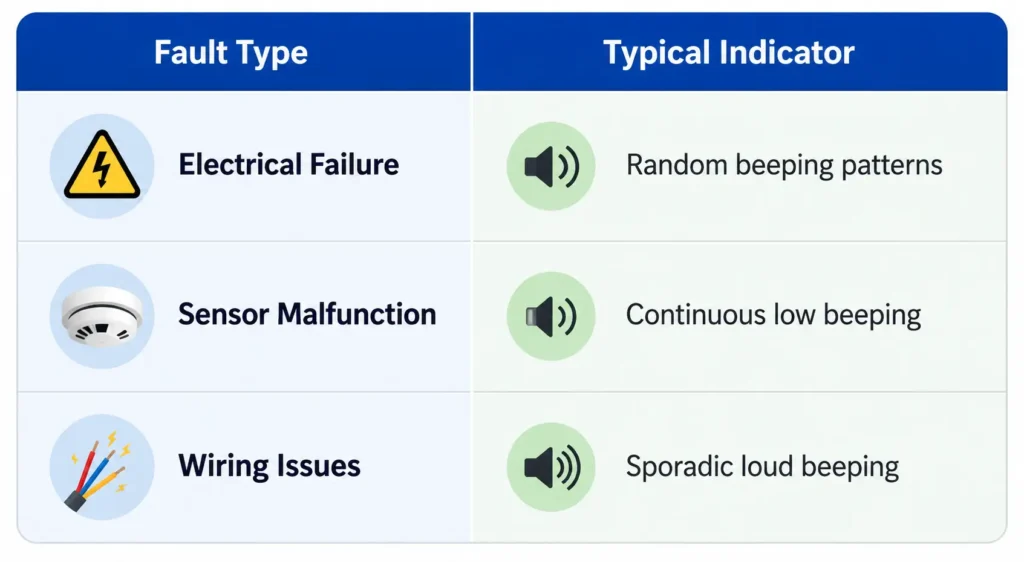
Electrical failures might include problems like power surges or insufficient voltage that disrupt the alarm’s operation. Sensor malfunctions, on the other hand, could be caused by accumulated dust or smoke particles that falsely trigger the alarm. Wiring issues often involve frayed or corroded wires that intermittently connect and disconnect.
To effectively address these faults, a professional assessment is typically necessary. Our professionals at Landlord Safety Experts can conduct a thorough inspection and testing to guarantee that all components of the fire alarm system are functioning correctly and safely.

How Regular Fire Alarm Maintenance Prevents Unwanted Beeping
Recognising the various faults in fire alarm systems, as identified in the preceding discussion, underscores the importance of regular maintenance to guarantee their ideal functioning. Regular upkeep not only extends the lifespan of the fire alarms but also greatly reduces the incidence of unexpected beeping, which can be both annoying and worrying for residents or office workers.
Here are key maintenance actions that can prevent unwanted fire alarm beeping:
- Battery Replacement: Make sure batteries are replaced regularly before they run low, which is a common cause of intermittent beeping.
- Cleaning Dust and Debris: Accumulated dust and insects can interfere with the sensors, leading to false alarms or beeping. Routinely cleaning these components can prevent such issues.
- Inspection and Testing: Scheduled professional inspections and testing can identify and resolve hidden problems that might not be immediately apparent to a layperson.
Implementing these maintenance strategies guarantees the reliability of fire alarm systems and minimizes disruptions caused by beeping. This proactive approach not only maintains the integrity of the alarm’s functionality but also provides peace of mind to all occupants, knowing that their safety mechanism is in peak condition.
When to Replace Your Fire Alarm for Reliable Fire Protection
While regular maintenance is vital for extending the lifespan of a fire alarm, there comes a time when replacement is the only viable option for guaranteeing reliable fire protection. Fire alarms, integral to safety, have recommended lifespans typically between 8 to 10 years. Post this period, their efficiency in detecting smoke or fire diminishes, even with diligent maintenance.
Manufacturers often specify the ideal replacement period in their product manuals; adhering strictly to these guidelines is essential. Ignoring these recommendations can lead to the device’s failure to operate effectively in critical situations, potentially endangering lives and property.
Another sign that it’s time to replace your fire alarm is frequent false alarms or an increase in the instances where the alarm fails to respond to tests. These malfunctions are often due to aged sensors that are no longer sensitive to smoke or heat variations as they once were.
Lastly, if you notice physical damage to the unit, such as cracks or exposed wires, or if newer models with significant technological advancements offer enhanced safety features, consider an upgrade. Replacing old fire alarms not only ensures compliance with safety regulations but also provides peace of mind, knowing that your system functions effectively when needed most.
Frequently Asked Questions
Can Paint Fumes Cause My Fire Alarm to Beep?
Yes, paint fumes can cause your fire alarm to beep. The particles in the fumes can be detected by the alarm’s sensors, which mistakenly signal the presence of smoke and trigger the alarm.
Are There Pet-Safe Fire Alarms That Don’t Beep as Loudly?
Yes, there are pet-friendly fire alarms designed to emit lower-volume alerts to minimize distress in animals. These devices balance the effectiveness of alerting residents with the sensitivity of pets to loud noises.
How Does Wi-Fi Interference Affect Fire Alarm Functionality?
Wi-Fi interference can disrupt fire alarm functionality by causing signal confusion, which may lead to false alarms or impair communication between interconnected alarms, reducing the system’s overall effectiveness and reliability in emergency situations.
Can a Power Surge Cause Permanent Damage to a Fire Alarm?
Yes, a power surge can cause permanent damage to a fire alarm by overwhelming its electrical components, potentially leading to malfunction or failure, necessitating professional assessment or replacement of the affected unit.
Is It Safe to Disable a Beeping Fire Alarm Temporarily?
Temporarily disabling a beeping fire alarm is not advisable, as it compromises safety. The beeping often signals low batteries or malfunctions, which require immediate attention to guarantee the alarm functions properly in an emergency.
Conclusion
In summary, the incessant beeping of a fire alarm, often attributed to low battery levels, can also result from dust accumulation, environmental factors, or system malfunctions. Understanding these triggers is essential for effective maintenance and guarantees the reliability of fire alarms. Regular checks and timely replacements are advisable to uphold safety standards. Addressing these common issues not only enhances protection but also minimises disruptions caused by false alarms.