Maintained emergency lighting is on all the time, like normal lighting and switches to battery power if the mains fail. Non-maintained emergency lighting stays off and only comes on during a power cut. Maintained fittings are common in cinemas, retail, and busy public areas where constant visibility and wayfinding are essential. Non-maintained fittings suit warehouses or back-of-house spaces where darkness is normal. Understanding where and why to use each type helps create safer, compliant escape routes and more informed decisions.
Key Takeaways
- Maintained emergency lighting stays on during normal operation and switches to battery power during a mains failure, acting as regular lighting plus backup.
- Non-maintained emergency lighting is normally off and only switches on when the mains power fails, providing light solely in emergencies.
- Maintained systems suit cinemas, theatres, retail, and high-occupancy areas that require continuous wayfinding and visibility.
- Non-maintained systems suit warehouses and back-of-house areas where darkness is typical and constant illumination is unnecessary.
- Both types can be combined in a single building, chosen based on occupancy, risk level, and how spaces are used under normal and emergency conditions.
Table of Contents
What Is Emergency Lighting and Why Does It Matter?
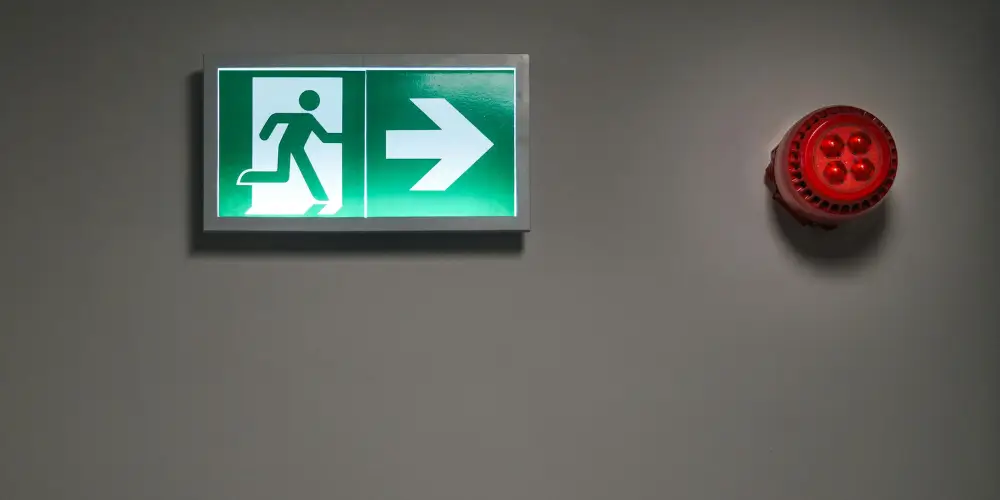
Emergency lighting refers to a system of backup lights designed to automatically activate during power failures, providing safe illumination for occupants to see, move, and evacuate. It functions as a safety net when the normal power supply fails, ensuring people are not trapped in darkness or forced into risky choices.
Clear escape routes, visible signage, and lit hazards give individuals the confidence to move quickly on their own terms. At its core, emergency lighting supports the right to free movement and self-preservation.
In workplaces, public venues, and shared housing, it reduces dependence on others by making exits, stairwells, and key safety points immediately visible. It also helps prevent panic, crowding, and confusion, which can threaten both safety and autonomy.
How Maintained Emergency Lighting Works
Building on the role emergency lighting plays in protecting safe movement, maintained emergency lighting refers to systems that operate continuously and switch to backup power only when the main supply fails. In normal conditions, these fittings act as regular luminaires, supporting open, flexible use of a space while silently standing ready for disruption.
Each maintained unit typically includes a light source, control gear, charging circuit, battery pack, and changeover device. While mains power is available, the luminaire runs from the supply, and the battery is kept charged. When the supply is interrupted, the changeover device automatically routes power from the battery to the same fitting, keeping illumination levels sufficient for escape and hazard avoidance.
Because they are always on, maintained systems allow consistent, familiar lighting along escape routes, in assembly areas, and in spaces where occupants value continuity, clear orientation, and the ability to move quickly without confusion during an outage.
How Non-Maintained Emergency Lighting Works
Unlike maintained systems that operate continuously, non‑maintained emergency lighting remains off under normal conditions and activates only when the mains power fails. Each unit contains a charger, a battery, and an automatic changeover circuit. While power flows freely from the grid, the charger tops up the battery, keeping it ready but unused, preserving both energy and lamp life.
When the mains supply drops, the internal circuitry instantly switches to battery power, illuminating the fitting without needing manual intervention. This rapid response holds escape routes open, giving people clear visual guidance to move where they choose, rather than freeze in darkness.
The lights stay on for a specified duration, typically one to three hours, depending on design and regulatory requirements. After power returns, the unit reverts to standby mode, recharging the battery and waiting silently for the next outage, providing protection without imposing constant operation.
Maintained vs Non-Maintained: Key Differences
Although both systems serve the same safety objective, maintained and non‑maintained emergency lighting differ fundamentally in how and when they operate.
Maintained fittings are powered during normal conditions, illuminating spaces continuously like standard luminaires, while also switching to battery backup during a mains failure. Non‑maintained fittings remain off in everyday use, activating only when the power supply is lost. This operational difference affects energy use, visual environment, and how clearly escape routes are perceived before any incident.
Maintained lighting offers constant visibility and familiar reference points, supporting people who want unbroken clarity and control over their surroundings. Non‑maintained lighting preserves darkness and reduces energy consumption, intervening only when absolutely necessary.
Both rely on batteries, test functions, and compliant design, yet they embody distinct philosophies: one prioritises continuous guidance and reassurance; the other stands back until an emergency demands intervention, then delivers light precisely when freedom of movement is most at risk.
Where to Use Maintained Emergency Lighting
When emergency lighting must double as everyday illumination, maintained fittings are typically specified for areas with high occupancy, complex layouts, or heightened risk. They are common in cinemas, theatres, clubs, and venues where people gather in the dark and need to move freely without feeling constrained by harsh or intermittent lighting.
Here, maintained luminaires guarantee that exits and key routes are always visible, while still supporting an engaging, comfortable atmosphere. They are also suited to retail spaces, galleries, and open-plan offices, where people expect seamless movement and clear wayfinding at any time. In these environments, maintained emergency lighting supports both normal work and leisure and rapid escape if power fails.
Corridors, stairwells, and atria that act as shared arteries through a building also benefit from maintained fittings, as constant illumination keeps circulation routes obvious, supporting autonomy and confident, unhurried decision-making during an emergency.
Where to Use Non-Maintained Emergency Lighting
In which settings does non-maintained emergency lighting offer the greatest advantage?
It proves most valuable in environments where people expect darkness as the norm and only need light when something goes wrong. Warehouses, plant rooms, storage areas, and back-of-house corridors often fall into this category, as workers move confidently in familiar territory and rely on emergency fittings only when power fails.
Non-maintained emergency lighting also suits cinemas, nightclubs, bars, and venues where low light supports atmosphere, performance, or privacy. Here, sudden illumination during an outage or fire alarm guides occupants toward exits without disrupting the usual sense of freedom and mood during normal operation.
In offices, residential blocks, and shared workspaces, non-maintained fittings are typically installed in stairwells, escape routes, plant areas, and utility rooms places people pass through rather than inhabit. The luminaires stay off, preserving visual calm and energy, yet instantly activate to safeguard independent movement when supply is lost.
Choosing Between Maintained and Non-Maintained Lighting
How should specifiers decide between maintained and non-maintained emergency lighting?
They begin by clarifying how each space is used in everyday life and during disruption. Maintained fittings suit areas where people expect constant illumination, such as social hubs, galleries, or mixed‑use spaces where ambience, branding, and visual comfort matter. Here, emergency coverage and normal lighting merge, giving designers more freedom to shape atmosphere without sacrificing safety.
Non-maintained lighting, by contrast, remains off until power fails, keeping ceilings visually clean and energy use low during normal operation. This appeals in back‑of‑house zones, storage areas, and locations where users value an uncluttered environment and minimal running costs.
Specifiers weigh several freedoms: freedom to design the look of a space, freedom from unnecessary energy consumption, and freedom to reconfigure layouts later. They balance these against risk level, occupancy patterns, and the importance of continuous light, often combining both types to serve different functions within the same building.
Emergency Lighting Regulations and Standards
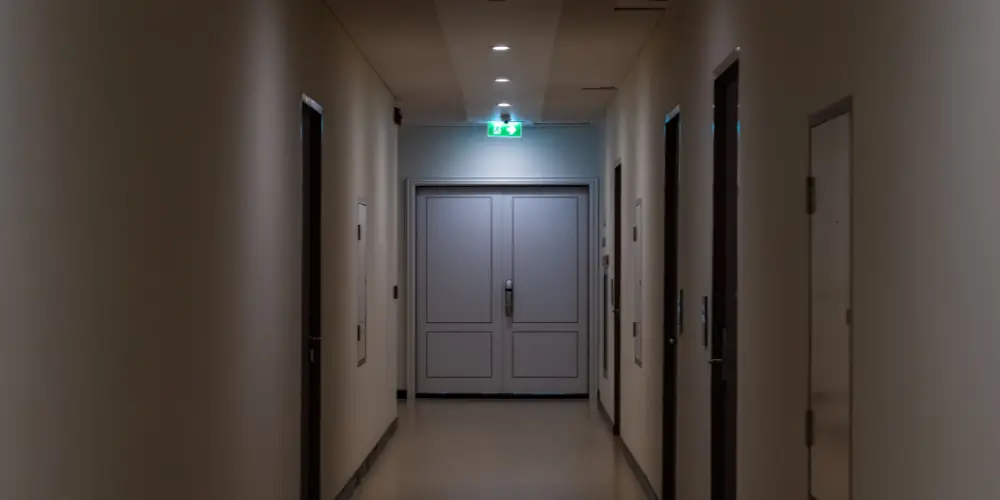
Although emergency lighting can feel like a design choice, it is fundamentally governed by a web of regulations and standards that define what “safe” actually means. These frameworks exist so people can move freely and confidently when power fails, without relying on guesswork or goodwill. Rather than limiting autonomy, they draw a clear baseline: minimum light levels, duration, and coverage for escape routes, open areas, and high‑risk zones.
In most jurisdictions, building codes and fire safety orders reference national or international standards that specify lux levels, signage visibility, battery backup times, and acceptable product markings. Risk assessments then translate these rules into a tailored emergency lighting scheme, reflecting building use, occupancy patterns, and evacuation strategy.
Compliance is not just about avoiding penalties; it protects the right to a safe exit, even in the worst circumstances. Properly applied standards guarantee that, when everything else fails, people still have a lit path out.
Installing, Testing and Maintaining Emergency Lighting
Proper installation, rigorous testing, and ongoing maintenance turn emergency lighting from a theoretical safety feature into a dependable life‑safety system. When equipment is installed in line with manufacturer instructions and relevant standards, occupants gain the freedom to move, evacuate, or assist others without hesitation during a power failure. Positioning, circuit selection, and correct labelling guarantee that escape routes remain clear and intuitive, not restrictive or confusing.
Once installed, regular testing confirms the system will perform under real stress. Monthly function tests and annual full‑duration discharge tests verify battery autonomy, charger performance, and luminaire reliability. Documented test records protect responsible persons while supporting transparent, accountable safety management.
Ongoing maintenance keeps systems responsive and unobtrusive. Replacing failed lamps, degrading batteries, or damaged fittings before they compromise performance preserves freedom of movement in an emergency. Periodic review of layouts, following refurbishments or change of use, guarantees lighting still aligns with actual escape strategies.
Frequently Asked Questions
How Much Do Maintained and Non-Maintained Emergency Lighting Systems Typically Cost?
Maintained fittings typically cost £40–£150 each, while non‑maintained units usually range from £25–£100. Pricing flexes with battery type, lumen output, and smart controls, giving specifiers financial freedom to tailor safety, aesthetics, and long‑term maintenance to their priorities.
What Common Mistakes Occur When Planning Emergency Lighting Layouts?
Common planning mistakes include ignoring escape route clarity, under-lighting open areas, overlooking high-risk tasks, misplacing luminaires, neglecting signage integration, forgetting maintenance access, and skipping real-world testing, which can all restrict safe, independent movement during power loss.
How Can Emergency Lighting Be Integrated With Smart Building Management Systems?
Emergency lighting links to smart systems via open protocols, enabling automated testing, remote monitoring, load‑shedding, and dynamic escape routing. This integration gives occupants clearer information, faster responses, reduced manual checks, and more freedom to move safely during disruptions.
Are There Tax Incentives or Grants Available for Upgrading Emergency Lighting?
Yes, many regions offer tax deductions, energy-efficiency credits, or safety grants for upgrading emergency lighting. Eligibility depends on jurisdiction, building type, and certification standards, so occupants and owners should review local schemes and consult a qualified tax professional.
How Do I Handle Emergency Lighting in Heritage or Listed Buildings?
They balance safety with preservation by using discreet, reversible fittings, wireless controls, and sympathetic colour temperatures. Specialists coordinate with conservation officers, employ photometric modelling, hide cabling in existing routes, and favour minimal structural impact while still meeting escape-route illumination standards.
Conclusion
In conclusion, understanding the distinction between maintained and non-maintained emergency lighting helps guarantee safer, compliant environments. Each system serves a specific purpose: maintained fittings support everyday illumination and high-occupancy or high-risk areas, while non-maintained units provide reliable backup when the power fails. By aligning lighting types with building use, legal standards, and risk assessments, building owners and managers can improve visibility, support safe evacuation, and meet essential emergency lighting regulations.