How to top up the boiler pressure and keep heating efficient, the system should be cool and switched off, then the pressure gauge checked for a cold target of about 1–1.5 bar (often 1.2–1.3). The filling loop is opened slowly by turning one valve, then the second, allowing water in while watching the gauge. Once the target pressure is reached, both valves are closed, and the caps are refitted. Next steps cover bleeding radiators and stopping repeat pressure drops.
Key Takeaways
- Check pressure with heating off and system cool; aim for 1–1.5 bar cold, typically about 1.2–1.3 bar.
- Low-pressure signs include slow-heating radiators, cold spots, gurgling pipes, fluctuating hot water, and frequent boiler cycling.
- Find the filling loop, open valves slowly, and watch the gauge as water enters to avoid over-pressurising.
- Stop topping up at target pressure, close valves in reverse order, and refit caps; hot pressure may rise to 1.8–2.0 bar.
- Call a Gas Safe engineer if pressure drops quickly, the relief pipe drips, air returns after bleeding, or you see boiler faults/noises.
Table of Contents
Ideal Boiler Pressure: 1–1.5 Bar Cold
For most sealed central-heating systems, the ideal how to top up the boiler pressure when cold sits between 1 and 1.5 bar, as shown on the gauge. This range typically provides enough water volume for the pump and radiators without pushing the system toward unnecessary stress. Readings are taken with the heating off and the system cooled, because pressure rises as water heats and expands.
Many boilers include a green band or marker around the recommended zone; manufacturer manuals may specify a slightly different target, often close to 1.3 bar. If the needle is near 1.0 bar when cold, it will usually climb to around 1.8–2.0 bar when hot, which is normal. A cold pressure well above 1.5 bar can leave less headroom for thermal expansion and may risk triggering the pressure relief valve during operation. For further details you can visit our blog what should a boiler pressure be.
Low Boiler Pressure Symptoms To Watch For
Although a boiler can keep running with how to top up the boiler pressure below the recommended range, the system often shows early warning signs such as radiators taking longer to warm up, uneven heating with cold spots, frequent boiler lockouts or fault codes related to low pressure, and a pressure gauge sitting near or below 1 bar when the system is cold.
These symptoms usually appear gradually and are easiest to spot during the first heat-up of the day. Performance may seem normal at the boiler, yet heat transfer around the home becomes inconsistent.
- Radiators remain lukewarm even when the thermostat calls for heat
- Hot water temperature fluctuates or runs cooler than usual at the tap
- Gurgling, bubbling, or rushing water noises are heard in pipework or radiators
- The boiler cycles on and off more often, struggling to maintain set temperatures
If these signs persist, occupants may notice higher running times and reduced comfort, suggesting pressure should be checked before heating demand increases further.
Why Boiler Pressure Drops (Common Causes)
Why does boiler pressure fall in the first place? In a sealed central-heating system, pressure is determined by the balance among water volume, temperature changes, and component integrity. When that balance shifts, the gauge drops. A common cause is a small leak from pipe joints, radiator valves, or the boiler itself; even slow seepage can steadily reduce the system’s water.
Bleeding radiators can also lower pressure because trapped air is released and must be replaced with water. A faulty pressure relief valve may discharge intermittently, often resulting in dampness at the external discharge pipe. Expansion vessel problems are another frequent culprit: if the vessel loses its air charge or its diaphragm fails, pressure can rise when heated and then be dumped, leaving low pressure when cool. Finally, recent maintenance or draining for repairs can leave the system under-pressurised if it is not refilled to the correct level.
Where To Find Your Boiler Filling Loop
Once the cause of low boiler pressure is understood, the next step is locating the filling loop used to top the system back up. On many combi boilers, it sits beneath the boiler casing, connecting the cold mains to the central-heating return via a short braided hose or a rigid link. Some models use an internal keyless filling link, accessed behind a small flap or under the control panel, rather than a removable hose.
Common places to check include:
- Under the boiler, near the pipework manifold, often beside the pressure gauge
- Inside the boiler’s lower front panel, where a keyed filling device may be fitted
- In an airing cupboard near a system boiler and hot-water cylinder, on adjacent pipework
- Close to the incoming mains stopcock, where an external filling loop may be installed
If no loop is visible, the boiler manual or manufacturer’s diagram usually identifies its location.
How To Top Up Boiler Pressure (Step-By-Step)
Before adjusting anything, the boiler should be cool and switched off, and the current pressure on the gauge should be checked so the system is only topped up to the manufacturer’s recommended range (typically around 1.0–1.5 bar when cold). The filling loop should be located, and any caps removed if required. For an external loop, both valves are typically closed; for an internal keyless loop, the lever or dial is usually in the “off” position.
To top up, one valve should be opened slowly, then the second valve opened gradually to allow mains water into the system. The gauge should be watched continuously as pressure rises. When the needle reaches the target (often 1.2–1.3 bar), the valves should be closed in reverse order and tightened to fully shut. The loop should be left in the closed position and any caps refitted. The boiler can then be switched back on and monitored briefly.
Bleed Radiators And Recheck Boiler Pressure
Bleed any radiators that feel cold at the top or sound gurgling, as trapped air can prevent proper circulation and distort the pressure reading. After topping up, turning the heating on briefly helps move air toward the bleed valves, making the next check more accurate.
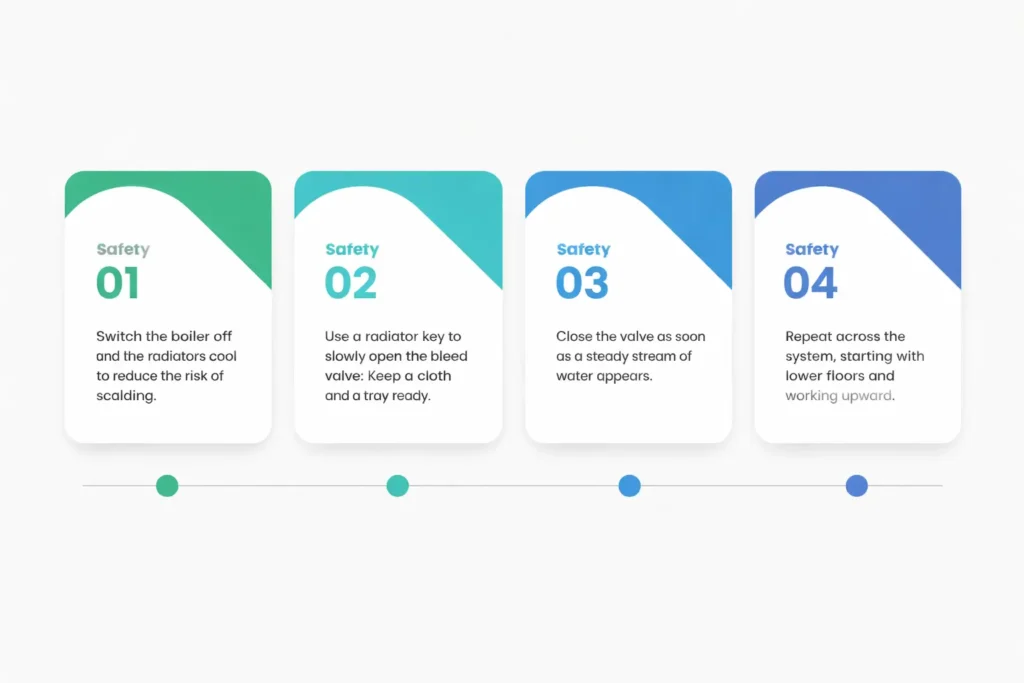
Once bleeding is complete, the boiler pressure gauge should be checked again. Releasing air can lower pressure slightly, so the reading may sit below the normal operating range shown on the dial or in the manual.
If needed, the system can be topped up again in small increments, then rechecked after a few minutes of circulation. This confirms stable pressure and evenly heated radiators.
If Boiler Pressure Keeps Dropping: Fixes To Try
Although a slight pressure dip after bleeding radiators can be normal, repeated drops usually indicate an underlying fault that topping up alone will not resolve. First, check for visible leaks: damp patches under radiators, towel rails, pipe joints, and around the boiler case. Tighten any accessible compression nuts slightly, using two spanners to avoid twisting pipes.
Next, inspect the filling loop. Verify both valves are fully closed and that the flexible hose is not weeping; a partially open valve can allow pressure to fluctuate and dump via the relief valve. Check the pressure relief pipe outside (usually copper). If it is wet or dripping after the boiler has been topped up and heated, the relief valve may be passing, or system pressure may be spiking. Finally, consider the expansion vessel’s charge: a flat vessel causes rapid rises when hot and sharp drops when cool. Re-pressurising it may stabilise readings.
When To Call A Gas Safe Engineer
Repeated pressure loss, a dripping relief pipe, or signs of a faulty expansion vessel can indicate a problem beyond simple topping up, and some checks should not be attempted without the right qualifications. A Gas Safe-registered engineer is required for any work involving the gas train, burner, flue, or sealed combustion components, and should be called if safety devices are operating or a leak is suspected.
An engineer can test the expansion vessel charge, check for internal leaks across the heat exchanger, confirm correct PRV operation, and verify system integrity after repairs.
Immediate professional help is advisable when any of the following occur:
- Pressure drops from normal to near-zero within hours or after every heat cycle
- The pressure relief pipe discharges regularly or leaves staining outside
- Radiators repeatedly need bleeding, yet air returns quickly
- Error codes, ignition failures, overheating, or unusual noises persist
Frequently Asked Questions
How Often Should I Check My Boiler Pressure?
Most households should check boiler pressure monthly, and always after bleeding radiators or noticing heating issues. If pressure drops repeatedly, weekly checks are sensible until the system is serviced. Stable systems may only need seasonal checks during colder months.
Can Topping Up Boiler Pressure Increase My Energy Bills?
Topping up boiler pressure usually does not increase energy bills; maintaining the correct pressure helps ensure efficient circulation. However, frequent topping up may indicate a leak, causing water loss and inefficiency, potentially raising costs and requiring professional attention.
Is It Safe to Top up Boiler Pressure at Night?
Yes, it is generally safe to top up boiler pressure at night if the boiler is cool and instructions are followed. He or she should monitor the gauge, avoid overpressurising, and check for leaks afterwards.
Will Topping up Boiler Pressure Affect My Boiler Warranty?
Topping up boiler pressure usually won’t void a warranty if done per the manual, within specified limits. However, damage from overpressurising or improper filling can. Some warranties require engineer servicing or documented maintenance records.
Can Low Boiler Pressure Damage My Boiler Over Time?
Yes, persistently low boiler pressure can damage a boiler over time by causing overheating, poor circulation, and pump strain. It may also trigger frequent shutdowns. Prolonged operation can shorten component life and increase repair risk.
Conclusion
Maintaining how to top up the boiler pressure between 1 and 1.5 bar when cold helps guarantee efficient heating and fewer breakdowns. Recognising low-pressure symptoms, understanding common causes, and knowing where the filling loop is located make topping up straightforward and safe when done carefully. After repressurising, bleeding radiators and rechecking the gauge helps stabilise the system. If pressure continues to fall, leaks or faulty components may be present, and a Gas Safe engineer should be consulted.