UK Building Regulations Parts A to P (Approved Documents) set the core safety and performance standards for building work in England, covering structure (A), fire safety (B), moisture control (C), materials (D), sound (E), ventilation (F), sanitation and water safety (G), drainage (H), combustion appliances (J), protection from falls (K), energy efficiency (L), access (M), glazing (N), overheating (O), and electrical safety (P). Which Parts apply depends on the project, inspections, and certification route. More detail follows on common triggers and compliance.
Key Takeaways
- UK Building Regulations are organised into Approved Documents Parts A–P, each covering a specific safety or performance outcome.
- Which Parts apply depends on building type and work scope; extensions often trigger A, B, C, F, L and P.
- Part A ensures structural stability; Part B covers escape routes and fire spread; Part C prevents damp and ground contamination.
- Parts D–J cover materials, sound, ventilation, water, drainage, and combustion safety, ensuring healthy, safe and usable buildings.
- Compliance is verified through Building Control via Full Plans or Building Notice, staged inspections, and a Completion Certificate for legal proof.
Table of Contents
Building Regs Parts A–P Explained (UK)
Although the Building Regulations are often discussed as a single rulebook, they are organised into distinct “Approved Documents” labelled Parts A to P, each covering a specific area of building safety and performance. This structure lets designers and owners focus on outcomes without wading through irrelevant detail.
Building Regulations Parts A to P addresses structural stability; B fire safety; C site preparation and resistance to contaminants and moisture; D toxic substances; E sound; F ventilation; G sanitation, hot water safety and water efficiency; H drainage and waste; J combustion appliances and fuel storage; K protection from falling, collision and impact; L conservation of fuel and power; M access and use; N glazing safety; O overheating; P electrical safety.
Each Part provides practical guidance while allowing alternative solutions when equivalent performance is demonstrated. Used well, the Parts act less like constraints and more like clear targets that protect occupants, neighbours, and future flexibility.
Which Building Regulations Parts Apply to Your Project?
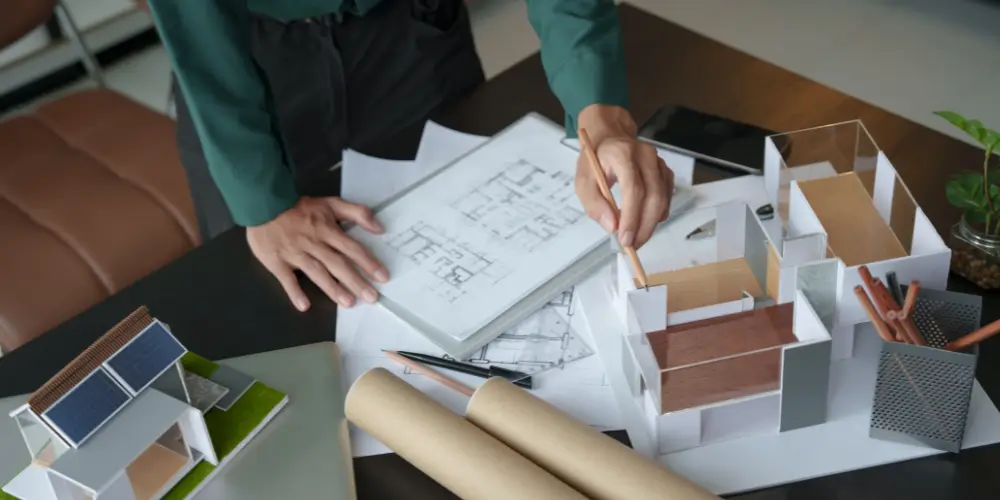
Which Parts of the Building Regulations apply depends on what is being built, altered, or refurbished, as well as the use of the building, its size and height, and whether the work creates “material alterations” or “material changes of use.” A small domestic extension may primarily trigger Parts A (structure), B (fire), C (moisture), F (ventilation), L (energy), and P (electrics), whereas a loft conversion often adds heightened fire safety requirements under Part B and access considerations under Part K and Part M.
Beyond typical home upgrades, different triggers appear quickly. New drainage or new bathrooms can bring Parts H (drainage) and G (sanitation and hot-water safety) into effect. Acoustic changes, flats, or conversions can engage Part E (sound). Larger glazing or guarding details relate to Part N and Part K, while combustion appliances and flues fall under Part J. Commercial fit-outs, larger buildings, and workplaces may widen the scope to Part O (overheating) and Part S (EV charging). Early mapping keeps choices flexible while avoiding late redesign.
Parts A–C: Structure, Fire Safety, Damp Control
Before any finishes, services, or energy measures are considered, Building Regulations Parts A–C set the baseline for a safe, durable building: they protect occupants while giving designers room to choose how outcomes are met. Part A focuses on structural stability, foundations, load paths, and robustness so buildings resist collapse under normal and accidental loads.
Part B addresses fire safety through escape routes, compartmentation, and limiting spread to neighbours, supporting practical layouts without gambling on risk. Part C tackles moisture: resisting rising damp, penetrating rain, and ground contaminants so interiors stay usable and fabric lasts.
Key expectations typically include:
- Evidence of adequate calculations, specifications, and inspections for the structure
- Fire-resisting elements, protected escape, and sensible access for fire service
- Separation to reduce fire spread within and between buildings
- Damp-proofing, cavity detailing, and weathering to shed water effectively
- Ground moisture and contaminants managed through membranes and site prep
Parts D–F: Materials, Soundproofing, Ventilation
With structural integrity, fire safety, and moisture control established under Building Regulations Parts A to P, focus on how buildings perform day to day through the products used, the control of noise, and the management of indoor air. Part D expects materials and workmanship that are fit for purpose, properly installed, and durable, so occupants are not trapped in constant repairs. Part E sets acoustic standards for separating walls, floors, and internal partitions, helping people live, work, and rest without unwanted intrusion.
Part F requires adequate ventilation to limit condensation, pollutants, and stale air, balancing comfort with energy efficiency and enabling healthier, self-directed living. Compliance can be achieved through tested products, robust detailing, and verifiable performance, rather than guesswork.
| Focus | Everyday impact |
| Materials (D) | Fewer failures, more choice |
| Sound (E) | Privacy, calmer homes |
Parts G–J: Water, Drainage, Boilers and Flues
Four closely linked requirements sit at the heart of everyday building services in Parts G–J: safe hot and cold water provision, effective drainage and waste disposal, controlled heat sources such as boilers, and correctly designed flues that remove combustion products.
Together, they protect health while letting occupants run homes and businesses with minimal interference, provided the basics are done right.
- Size and protect cold-water storage and distribution to prevent contamination, stagnation, and backflow.
- Deliver hot water safely, limiting scald risk and ensuring adequate temperature control at outlets.
- Design foul and surface-water drainage to flow freely, resist leaks, and allow straightforward rodding access.
- Install boilers and other heat-producing appliances with correct ventilation, clearances, and competent commissioning.
- Route flues to discharge safely, maintain draught, and avoid harmful spillage or re-entry at openings.
Compliance is typically evidenced through tested components, installer certification, and clear documentation for future alterations.
Parts K–M: Stairs, Energy Efficiency, Accessibility
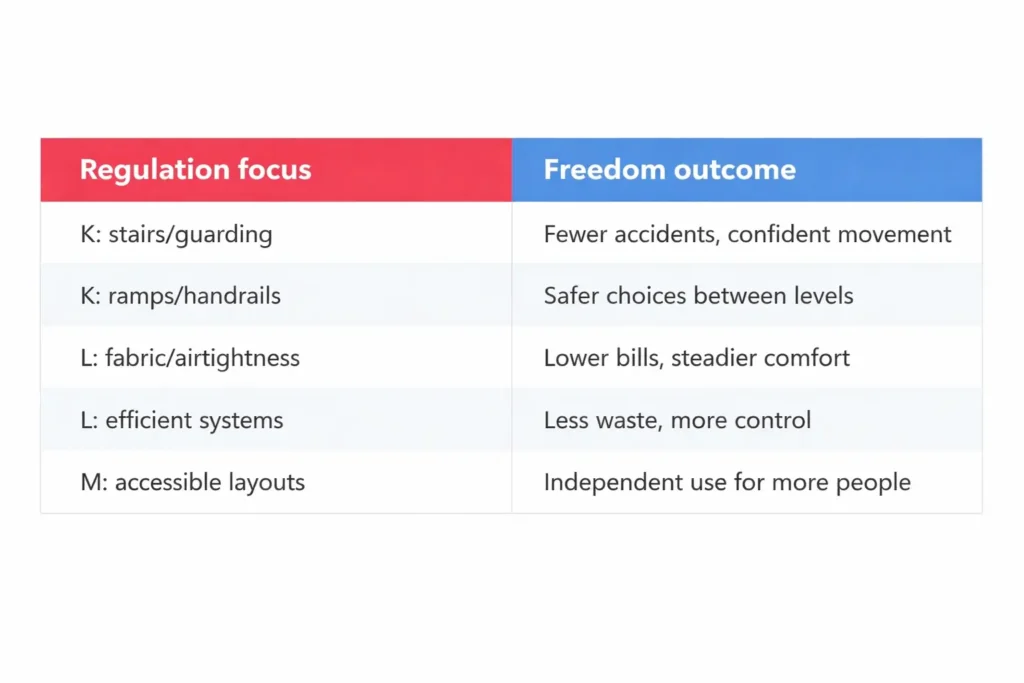
Although often treated as separate checklists, Parts K–M work together to make buildings safer to move around, cheaper to run, and usable by the widest range of people. Part K governs stairs, ramps, guarding and protection from falling or impact, pushing designers toward predictable geometry, adequate handrails, and sensible landings. Part L drives energy efficiency through insulation, airtightness, and efficient building services, reducing long-term bills and dependence on volatile energy markets. Part M focuses on access and use, shaping entrances, corridors, sanitary layouts, and step-free routes so occupants and visitors can move independently.
Parts N–P (and Q): Glazing, Electrics, Home Security
Parts N–P (with Part Q) shift the focus from movement, comfort, and access to the everyday risks posed by glass, wiring, and unwanted entry. They set practical baselines so a home can feel open and light without trading away safety or autonomy.
Part N, now largely absorbed into other guidance, historically covered glazing impact safety; today, the expectation remains: critical locations need toughened or laminated glass to reduce injury. Part O tackles overheating, nudging designers to balance big glazing with shading and ventilation.
Part P governs electrical safety in dwellings, aiming to prevent shock and fire through competent design, sound installation, and appropriate circuit protection. Part Q addresses security in new homes, targeting doors and accessible windows so residents can live freely without constant hardening.
- Use safety glass in doors and low-level panes
- Control summer heat with shading and purge ventilation
- Keep electrics zoned, protected, and properly earthed
- Specify tamper-resistant consumer units and RCDs
- Fit-tested doorsets and secure window hardware

Building Control: Plans, Inspections, Completion Certificate
Before any foundations are poured or walls go up, Building Control provides the formal route for demonstrating that a project meets the Building Regulations, through plan checking, staged site inspections, and final sign-off. Applicants can choose a local authority team or an approved inspector, keeping control over cost, timescale, and service level.
Two common routes exist: Full Plans, where drawings are checked and approved in advance, and Building Notice, where work starts sooner, but design risk sits with the builder. Inspections typically cover excavation, foundations, damp-proofing, structural elements, insulation, drainage, fire stopping, and final completion; missing a visit can mean uncovering work later.
Building Control focuses on compliance, not finish quality, so separate snagging may still be needed. When satisfied, the inspector issues a Completion Certificate, essential for conveyancing, warranties, and proving lawful work, and it protects future choices, such as selling, refinancing, or extending again.
Frequently Asked Questions
How Long Do Building Regulations Approval and Inspections Typically Take?
Approval typically takes 2–8 weeks: 5–10 working days via building notice, or 3–8 weeks for full plans. Inspections occur at key stages, usually within 24–48 hours of booking, depending on workload.
What happens if the previous work in my home lacks a building control sign-off?
Missing sign-off can trigger enforcement, insurance and resale obstacles. A homeowner may choose regularisation, further inspections, or remedial works to regain control. Lenders and buyers often demand proof, reducing negotiating freedom and property value.
Can I Use an Approved Inspector Instead of the Local Authority?
Yes, a homeowner can appoint an Approved Inspector instead of the local authority for most notifiable work, gaining flexibility and choice. The inspector issues plans and final certificates, but cannot regularise unauthorised past work.
Do I Need Building Regulations for Temporary Structures Like Garden Offices?
Often yes: garden offices may need building regulations if they’re large, insulated, have sleeping space, plumbing, or electrics, or sit close to boundaries. Very small, unheated, detached buildings sometimes escape, but check locally.
How Much Does a Building Regulations Application Usually Cost?
A building regulations application usually costs £200–£800, depending on project size and local authority. Private inspectors may charge £500–£1,500+. Extra fees for inspections, amendments, or structural calculations can apply; requesting quotes preserves choice.
Conclusion
Understanding Building Regulations Parts A to P (and, where relevant, Part Q) helps guarantee UK building work is safe, compliant, and fit for purpose. Each Part addresses a specific risk area from structural stability and fire safety to ventilation, drainage, energy efficiency, glazing, and electrical safety. Identifying which Parts apply at the outset reduces delays, redesigns, and cost overruns. Working with Building Control, submitting the right information, and passing inspections supports a smooth sign-off and a reliable completion certificate.