Where to Place Your Carbon Monoxide Alarm should be installed on every level of a home, including the basement, and near all sleeping areas. Units are best placed at breathing height or on the ceiling, away from bathrooms, vents, and cooking appliances. They should be close to fuel‑burning appliances but not in drafty spots or behind furniture. Hallway and bedroom placement improves nighttime protection. Correct positioning, number of units and mounting choices can greatly increase safety and peace of mind.
Key Takeaways
- Install at least one CO alarm on every level of your home, including the basement and any floor with fuel‑burning appliances.
- Place alarms near sleeping areas, ideally inside each bedroom and in hallways outside bedrooms, for early warning at night.
- Mount alarms at breathing height or on the ceiling, following manufacturer instructions, with clear airflow around the unit.
- Keep alarms away from bathrooms, cooking appliances, vents, drafty windows, and behind furniture to avoid false readings or impaired detection.
- Add extra alarms near attached garages, furnaces, and larger open areas to ensure complete coverage, especially in bigger or multi‑story homes.
Table of Contents
Where Should Carbon Monoxide Alarms Go in Your Home?
Precisely placing carbon monoxide alarms in a home is critical to ensuring early detection and protection. Strategic placement lets people move, sleep, and live freely without wondering whether an unseen hazard is building in the background.
Alarms work best when installed where carbon monoxide is most likely to travel and where people spend the most time, unaware, especially while sleeping. Alarms should be positioned near sleeping areas so they can wake occupants quickly if levels rise at night.
One should be located on every level of a home, including spaces with fuel‑burning appliances such as furnaces, gas water heaters, fireplaces, and attached garages. Devices belong at breathing level or higher, following manufacturer height guidance, with clear airflow around them.
They should not sit behind furniture, near vents, in bathrooms, or next to cooking appliances, where steam, drafts, or normal use can interfere with accurate sensing and dependable alerts.
How Many Carbon Monoxide Alarms Do You Actually Need
Many households underestimate the number of carbon monoxide alarms needed for reliable coverage. Safety standards generally call for at least one alarm on every level of a home, but that is the bare minimum.
For people who value independence and uninterrupted sleep, the practical question is simpler: will an alarm sound loudly enough and soon enough, wherever they are?
A useful rule is one alarm per floor, plus additional units near every sleeping area, and another near internal fuel‑burning appliances such as furnaces or attached garages. Larger or sprawling layouts typically require more.In small apartments, a single, centrally placed combination unit may meet code, yet adding a second near the bedroom offers extra margin.
Multi‑story homes, guest suites, and short‑term rentals often require multiple alarms to ensure every occupant hears a warning quickly, without relying on open doors, perfect hearing, or sheer luck.
Carbon Monoxide Alarm Requirements Under UK Law
In the UK, carbon monoxide alarms are legally required in certain situations, particularly for landlords renting out properties. The Smoke and Carbon Monoxide Alarm (England) Regulations 2015 mandate that landlords must install a carbon monoxide alarm in any room containing a solid fuel burning appliance, such as coal fires, wood stoves, or gas fires. This regulation is a key part of the country’s broader fire safety and health regulations, designed to protect tenants from the dangers of carbon monoxide poisoning.
While carbon monoxide alarms primarily detect hazardous gas leaks rather than fires, they are part of the overall safety framework. The Regulatory Reform (Fire Safety) Order 2005 and other fire safety regulations work in tandem with CO alarm requirements to ensure comprehensive protection. Both smoke and carbon monoxide alarms are critical in safeguarding life and property by alerting occupants to fire and toxic gas risks.
Best CO Alarm Locations on Each Floor
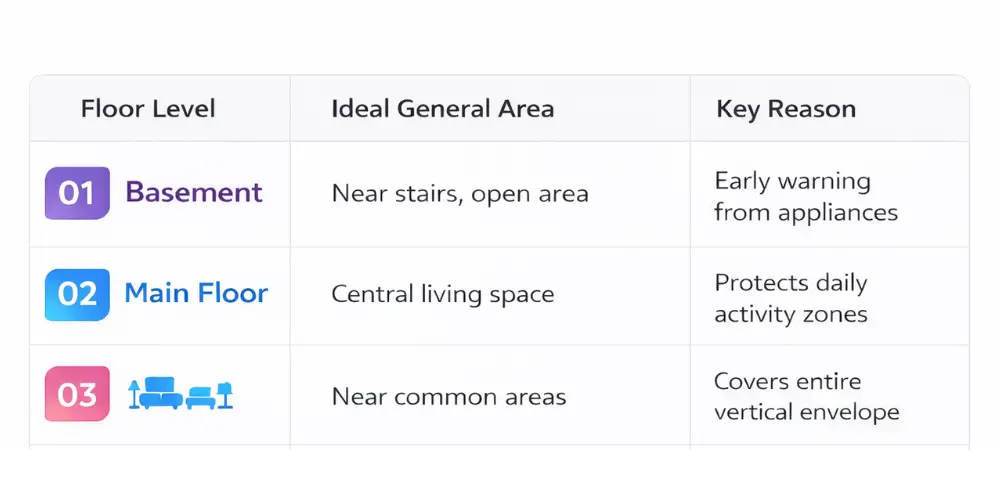
Although every home is laid out differently, carbon monoxide alarms tend to work best when placed according to how people actually live and move through each floor. Instead of treating alarms as decorations, a homeowner can see them as silent sentinels that guard everyday freedom of movement, cooking, relaxing, working, or doing laundry without needing constant thought.
On the main living floor, experts typically recommend one alarm in a central spot, away from kitchens and bathrooms, to reduce false alerts. For basements, especially those with fuel‑burning appliances, an alarm near the bottom of the stairs helps catch rising CO before it spreads.
Upper floors still matter, even if they feel “far” from fuel sources. An alarm on each level guarantees no area becomes a blind spot.
Where to Put CO Alarms in Bedrooms and Hallways
“Where to Place Your Carbon Monoxide Alarm in Bedrooms and adjoining hallways deserves special attention because sleeping occupants are less likely to notice early signs of carbon monoxide exposure. In these spaces, proper CO alarm placement supports the freedom to sleep, work, or relax without constant worry.”
- Inside each bedroom, a CO alarm should be installed in every sleeping room, ideally on the wall at breathing height or on the ceiling, following the manufacturer’s guidance. This guarantees each person receives a direct, unmistakable alert.
- In hallways outside sleeping areas where bedrooms cluster off a corridor, a CO alarm should be placed in the hallway, roughly centrally between the doors. This creates shared protection if occupants sleep with doors open or closed.
- Avoiding dead spots and obstructions. Alarms should not be hidden behind furniture, curtains, or inside closets. Clear airflow around the device allows it to sense danger early, preserving both safety and personal autonomy.
CO Alarm Placement Near Boilers, Fires and Gas Appliances
Some of the highest‑risk areas for carbon monoxide buildup are around fuel‑burning boilers, fires, and gas appliances, so alarm placement here must be deliberate. A person who values independence in their home needs these devices positioned to warn early, without constant nuisance triggers that tempt them to disable protection.
Experts typically recommend installing a CO alarm on the same level as each fuel‑burning appliance, mounted on a wall or ceiling according to the manufacturer’s instructions. It is usually placed at least 1–3 meters (3–10 feet) from boilers, open fires, gas hobs, or ovens, so that the sensor measures room air rather than brief exhaust plumes.
Where a boiler sits in a utility room or basement, placing an alarm just outside the room, or on the route from that space to living areas, provides early notice while keeping escape routes clear and time‑efficient.
Common CO Alarm Placement Mistakes to Avoid
When a carbon monoxide alarm is installed in the wrong place, it can fail to detect danger in time or trigger so often that residents are tempted to silence or remove it. Poor placement quietly undermines a person’s freedom to live, sleep, and move without worrying about invisible threats in their own space.
Common errors usually fall into three categories:
- Hiding alarms behind obstacles. Placing units behind curtains, furniture, or doors restricts air flow, slowing detection and giving CO a head start.
- Mounting alarms in dead-air zones, corners, tight alcoves, and spots with little air movement may delay response, as CO can stratify or bypass stagnant pockets of air.
- Locating alarms in constantly drafty spots. Positioning them beside open windows, extract fans, or supply vents can dilute CO around the sensor, causing delayed or missed alerts and creating a false sense of security.
Wall vs Ceiling: Mounting Height, Power and Maintenance
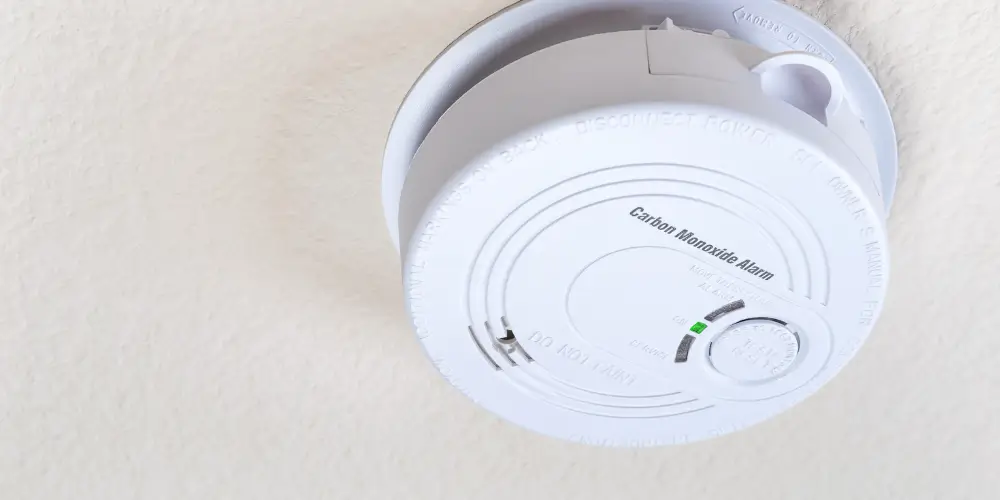
“Where to Place Your Carbon Monoxide Alarm mounting height is not just a technical detail; it directly affects how quickly a carbon monoxide alarm senses danger and how reliably it can be tested and maintained. Ceiling mounting usually offers the fastest detection because CO mixes with warm air rising from appliances and heaters. However, a high, awkward location can discourage regular testing, battery changes, and cleaning, small acts that keep a person in control of their own safety.”
On walls, the ideal position is typically 5–6 feet above the floor, away from corners, vents, and windows. This compromise balances effective sensing with easy reach, especially in rooms with high ceilings or limited power outlets.
| Option | Key Consideration |
| Ceiling mount | Faster detection; may need hardwiring |
| High wall mount | Good mix of access and performance |
| Plug‑in with backup | Simple installation; dependent on outlet location |
| Battery‑only unit | Maximum placement freedom; requires strict maintenance |
Frequently Asked Questions
Can Carbon Monoxide Alarms Detect Other Gases Like Natural Gas or Propane Leaks?
No, standard carbon monoxide alarms cannot detect natural gas or propane. They monitor only CO levels. Individuals seeking reliable protection must use separate combustible gas detectors designed to detect methane, propane, and similar flammable gases.
Do Pets or Household Plants Affect Carbon Monoxide Alarm Performance or Placement?
Pets and household plants generally do not affect the performance or placement of carbon monoxide alarms. However, alarms should be mounted out of pets’ reach, away from heavy dander, humidity, or blocked airflow to preserve accurate sensing and fast alerts.
How Often Should I Replace an Older Carbon Monoxide Alarm Unit Entirely?
They should fully replace older carbon monoxide alarms every 5–10 years, following the manufacturer’s date or expiration label. This simple reset preserves autonomy, ensuring trusted, uncompromised warning before sensors quietly lose accuracy and protective edge.
Are Smart Carbon Monoxide Alarms With Phone Alerts More Reliable Than Basic Models?
Smart carbon monoxide alarms aren’t inherently more reliable at detecting gas; both must meet the same safety standards. However, smart models enhance freedom and safety by adding phone alerts, remote monitoring, diagnostics, and easier maintenance awareness.
What Should I Do if My Carbon Monoxide Alarm Briefly Chirps and Then Stops?
They should treat a brief chirp as a status signal: check the manual, replace batteries, confirm venting is clear, and test the alarm. If chirping returns or the cause is unclear, contact professionals and ventilate immediately.
Conclusion
“By understanding where to place your carbon monoxide alarm and where not to, homeowners can dramatically increase their family’s safety. Strategically positioning units on every floor, near bedrooms, and close to fuel‑burning appliances helps guarantee early detection of this invisible gas. Avoiding common placement mistakes and following guidance on mounting height and power sources keeps alarms reliable and effective. With thoughtful installation and regular maintenance, carbon monoxide protection becomes a simple, dependable part of everyday home safety.”