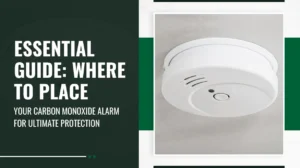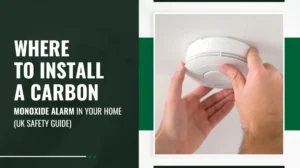
Where to Install a Carbon Monoxide Alarm: Carbon monoxide alarms should be installed on every level of the home and in hallways outside each sleeping area so alerts are heard at night. Placement works best along common travel paths and shared living spaces, with a unit near the basement stairway in homes with basements. Install additional alarms near fuel-burning appliances, but not directly above them. Avoid bathrooms, dusty workshops, dead-air corners, and drafty spots near windows or doors. More guidance on mounting height and maintenance helps guarantee dependable coverage.
Key Takeaways
- Install a carbon monoxide alarm on every level of your home, including basements and split-level floors.
- Place alarms in hallways outside each sleeping area so everyone can hear alerts at night.
- Mount alarms on common travel paths and shared living spaces, following the manufacturer’s height and clearance instructions.
- Put alarms near fuel-burning appliances (furnace, water heater, fireplace), but not directly above them or in strong drafts.
- Avoid bathrooms, dead-air corners, windows/doors, vents, and dusty or chemical-heavy areas to reduce false alarms and missed detection.
Table of Contents
The Minimum CO Alarm Setup
At a minimum, a carbon monoxide alarm should be installed on every level of the home and outside each sleeping area so an alert can be heard quickly at night. This baseline setup protects personal choice by reducing reliance on guesswork when fuel-burning equipment or attached garages are present.
On each level, placement should favour common travel paths and shared living zones, not tucked behind doors, drapes, or furniture. An alarm should be mounted per the manufacturer’s instructions, avoiding bathrooms, cooking appliances, and forced-air registers, which can create false readings or delay detection. For homes with basements, one unit belongs near the stairway leading up, where rising air can carry gas. For split-level layouts, each distinct floor should be treated as its own level. Regular testing, battery replacement, and end-of-life replacement keep the system dependable year-round.
Place a Carbon Monoxide Alarm Near Bedrooms
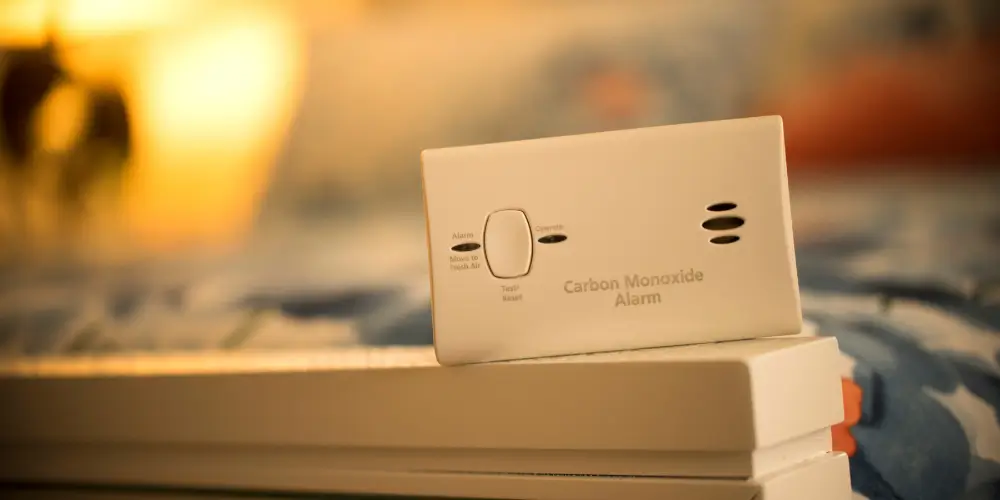
Nighttime is the most vulnerable window for carbon monoxide exposure, so alarms should be placed near bedrooms so occupants can hear them immediately. During sleep, early symptoms like headache or nausea may go unnoticed, and a warning must cut through closed doors and background noise.
Where to Install a Carbon Monoxide Alarm: A unit placed just outside sleeping areas, typically in the hallway, for fast notification without being muffled by distance. Follow the manufacturer’s height and clearance guidelines, keeping the alarm away from supply vents, ceiling fans, and dead-air corners to avoid detection delays.
Avoid placing it in bathrooms or right beside humidifiers, where steam can trigger trouble alarms and tempt people to disable the device. If bedrooms are spread out, prioritise locations that give each sleeper a clear, unblocked path to the sound. This placement supports self-reliance: people get an unmistakable alert in time to ventilate, evacuate, and call for help.
Put a CO Alarm on Each Level of Your Home
Bedroom-adjacent placement improves audibility during sleep, but carbon monoxide can accumulate in other parts of a house long before it reaches the hallway. Because CO mixes with indoor air and moves with pressure changes and HVAC circulation, a single alarm can leave entire floors unmonitored for several minutes.
A practical, autonomy-friendly method is to place at least one listed CO alarm on every level: basement, main floor, and any upper stories, including finished attics. This creates independent detection zones, reducing reliance on a single device and a single pathway for the gas to reach it. For split-levels, treat each distinct elevation as its own level. Mount alarms according to the manufacturer’s height and distance guidance, and keep them clear of doors, supply registers, and dead-air corners.
Interconnected models can add convenience, but separate units still provide resilient coverage. Test monthly and replace by date.
Install CO Alarms Near Fuel-Burning Appliances
One high-priority placement zone is within range of fuel-burning appliances such as furnaces, boilers, water heaters, gas dryers, fireplaces, and wood stoves because leaks and backdrafts often originate at the source.
Where to Install a Carbon Monoxide Alarm: A CO alarm positioned nearby can provide an earlier warning, allowing occupants to act on their own terms: shut down equipment, ventilate, and choose the next step without delay. Follow the manufacturer’s distance guidance and any local code, typically avoiding installation directly above the appliance or in dead-air corners where detection can lag.
Keep the unit accessible for testing and battery replacement, and ascertain that it is not blocked by furniture, drapes, or stored items. When appliances are in separate rooms, each room benefits from its own protection rather than relying on a distant alarm. Regularly test alarms and maintain appliances; clean vents, confirm proper draft, and address unusual soot, odour, or pilot issues promptly.
Garages, Basements, and Attics: CO Alarm Rules
Because these areas often contain ignition sources and poor ventilation, garages, strong basements, and attics require the deliberate placement of carbon monoxide alarms rather than a one-size-fits-all approach. In attached garages, place an alarm in the adjacent living space and on the level above, so a running vehicle or stored equipment cannot quietly backdraft into the home. In basements, install an alarm on the basement level and another near the stairway leading up to capture rising CO before it spreads. For attics that house furnaces or air handlers, protect the route people actually breathe: add an alarm on the nearest occupied level and, when the attic is regularly accessed, one at the attic entry.
| Area | Practical rule |
| Garage | Cover the living area next to it |
| Basement | Cover the level and the stair path |
| Attic | Cover the nearest occupied level |
| All three | Test monthly; replace per manufacturer |
Where Not to Install a Carbon Monoxide Alarm
Most installation mistakes happen in places that disrupt sensing rather than improve safety. A carbon monoxide alarm should not be placed in “dead-air” pockets such as tight corners, behind curtains, inside cabinets, or tucked into recessed shelving, where air movement is limited, and readings lag.
It also should not be installed next to windows, exterior doors, supply vents, ceiling fans, or other strong drafts that can dilute or blow past CO before it’s detected. Avoid locations that create false alarms or damage: directly above or beside fuel-burning appliances, fireplaces, or cooking equipment; in kitchens near the stove; in bathrooms or other high-humidity areas; and in places exposed to steam, grease, or aerosols.
Do not mount the unit in dusty workshops, near lint-heavy laundry areas, or where chemicals and solvents are stored. Finally, skip spots that invite tampering or accidental unplugging; dependable protection favours stable, accessible placement.
How High to Mount a Carbon Monoxide Alarm
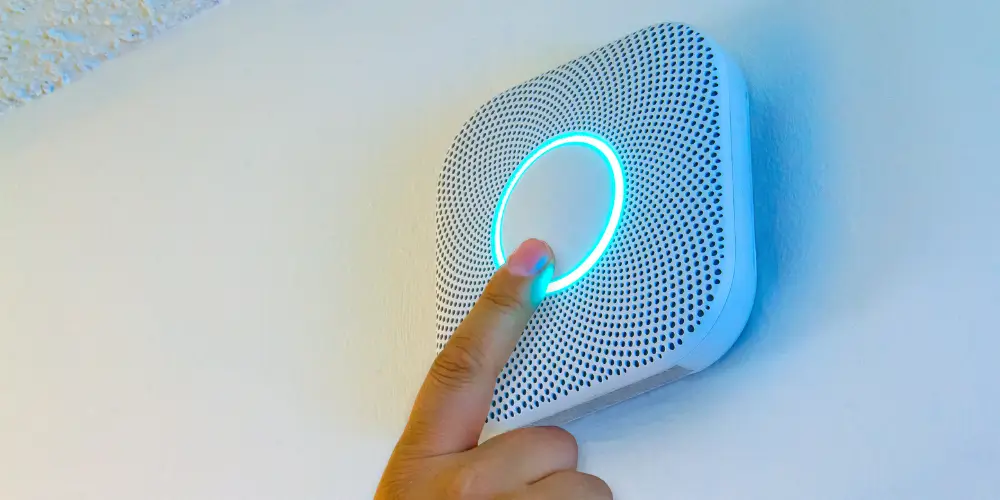
After choosing a location free of drafts, humidity, and other interference, the next question is mounting height. Carbon monoxide mixes readily with room air, so most modern alarms can be mounted either high or low, as long as the manufacturer’s instructions are followed.
For wall mounting, a practical rule is to place the unit at breathing height, about 5 feet from the floor, so it samples air where people actually live, work, and sleep. If installed on the ceiling, the alarm should be at least 4 inches from any wall to avoid dead-air corners. If installed on a wall near the ceiling, keep it 4 to 12 inches below the ceiling line.
Avoid placing it directly beside supply vents, return grilles, ceiling fans, or openable windows, where moving air can delay detection. The goal is simple: a placement that alerts occupants quickly without surrendering reliability to airflow quirks.
Test and Replace CO Alarms on Schedule
Even with ideal placement, a carbon monoxide alarm is only dependable if it is tested regularly and replaced before its sensor reaches the end of life. Most manufacturers recommend pressing the test button monthly to confirm the horn and electronics function; this does not prove CO-sensing accuracy, but it verifies that the unit can alert occupants.
Batteries should be replaced on schedule, unless a sealed 10-year battery model is used, and chirps should never be ignored. Replacement timing matters because CO sensors drift over time. Many alarms are listed for 5–7 years, while some are rated for 10; the date is typically printed on the back.
When the end-of-life signal sounds, the unit should be replaced immediately, not “silenced” indefinitely. A simple calendar reminder protects autonomy: fewer surprises, fewer false assurances, and a reliable warning system that keeps households in control of their air, choices, and exit time.
Carbon Monoxide Alarms and UK Law
Under UK law, carbon monoxide alarms are required in certain circumstances, particularly in private rented properties. According to the Smoke and Carbon Monoxide Alarm (England) Regulations 2015, landlords must install a carbon monoxide alarm in any room with a solid fuel burning appliance (e.g., a coal fire, wood stove, or gas fire). This regulation is part of the broader fire safety and health and safety framework in the UK to protect tenants from carbon monoxide poisoning.
While CO alarms are primarily focused on detecting hazardous gas leaks rather than fire directly, the general fire safety regulations (e.g., Regulatory Reform (Fire Safety) Order 2005) work together with CO alarm requirements to ensure comprehensive safety. Fire safety regulations in the UK ensure that buildings are equipped with the necessary alarms and detection systems, which can include both smoke detectors and CO alarms where required. Both types of alarms are meant to protect life and property from potential hazards like fire and toxic gas exposure.
Frequently Asked Questions
What Is Carbon Monoxide, and Why Is It so Dangerous?
Carbon monoxide is a colourless, odourless gas produced by incomplete combustion; it is dangerous because it blocks the delivery of oxygen to the blood, causing headache, confusion, unconsciousness, and death. It can accumulate unseen in homes and vehicles.
Do Carbon Monoxide Alarms Detect Natural Gas Leaks Too?
No, carbon monoxide alarms generally do not detect natural gas leaks. They measure CO, not methane or odorants. For independent safety and choice, a separate combustible-gas detector or utility-provided monitoring is typically needed.
Can My Smart Home System Connect to a Carbon Monoxide Alarm?
Yes, many smart home systems can connect to certain carbon monoxide alarms via Wi‑Fi, Zigbee, Z‑Wave, or a hub. They should choose certified, interoperable models, control their alerts, and avoid vendor lock‑in.
How Can I Tell if My Carbon Monoxide Alarm Is Malfunctioning?
A malfunctioning carbon monoxide alarm may show erratic chirps, fail self-tests, display error codes, or ignore test-button presses. He should check the power, batteries, expiration date, and sensors; if behaviour persists, replace them immediately.
Are Carbon Monoxide Alarms Required by Law Where I Live?
Carbon monoxide alarm requirements vary by location and depend on local or state law. A freedom-minded resident can check statutes or building codes, ask fire officials, or consult landlords to avoid unnecessary mandates.
Conclusion
Where to Install a Carbon Monoxide Alarm: A carbon monoxide alarm plan works best when it covers sleeping areas, each level of the home, and rooms with fuel-burning appliances. Special attention should be given to garages, basements, and attics where exhaust or malfunctioning equipment can raise risk. Alarms should be mounted at the recommended height, kept away from vents, windows, and high-humidity spots, and never placed where airflow is blocked. Regular testing and timely replacement keep protection reliable.