The cost of a gas safety check in 2025 typically ranges from £70 to £140. Prices vary by location, number and type of gas appliances, and whether a Gas Safety Certificate is included. Urban areas and evening or weekend appointments usually sit at the higher end. Some engineers bundle the check and certificate, while others charge separately. Understanding what’s included, how pricing works, and how to budget helps people judge whether a quote is truly good value.
Key Takeaways
- A standard gas safety check in 2025 typically costs between £70 and £140, depending mainly on location, demand, and provider pricing.
- Prices rise with the number and type of appliances checked, property size, and how complex or time‑consuming access to appliances and pipework is.
- Urban areas and peak times (evenings, weekends, winter) usually attract higher call‑out rates and possible surcharges for appointments.
- Some engineers bundle the check and the Gas Safety Certificate into one fee, while others charge separately for the inspection and written record.
- Landlords often budget annually for mandatory checks across properties, whereas homeowners can schedule checks more flexibly as part of general maintenance.
Table of Contents
What Does a Gas Safety Check Include?
During a gas safety check, a qualified engineer systematically inspects all gas appliances, pipework, and flues to guarantee they are operating safely and efficiently. Each appliance is checked for correct gas pressure, secure connections, and stable flame patterns, ensuring fuel is burned cleanly and reliably.
Ventilation routes and flues are examined to confirm that dangerous gases can escape freely, rather than accumulating indoors. The engineer also looks for visible signs of damage, corrosion, or wear on pipework and appliance casings.
Safety devices such as flame‑failure components and shut‑off valves are tested to verify they respond correctly under fault conditions. Where appropriate, carbon monoxide tests are carried out around appliances and flue outlets.
Finally, the engineer records findings, highlights any immediate risks, and explains which issues must be addressed before continued use, giving occupants clear information to make informed decisions about their space and personal safety.
How Much Does a Gas Safety Check Cost in 2025?
Understanding what a gas safety check involves naturally leads to the question of how much it will cost in 2025. For most households, a standard check by a qualified engineer is expected to fall roughly between £70 and £140, depending on region, property size, and the number of gas appliances.
Urban centres and high‑demand periods typically sit at the upper end of this range, while rural or highly competitive areas may be at the lower end.
Key price drivers include:
- Location and demand – High-cost cities usually carry higher call‑out and labour rates.
- Number and type of appliances – Multiple boilers, gas fires, or cookers increase inspection time and fee.
- Appointment timing and extras – Evening or weekend slots, plus minor adjustments or remedial work, may add to the base price.
Transparent quotes allow individuals to budget confidently and choose providers without feeling locked into inflated costs.
Gas Safety Check vs Gas Safety Certificate: What Each Costs
Although the terms are often used interchangeably, a gas safety check and a Gas Safety Certificate refer to related but distinct aspects of the same process, and this can affect what someone is charged.
The check is the practical inspection: an engineer tests appliances, flues, and pipework to confirm they are operating safely. The certificate often called a Gas Safety Record is the written proof of that inspection. In many cases, providers advertise a single price that covers both the check and the certificate. However, some separate the two, quoting a base fee for the inspection and an additional charge for issuing formal paperwork.
This distinction matters for anyone who wants cost transparency and the freedom to compare offers on equal terms. Where prices are split, the check usually represents the bulk of the cost, while the certificate carries a smaller, administrative-style fee layered on top.
What Drives Gas Safety Check Costs (Property, Appliances, Location)
Several practical factors sit behind the price a household or landlord is quoted for a gas safety check. Costs do not rise randomly; they reflect time on site, complexity, and travel. Understanding these drivers lets people plan on their own terms and avoid paying for more than they need.
- Property size and layout Larger homes, multiple floors, or awkward access (lofts, basements, outbuildings) demand more inspection time. Engineers may charge more where checks are clearly longer or more complex.
- Number and type of gas appliances Each extra boiler, fire, or cooker adds to the workload. High-output boilers, older appliances, or specialist kit (such as range cookers) can also command a premium.
- Location and local market rates Urban centres and remote areas alike may attract higher fees one due to higher overheads, the other due to travel time and limited competition.
Landlords vs Homeowners: How Much to Budget for Gas Safety Checks
How much to budget for a gas safety check depends heavily on whether the property is owner‑occupied or rented out. Landlords face legal duties, so they typically plan for annual checks as a fixed operating cost, much like insurance or tax. For a standard rental, many set aside enough to cover a yearly certificate plus occasional extra diagnostics if a tenant reports an issue.
Homeowners, by contrast, enjoy more flexibility. They are not bound by the same regulations and can schedule checks around their own risk tolerance, appliance age, and lifestyle. Some prefer an annual check for peace of mind; others stretch the interval and reserve funds mainly for suspected faults or upgrades.
In practice, landlords often budget on the higher side, allowing for repeat visits across multiple properties, while homeowners may ring‑fence a smaller, more adaptable sum within their general home‑maintenance budget.
How to Compare Gas Safety Check Quotes and Spot Fair Pricing
Once a rough budget is in mind, the next step is understanding what constitutes a fair price and how to compare competing quotes. Instead of accepting the first figure offered, a savvy owner or landlord evaluates what each quote truly delivers in return for their money and flexibility.
A clear comparison usually focuses on three elements:
- Scope of work – Does the quote cover every gas appliance, flues, and necessary safety tests, or is it limited to a basic inspection? A cheaper quote may exclude key checks.
- Credentials and accountability – Is the engineer properly registered, insured, and willing to document findings clearly? Verified competence justifies moderate price differences.
- Structure of fees – Are call‑out charges, additional appliance fees, and certificate costs itemised and fixed, or left open‑ended? Transparent, written pricing reduces the risk of surprises and preserves the client’s control over decisions.
Smart Ways to Save on Gas Safety Checks Without Cutting Corners
Although safety checks are a legal and moral obligation rather than an expense to trim recklessly, there are practical ways to control costs without weakening protection. A key tactic is timing: booking checks during off‑peak seasons can secure lower rates and better appointment choice.
Combining gas safety checks with boiler servicing or other maintenance under a single visit can also reduce call‑out charges. Property owners can further save by maintaining appliances between visits. Bleeding radiators, keeping vents clear, and reporting issues early help engineers work faster and avoid costly repeat callouts. Choosing a nearby, well‑reviewed engineer limits travel fees and time charges.
For landlords or portfolio owners, arranging block bookings for multiple properties often earns volume discounts while keeping every unit compliant. Finally, tracking certificate expiry dates and scheduling ahead avoids premium “last‑minute” fees, giving the individual more control over both safety and budget.
When Paying More for a Gas Safety Check Is Worth the Cost
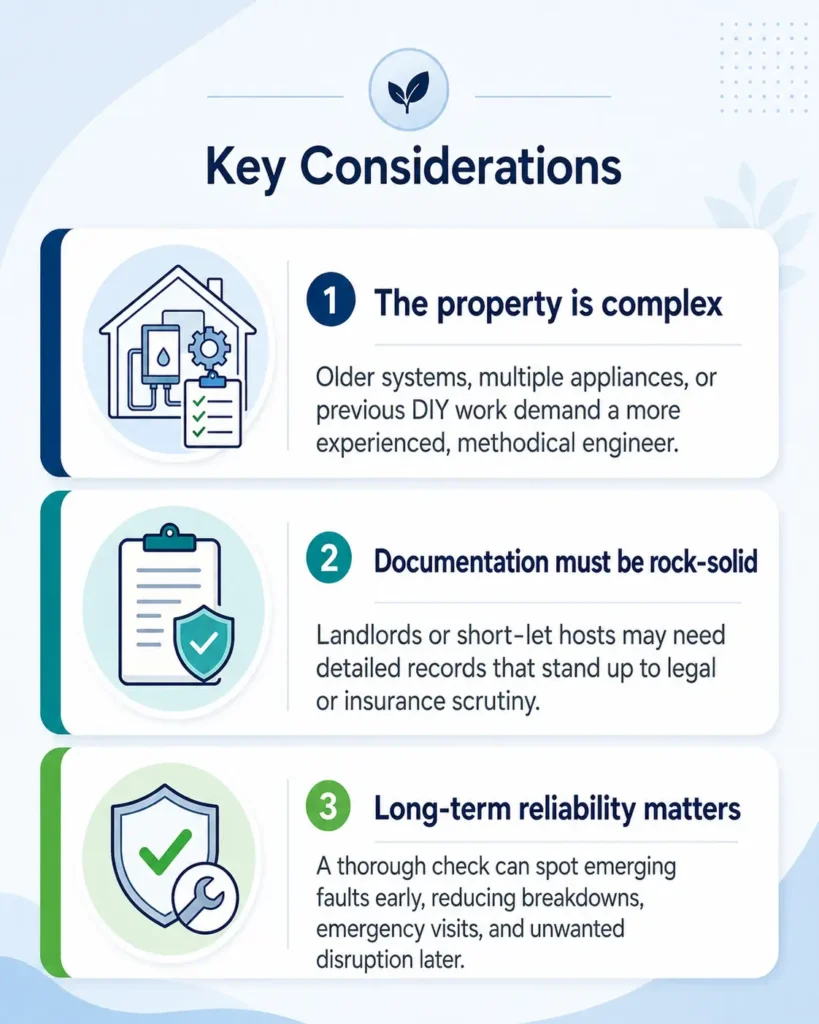
There are situations where opting for the cheapest gas safety check can be a false economy, and a higher fee is justified. For those who value autonomy and minimal interference from authorities, paying more can be a strategic choice that safeguards both personal freedom and property. A higher price often reflects deeper expertise, better equipment, and the time needed to uncover issues that rushed inspections miss.
In practice, it may be worth paying extra when:
What to Expect on the Day of Your Gas Safety Check
Most people find a gas safety check far more structured and straightforward than expected. On the day, the engineer arrives within an agreed time window and immediately confirms identification and Gas Safe registration. They ask brief questions about appliances, access, and any past issues, then move quickly into testing so disruption stays minimal. They visually inspect each gas appliance, flue, and visible pipework, then use calibrated instruments to check gas pressure, combustion, and ventilation.
Where needed, they temporarily switch appliances off to test safely, explaining any limitations before proceeding. If a problem is found, it is clearly categorised: safe to use, use with advice, or immediately unsafe.
Unsafe appliances are capped off, with repair options and likely costs outlined so the household can choose a path that suits its budget and lifestyle. Before leaving, the engineer completes the gas safety record and highlights any future risks to watch.
Frequently Asked Questions
How Often Do Gas Safety Check Prices Change Throughout the Year?
Gas safety check prices typically shift seasonally, rising in colder months and stabilizing or dropping in warmer periods. They may also change with fuel-market fluctuations, regional competition, promotional offers, and new regulations affecting engineers’ operating costs.
Are Gas Safety Check Costs Tax-Deductible for Landlords or Businesses?
Yes, they are often tax-deductible as allowable business expenses. Landlords and businesses can usually offset routine gas safety checks against rental or operating income, but must keep invoices and follow specific national tax rules or accountant guidance.
Does Home Emergency Cover or Boiler Insurance Include Gas Safety Checks?
Home emergency cover or boiler insurance may include gas safety checks, but often only in higher-tier policies. Individuals must scrutinise policy documents, exclusions, and annual service clauses, and challenge insurers’ limits to protect their property and autonomy.
Can I Combine a Gas Safety Check With Other Inspections for a Discount?
Yes, many engineers and companies offer discounts when gas safety checks are combined with boiler servicing or wider inspections. The individual should request itemised quotes, compare providers, and negotiate bundled pricing to maximise flexibility and savings.
What Happens if I Can’T Afford a Gas Safety Check This Year?
They face legal and safety risks but still hold options: negotiate payment plans, seek landlord or social assistance schemes, use charity grants, prioritize urgent repairs, and never bypass checks or tamper with gas appliances themselves.
Conclusion
Understanding what a gas safety check involves, typical 2025 prices, and the factors that influence costs helps homeowners and landlords budget realistically and avoid overpaying. By comparing quotes, checking engineer credentials, and focusing on value rather than the cheapest option, they can secure safe, compliant inspections. In many cases, paying slightly more for an experienced, reputable engineer offers better long‑term protection, fewer callbacks, and greater peace of mind about their property and occupants.