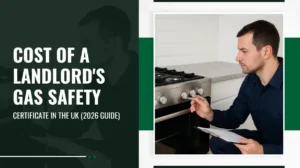
In the UK, a landlord’s Gas Safety Certificate typically costs between £60 and £120. Prices depend on location (with London and the South East often higher), the number of gas appliances, and the engineer’s own rates. Older or more complex systems can also drive up the price. Bundling the check with a boiler service or booking multiple properties together can lower costs. There are several other factors that can influence what a landlord eventually pays.
Key Takeaways
- In the UK, a landlord’s Gas Safety Certificate typically costs £60–£120, depending mainly on location and engineer.
- Urban areas, especially London and the South East, sit at the higher end of the price range.
- Costs usually rise with the number of gas appliances; some engineers charge a base fee plus a supplement per extra appliance.
- Older or complex systems, weekend visits, or last‑minute bookings can increase the overall price.
- Landlords can cut costs by bundling the certificate with boiler servicing or block‑booking multiple properties.
Table of Contents
How Much Does a Landlord Gas Safety Certificate Cost?
When budgeting for a landlord gas safety certificate, the typical cost in the UK generally ranges from £60 to £120 for a standard residential property, depending on location, the number of gas appliances, and the engineer’s pricing structure.
Urban areas, especially London and the South East, often sit at the higher end of that range, reflecting higher operating costs and demand. Additional appliances can push the price up, with some engineers charging per appliance beyond a basic package.
Landlords seeking flexibility often compare independent engineers with larger firms; independents may offer lower base prices, while bigger companies sometimes bundle certificates with servicing.
Multi‑property landlords can usually negotiate discounts for block bookings, keeping ongoing compliance from becoming a financial burden. Prices also shift seasonally, with quieter periods sometimes producing lower quotes, giving proactive landlords more control over both timing and overall spend.
What a Landlord Gas Safety Certificate Is (And Why It’s Required)
Beyond cost considerations, a landlord’s gas safety certificate (officially a Gas Safety Record) is a legal document confirming that all gas appliances, flues, and associated pipework in a rented property have been inspected by a Gas Safe-registered engineer and found safe to use at the time of inspection.
It protects both landlord and tenant, setting a clear standard so people can live and let others live without hidden risk or compromise. At its core, the certificate records whether the gas installation is safe on the day of the visit and, if so, what, if anything, must be remedied.
Typically, it will note:
- Which appliances and flues were checked
- Test results and any identified defects
- Whether those defects make an appliance unsafe to use
- What remedial work or disconnection is required
- The engineer’s Gas Safe registration details and signature
The law Gas Safety (Installation and Use) Regulations 1998 requires this document to be provided annually for most rented homes, before tenants move in and throughout the tenancy. For more details, read our blog post What Is a Landlord’s Gas Safety Certificate? Understanding Its Importance for Tenant Safety.
Key Factors That Change Your Gas Safety Certificate Price
Although the legal requirement is the same across England, Scotland and Wales, the price a landlord actually pays for a gas safety certificate can vary considerably between properties and providers. The number of gas appliances is a central driver: each additional boiler, fire, hob or water heater takes time to inspect, pushing up the fee. Older or poorly maintained systems may also increase costs, as engineers allow extra time for access issues, existing faults or non‑standard parts.
Engineer choice matters. Independent Gas Safe engineers often set lower prices than large national firms that layer on overheads and admin charges. The scope of the visit is another factor: combining the certificate with boiler servicing, minor repairs or detector installation can alter the final figure, sometimes reducing overall spend.
Finally, booking flexibility influences price; last‑minute, evening or weekend appointments typically command a premium for the engineer’s time. Read out our guide on finding a Gas Safe Registered engineer, Gas Safe Registered Engineer Near Me.

How Location and Property Type Affect Landlord Certificate Costs
Alongside appliance numbers and engineer choice, geography and building characteristics play a major role in what landlords actually pay.
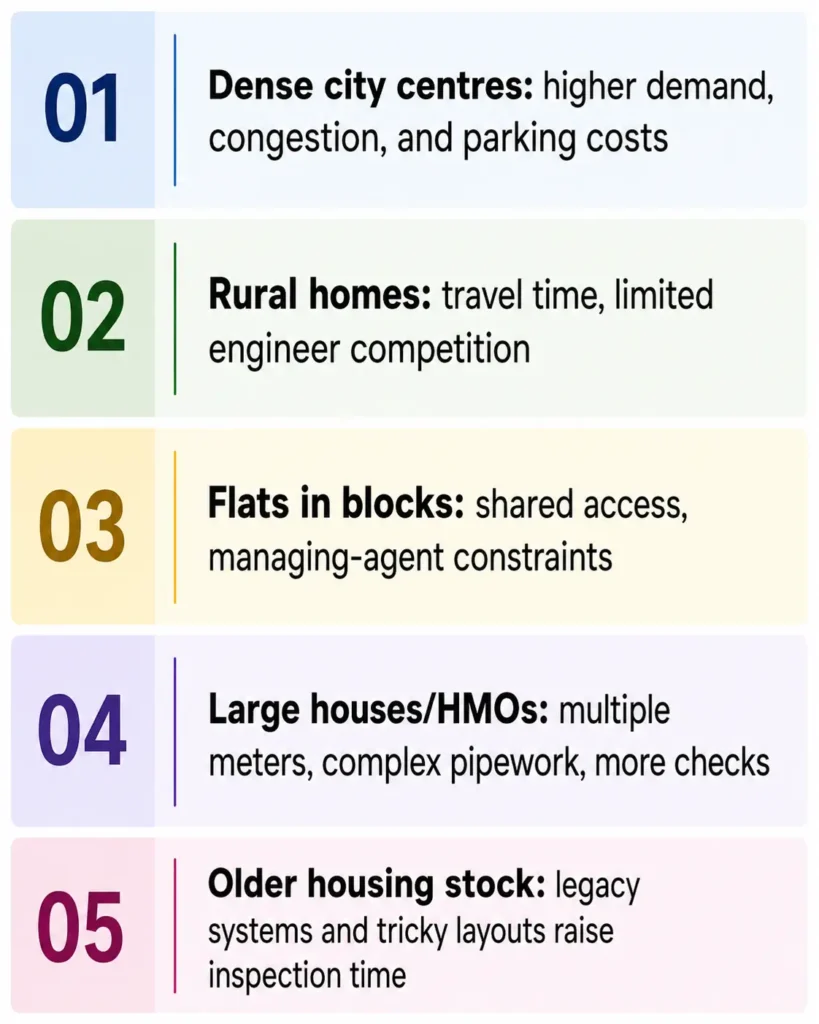
Urban postcodes with tight time slots and parking restrictions usually attract higher fees than quieter suburbs, where engineers can move faster and keep overheads lean. Rural areas may sit in the middle: fewer engineers, more travel, but lower general cost of living. Property type also shapes the bill. Compact flats differ from rambling HMOs, and Victorian conversions rarely behave like new‑build blocks.
Engineers price in access, layout, and system complexity, not just the number of radiators.
Save on Your Gas Safety Certificate by Bundling Boiler Servicing
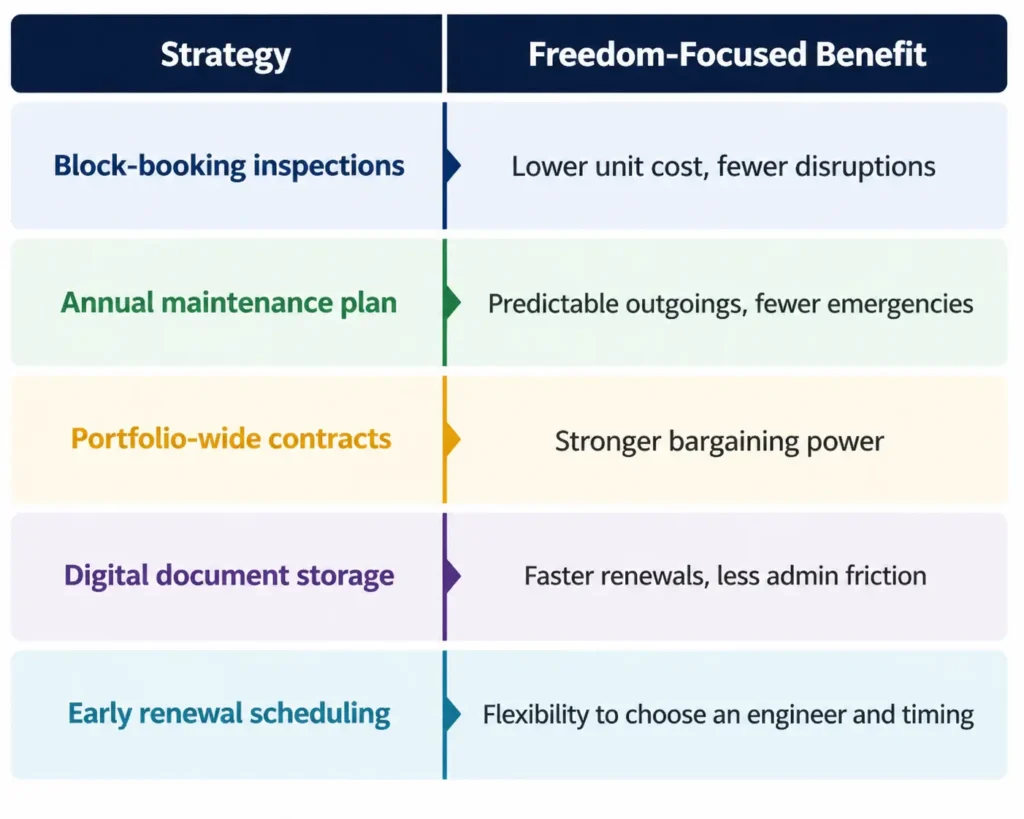
When planning the annual Gas Safety Certificate, many landlords cut costs by scheduling a boiler service at the same visit. This simple shift allows them to keep control of outgoings without sacrificing legal compliance. Engineers typically charge lower rates when multiple tasks are completed in one appointment, because travel and administration are reduced.
Bundling lets landlords lock in predictable, once‑a‑year costs instead of facing surprise call‑out fees later. A serviced boiler is also less likely to fail suddenly, which supports uninterrupted tenancies and reduces pressure to fund urgent repairs at short notice. Many gas engineers now advertise combined “CP12 plus boiler service” packages, often priced more attractively than booking the checks separately.
Landlords still retain the flexibility to compare several quotes and choose how thorough the service should be. Over time, this strategic bundling can stabilise maintenance budgets while leaving more capital free for other investments or improvements.
Cheap vs Quality Gas Safety Certificates: When ‘Cheap’ Costs More
Bundling services can certainly trim costs, but a narrow focus on the cheapest Gas Safety Certificate can backfire. A rock‑bottom quote may feel like freedom from overheads, yet it can quietly restrict a landlord’s options later: limited inspection time, rushed engineers, or vague reports that fail to stand up when a dispute arises.
A genuinely good‑value certificate respects both legal duties and the landlord’s desire for flexibility and peace of mind. When comparing prices, a freedom‑minded landlord looks beyond the headline fee and asks what is actually being delivered:
- The time the engineer allocates per property
- Whether all appliances and flues are properly tested
- Clarity and detail of the written report
- Responsiveness if follow‑up questions or issues arise
- Evidence of qualifications, insurance, and accreditation
Paying slightly more for thorough work can prevent repeat visits, void tenancies, or enforcement action that costs far more than any upfront “savings.”
Smart Ways to Cut Gas Safety Certificate Costs Without Cutting Corners
Although a Gas Safety Certificate is a non‑negotiable legal requirement, landlords still have room to control costs through planning and sensible decision‑making rather than risky shortcuts. By thinking ahead, they preserve both legal compliance and personal freedom over how their properties are run and financed.
Landlords who group inspections across multiple properties can often negotiate lower per‑certificate rates, especially if they commit to an annual schedule with the same Gas Safe engineer. Preventive maintenance also matters: servicing boilers and appliances before they fail usually keeps inspections quick, clean and inexpensive.
Digital record‑keeping frees landlords from last‑minute panic. Storing certificates, service histories and appliance details in one place reduces admin fees and avoids repeat visits.
Frequently Asked Questions
How Long Does a Landlord’s Gas Safety Certificate Remain Valid?
A landlord’s gas safety certificate remains valid for 12 months. This annual rhythm gives tenants reassurance while allowing landlords regular check‑ins on system integrity, balancing safety with the independence to manage properties flexibly and responsibly over time.
What Happens if I Don’T Renew My Gas Safety Certificate on Time?
They risk breaking legal duties, invalidating insurance, and endangering tenants’ safety. Authorities may impose fines or prosecution, and tenants could demand repairs or report them. Responsible landlords renew promptly to protect both their independence and others’ right to safe homes.
Can Tenants Request to See the Gas Safety Certificate, and How Quickly?
Tenants can request the gas safety certificate at any time, and landlords must provide a copy within 28 days of the check and before new tenants move in, ensuring transparent, accountable control over their living environment.
Do I Need a Separate Certificate for Each Rental Property I Own?
Yes, a separate gas safety certificate is required for each rental property. Each home’s appliances and pipework must be inspected and documented individually, ensuring every tenant’s right to live with safe, independently verified gas installations.
How Do I Check if an Engineer Is Properly Gas Safe Registered?
They verify an engineer by searching the Gas Safe Register online or calling its helpline, confirming the engineer’s name, ID number, photo, and qualifications, then checking the engineer’s yellow Gas Safe ID card on arrival.
Conclusion
To summarise, understanding what a landlord’s gas safety certificate is and why it’s required helps landlords budget more accurately. Costs vary with location, property size, the number of appliances, and the engineer’s qualifications, but strategic choices make compliance affordable. Bundling boiler servicing with planning renewals early and avoiding unrealistically cheap offers can reduce long-term expenses and risk. By focusing on value rather than the lowest price, landlords protect their tenants, properties, and legal position cost‑effectively.