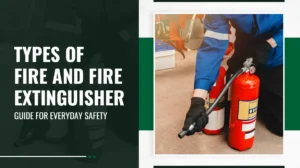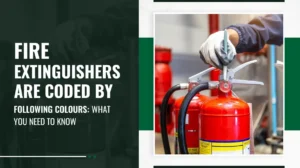
Types of Fire and Fire Extinguisher: Fires are grouped into classes: A (ordinary combustibles), B (flammable liquids and gases), C (energised electrical), D (combustible metals), and K (cooking oils and fats). Matching extinguishers include water or foam for Class A, foam or CO₂ for Class B, CO₂ or dry chemical for Class C, special powders for Class D, and wet chemical for Class K. Knowing these types and how each extinguisher works helps people choose, place, and use them more effectively.
Key Takeaways
- Fires are classified by fuel: Class A (solids), B (liquids/gases), C (electrical), D (metals), and K/F (cooking oils and fats).
- Water extinguishers are for Class A only; never use them on electrical, flammable liquid, or oil fires.
- Foam extinguishers suit Class B and some Class A fires by blanketing flammable liquids and cutting off oxygen.
- CO₂ and dry chemical extinguishers are used on electrical (Class C) fires because they are non‑conductive and leave minimal or manageable residue.
- Class K wet chemical extinguishers are specialised for cooking oil fires, forming a barrier that cools and prevents re‑ignition.
Fire Classes: What Each One Means
Fire classes provide a systematic way to categorise different types of fires by the fuel involved, guiding the safe and effective selection of extinguishing methods. This structure helps people act with confidence instead of panic, reducing reliance on guesswork when every second matters.
Class A covers ordinary combustibles such as wood, paper, cloth, rubber, and many plastics.
Class B involves flammable liquids and gases, including fuels, oils, solvents, and some paints.
Class C refers to fires in energised electrical equipment, where live current creates additional hazards.
Class D involves combustible metals such as magnesium, sodium, and titanium, often found in workshops or industrial settings.
Class K (or F in some regions) covers fires involving cooking oils and fats, common in both commercial and home kitchens.
Which Extinguisher for Each Fire Class?
Because each fire class reacts differently to heat and extinguishing agents, choosing the correct extinguisher is essential for both effectiveness and safety.Class A fires, involving ordinary combustibles, are best matched with water, foam, or multipurpose dry chemical (ABC) extinguishers, which cool and coat the burning material.
Class B fires, fueled by flammable liquids, call for foam, CO₂, or dry chemical agents that separate fuel from oxygen without spreading the liquid.
Class C fires, energised electrical incidents, demand non‑conductive agents such as CO₂ or dry chemical; once power is cut, the fire is usually treated as Class A.
Class D fires involving combustible metals require specialised dry powders designed for that metal; never water or foam.
Class K fires, linked to cooking oils and fats, are handled with Class K wet chemical extinguishers that rapidly knock down flames and create a barrier, supporting quick, controlled evacuation.
How Different Fire Extinguishers Work
Although all extinguishers share the same basic goal of stopping combustion, they do so through different physical and chemical actions tailored to specific fuels. Each type targets at least one side of the fire triangle: heat, fuel, or oxygen. Understanding this mechanism lets people act decisively instead of relying on guesswork in an emergency.
Dry chemical agents, such as monoammonium phosphate or sodium bicarbonate, interrupt the chemical chain reaction in the flame zone, forming a barrier over the fuel and smothering vapours. Carbon dioxide displaces oxygen around the fire and cools surfaces slightly as it expands, leaving no residue and protecting equipment and preserving options afterwards. Foam forms a stable blanket over flammable liquids, sealing in vapours and preventing re‑ignition, while its water content absorbs heat.
Clean agents, including halocarbon blends, vaporise and absorb heat while inhibiting flame chemistry, providing rapid knockdown without compromising sensitive electronics or mobility.
Water Extinguishers for Class A Fires
Among the various extinguishing methods, the most straightforward is the water extinguisher, designed specifically for Class A fires involving ordinary combustibles. These fires involve everyday materials, such as paper, wood, textiles, and some plastics found in homes, workshops, and public spaces where people seek to live and work without feeling constrained by constant hazards.
A water extinguisher works by rapid cooling. The jet or spray absorbs heat from burning material, dropping its temperature below the ignition point and breaking the combustion cycle. This simplicity appeals to users who prefer clear, predictable tools to complex, specialised agents in Types of Fire and Fire Extinguisher.
However, understanding its limits preserves real freedom of action. Water must never be used on live electrical equipment or on burning flammable liquids, where it can spread danger rather than suppress it.
When matched correctly to Class A risks, a water extinguisher offers reliable, low‑cost, and easily understood protection.
Foam Extinguishers for Liquids and Solids
Foam extinguishers provide versatile protection for both flammable liquids (Class B) and many solid combustibles (Class A). They work by forming a stable blanket that floats on liquid fuel, cutting off oxygen and suppressing vapour release, while the water content cools surrounding materials.
This dual action helps keep a small incident from escalating into a barrier against escape or rescue.
They are commonly chosen for workshops, garages, fuel storage areas, and mixed-use spaces where both plastics, paper, or wood and liquid fuels are present. Their range and coverage let people tackle a fire from a safer distance, maintaining clear exit routes and options.
Unlike plain water units, foam extinguishers may be used on many spill fires without spreading the burning liquid. Users must still avoid spraying with excessive force directly into a pool, instead allowing the foam to flow gently across the surface, building a protective layer within Types of Fire and Fire Extinguisher.
CO2 Extinguishers for Electrical Fires
CO2 extinguishers provide essential protection for electrical fires by displacing oxygen around the flame without leaving conductive or corrosive residue. This allows energised equipment to be tackled without the fear of water, foam, or chemical deposits creating new hazards or long‑term damage.
The agent, released as a cold, high‑pressure gas, quickly smothers the flame while evaporating cleanly into the air. For people who value autonomy and minimal disruption, CO2 supports rapid intervention with limited collateral impact on property or operations.
It is especially suited to control panels, server racks, machinery, and confined electrical spaces where continuity and cleanliness matter. However, it is effective only while the gas concentration is maintained, so reignition remains a possibility if heat sources stay active.
Users must also respect the risks of asphyxiation in small rooms and the extreme cold of the discharge horn, ensuring responsible use that protects both lives and equipment.
Dry Powder Extinguishers: Uses and Limits
While CO2 units excel at live-electrical risks, many mixed‑fuel environments rely on dry-powder extinguishers for their broad fire‑fighting capability.
These units disrupt the chemical chain reaction in Class A, B, and C fires, allowing people to defend workshops, vehicles, and outdoor sites without switching equipment. Their power lies in flexibility: one cylinder can tackle burning solids, flammable liquids, and gas-fed flames, even around energised circuits. However, this freedom has limits.
Dry powder creates dense clouds that sharply reduce visibility and can hinder escape. The residue contaminates machinery, electronics, and stock, often causing more disruption than the fire itself. Indoors, the airborne powder can irritate lungs and should never be used casually in confined areas.
It does not provide effective cooling, so re‑ignition remains a risk if fuel stays hot. For these reasons, dry powder suits open, industrial, and mobile settings more than clean, occupied interiors.
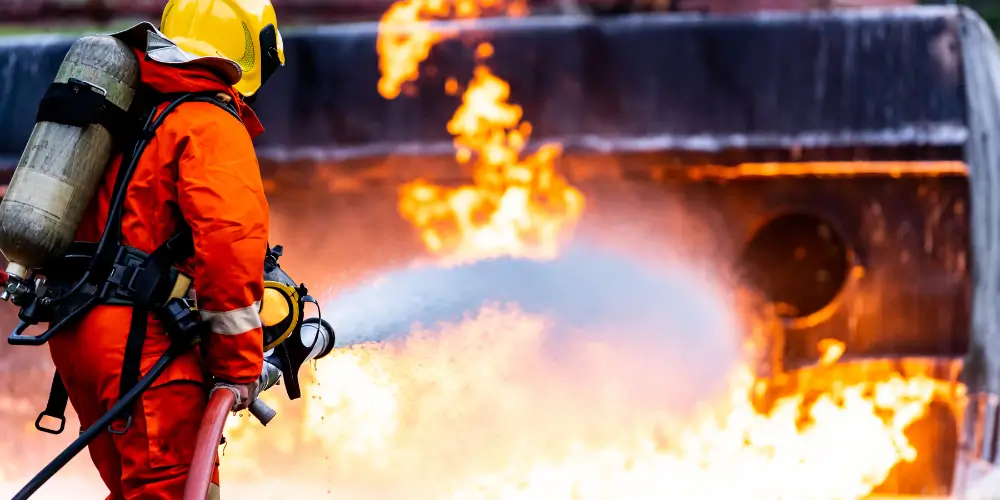
Wet Chemical Extinguishers for Cooking Oils
Harnessing a specialised formula, wet chemical extinguishers are designed specifically to tackle high‑temperature cooking oils and fats that fuel dangerous Class F fires.
When superheated oil ignites, conventional water jets or dry agents can spread burning liquid, escalating risk and trapping people. The wet chemical stream instead cools the oil and reacts with it, forming a soapy, foam-like layer that smothers flames and blocks re-ignition. This process, known as saponification, converts volatile oil into a more stable barrier, providing occupants with a safer escape route and greater control over their environment within Types of Fire and Fire Extinguisher.
Wet chemical units are typically found in commercial kitchens, food trucks, and any space where deep‑fat fryers or woks are used intensively. Clearly labelled for Class F fires, they are deployed at a short distance with a gentle, controlled application pattern, reducing splash and helping individuals protect themselves without surrendering to panic or chaos.
Choose and Maintain the Right Extinguisher
After understanding how wet chemical units manage volatile cooking oils, attention naturally turns to selecting and maintaining extinguishers for other risks in a building.
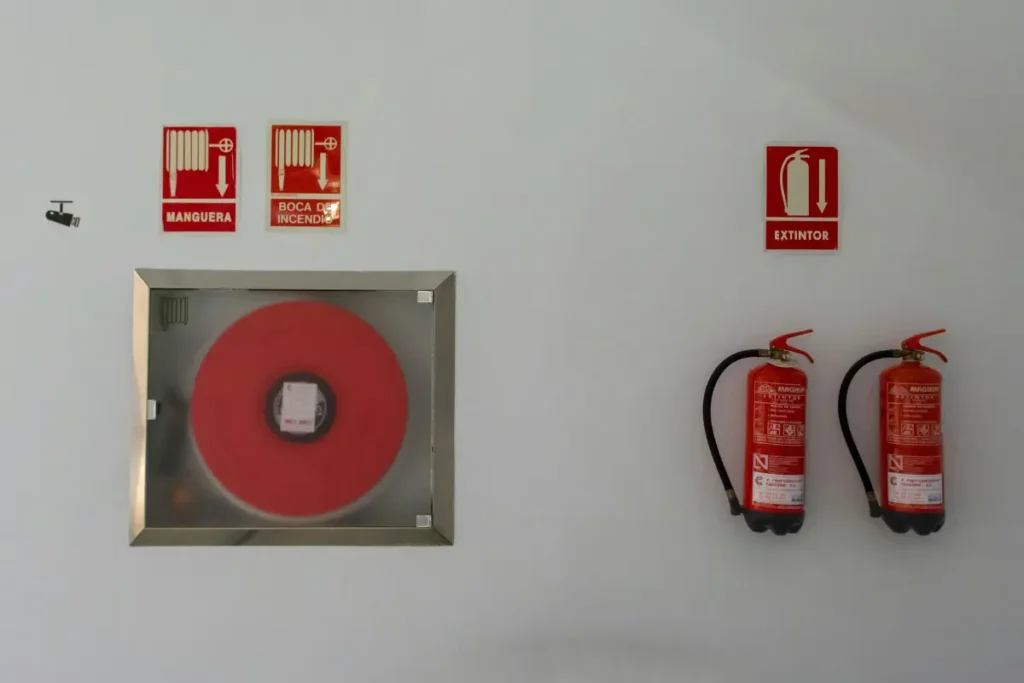
An informed choice of Types of Fire and fire extinguishers lets occupants move, work, and gather without feeling dependent on slow outside help. They match extinguishers to fuel types: water or water-mist for ordinary solids, foam for flammable liquids, CO₂ for live electrics and sensitive equipment, and dry powder for mixed or outdoor hazards where visibility is less critical. To keep this protection reliable, extinguishers are positioned on clear escape routes, wall-mounted, and labelled so anyone can act fast.
Regular monthly visual checks spot damage, broken seals, or low pressure. Annual servicing by a competent technician confirms weight, pressure, and nozzle condition. Records are kept, expired units are replaced, and discharged ones are recharged immediately. Proper choice and maintenance preserve the freedom to respond, not just evacuate.
Frequently Asked Questions
Can I Use an Expired Fire Extinguisher in an Emergency?
They technically can, but shouldn’t rely on it. An expired extinguisher might fail, discharge weakly, or leak. In a real emergency, they’d use it only if no safer, properly serviced alternative exists.
What Should I Do Immediately After Using a Fire Extinguisher?
They should back away, confirm the fire is fully out, and stay ready to evacuate. Then they must call emergency services, ventilate the area, avoid breathing lingering fumes, and arrange inspection or replacement of the extinguisher used.
How Should Fire Extinguishers Be Stored in Vehicles or Outdoors?
They should be securely mounted upright, easily reachable, and protected from weather, heat, and impact. The observer notes clear labelling, regular inspections, tamper seals intact, and quick-release brackets enabling rapid grab-and-go use without restrictive barriers.
Are There Special Extinguishers for People With Limited Strength or Mobility?
Yes. Lightweight, ergonomic extinguishers with easy‑squeeze levers, wall‑mounted pull‑down units, and aerosol can-style devices exist, empowering people with limited strength or mobility to act independently. Clear labelling and nearby alarms further preserve personal autonomy during emergencies.
What Fire Extinguisher Training Is Recommended for Home or Office Occupants?
Basic extinguisher training should include practice of the PASS technique, recognising when not to fight fires, escape-route planning, understanding extinguisher labels, and short hands-on drills, empowering occupants to act voluntarily, confidently, and only when safe within personal limits.
Conclusion
Understanding Types of Fire and Fire Extinguishers and matching them with the correct extinguisher helps prevent small incidents from becoming disasters. By recognising the differences between water, foam, CO2, dry powder, and wet chemical units, individuals and workplaces can respond more effectively to specific risks. Regular inspection, proper placement, and basic training guarantee that extinguishers are ready when needed. Ultimately, informed choices and ongoing maintenance support a safer environment and more confident responses in an emergency.