Maintained and Non-Maintained Emergency Lighting. Maintained emergency lights stay on during normal operation and switch to battery power during outages, making them suitable for stairwells, assembly areas, and venues with low ambient light. Non-maintained units remain off until a power failure, then illuminate for the rated duration, often used in offices and warehouses to save energy. Selection should follow a risk assessment, local codes, and standards such as BS 5266 and EN 1838, with correct placement and regular testing. Further guidance clarifies key design and maintenance steps.
Key Takeaways
- Maintained emergency lights stay on normally and switch to battery during outages, improving constant wayfinding in dim or public areas.
- Non-maintained units stay off in normal use and activate only on power failure, reducing energy use in well-lit workplaces.
- Choose based on occupancy risk, escape route complexity, ambient lighting levels, and the need for continuous visibility of exits and safety equipment.
- Ensure compliance with BS 5266 and EN 1838, including correct placement at exits, stairs, changes of direction, alarms, and firefighting equipment.
- The Responsible Person must ensure suitability, testing, repairs, and logbooks; contractors can help, but accountability remains with the dutyholder.
Table of Contents
Maintained vs Non-Maintained Emergency Lighting: Quick Decision Guide
When should maintained emergency lighting be chosen over non-maintained units? Maintained units operate continuously, providing normal illumination and switching seamlessly to battery power during an outage. They are typically preferred where lights must remain on whenever a space is occupied, or where sudden darkness could increase risk, such as in assembly areas, public-facing interiors, stairwells, and places with limited daylight. Non-maintained emergency lighting remains off during normal conditions and turns on only when mains power fails. It is often selected for areas already adequately lit by standard fixtures and where continuous emergency-luminaire operation is unnecessary, helping reduce energy use and lamp wear.
Maintained and Non-Maintained Emergency Lighting. A quick rule: choose maintained where constant visibility, reassurance, or wayfinding is needed; choose non-maintained where existing lighting sufficiently serves occupants until a power failure. The final selection should align with local codes, occupancy patterns, and maintenance capabilities.
Choosing Emergency Lighting for Escape Routes (Step-by-Step)
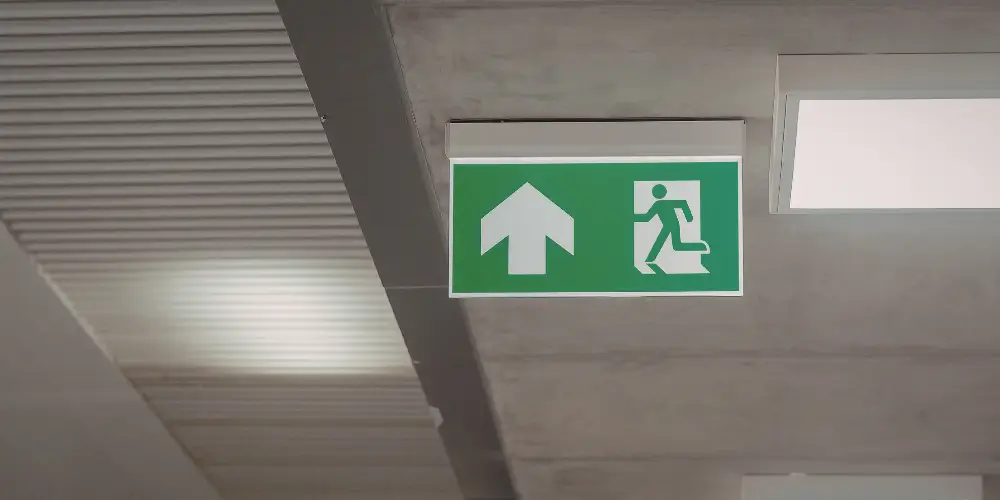
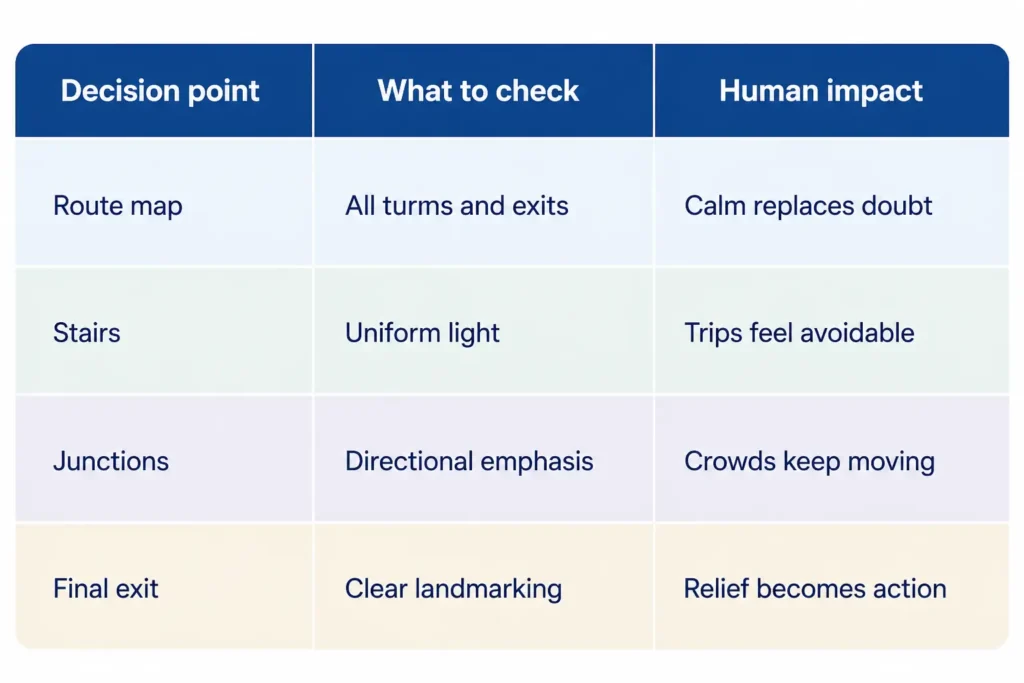
Maintained and Non-Maintained Emergency Lighting. Escape routes demand emergency lighting that keeps occupants oriented, prevents bottlenecks, and makes exits unmistakable under fault conditions. A practical selection process begins with mapping every escape path, including changes in level, intersections, and final exits. Next, identify “panic points” where confusion is likely: long corridors, lobbies, and stair cores. Then set performance targets: sufficient illuminance on the route, clear visibility of direction signs, and controlled glare so that eyes can adapt quickly. After that, place luminaires to eliminate shadowed pockets, especially near doors, fire equipment, and alarm call points. Finally, verify the design through a walk-through scenario and document locations for inspection and testing.
Maintained Emergency Lighting Explained (What It Does Day-to-Day)
Maintained emergency lighting extends the escape-route approach by keeping selected luminaires illuminated during normal occupancy and during a power loss.
Maintained and Non-Maintained Emergency Lighting. In day-to-day use, it functions as part of the building’s regular lighting scheme, supporting safe movement and clear wayfinding even when ambient light is low. Because these fittings are already on, occupants tend to notice exits, changes in floor level, and key safety equipment without needing to “search” under stress. It is often specified for areas where continuous reassurance matters, such as public corridors, stair enclosures, reception zones, and venues that dim general lighting for atmosphere.
Routine checks focus on confirming lamp operation, signage visibility, and consistent light distribution along routes.
- It reduces anxiety by making escape information feel constantly present.
- It protects confidence by keeping hazards and direction cues unmistakable.
- It supports calm decision-making by maintaining familiar lighting conditions.
Non-Maintained Emergency Lighting Explained (When It Switches On)
How does non-maintained emergency lighting behave in normal conditions?
It remains off during everyday operation and does not contribute to the building’s regular illumination. The fitting is still powered at the supply side, so its charger keeps the internal battery topped up, but the lamp or LED array remains unlit while mains power is present.
It switches on automatically when normal power fails, typically triggered by a loss of mains voltage to the luminaire’s control gear. At that point, the unit draws on its battery and provides light for a rated duration, commonly one to three hours, depending on the specifications.
When mains power returns, the light switches back off and the battery begins recharging. Because activation is tied to supply failure, non-maintained units are designed to operate only in emergencies, ensuring stored energy is preserved for outages and preventing confusion with normal lighting circuits.
Regular testing confirms correct changeover and battery condition.
Best Uses for Maintained Emergency Lighting (By Building Type)
Two common scenarios make a maintained emergency luminaire the preferred choice: buildings that rely on lighting at all times for safe movement, and spaces where the same fitting must double as normal and emergency illumination.
In these settings, the constant presence of light supports orientation, reduces anxiety, and keeps key routes legible even before an outage occurs. Maintained fittings are commonly used in venues after dark or with unfamiliar occupants, such as theatres, cinemas, and event halls, where dark adaptation and crowd flow make continuous exit-sign and route lighting reassuring.
They also fit shopping centres, hotels, and large public foyers, where people arrive, browse, and move between levels, so consistent wayfinding matters. In healthcare and residential care settings, maintained lighting supports vulnerable users and night staff, helping prevent disorientation and falls.
- Keeps escape routes visible, not just “on when needed”.
- Calms crowded spaces by preserving familiar lighting cues.
- Protects high-traffic circulation areas where hesitation can become dangerous.
Best Uses for Non-Maintained Emergency Lighting (By Building Type)
Non-maintained emergency luminaires suit buildings where normal lighting is sufficient during occupancy and emergency light is only required after a mains failure. They are commonly chosen where providing a constantly lit fitting would add unnecessary energy use, glare, or visual clutter. In these settings, the key aim is enabling safe escape and hazard awareness when the normal supply is lost, rather than providing continuous wayfinding.
| Building type | Why non-maintained fits |
| Offices (open-plan, cellular) | Day-to-day lighting is adequate; backup only for evacuation routes. |
| Warehouses and storage | High bays suit normal operations; emergency output guides aisles and exits. |
| Schools and universities | Classrooms and corridors use standard lighting; backup supports orderly evacuation. |
| Retail (supermarkets, shops) | General lighting is already bright; emergency lighting activates only during outages. |
| Industrial workshops | Task lighting dominates; emergency units support shutdown and safe egress. |
Selection still depends on the complexity of the escape route, occupancy risk, and required illumination levels.
Testing Emergency Lighting: Monthly Checks vs Annual Duration Tests
When should emergency lighting be tested, and what does each test actually prove? A practical approach separates quick monthly checks from the deeper annual duration test.
Monthly tests briefly simulate a mains failure to confirm that each luminaire changes over, that indicators behave normally, and that obvious faults, such as dead lamps, damaged diffusers, and missing charge, are caught early.
Annual duration tests run the system on battery for its rated period, revealing gradual battery decline, charger weakness, and circuits that cope for minutes but not the full outage. Because this test is demanding, it is usually planned to reduce disruption and allow time for recharging afterwards.
To many building operators, testing matters because it protects people from three unsettling outcomes:
- A dark corridor that turns a calm exit into panic.
- A “working” fitting that fades halfway through an evacuation.
- A hidden failure is discovered only when power is lost.
Emergency Lighting Compliance: Duration, Placement, Responsibilities
Regular testing only confirms performance against a standard; compliance defines what that standard is in the first place how long emergency lighting must operate, where fittings must be positioned to protect escape routes and safety points, and who is accountable for specifying, maintaining, and recording the system.
Most UK guidance (such as BS 5266 and EN 1838) requires luminaires to provide a minimum duration of three hours, unless a risk assessment justifies a shorter period.
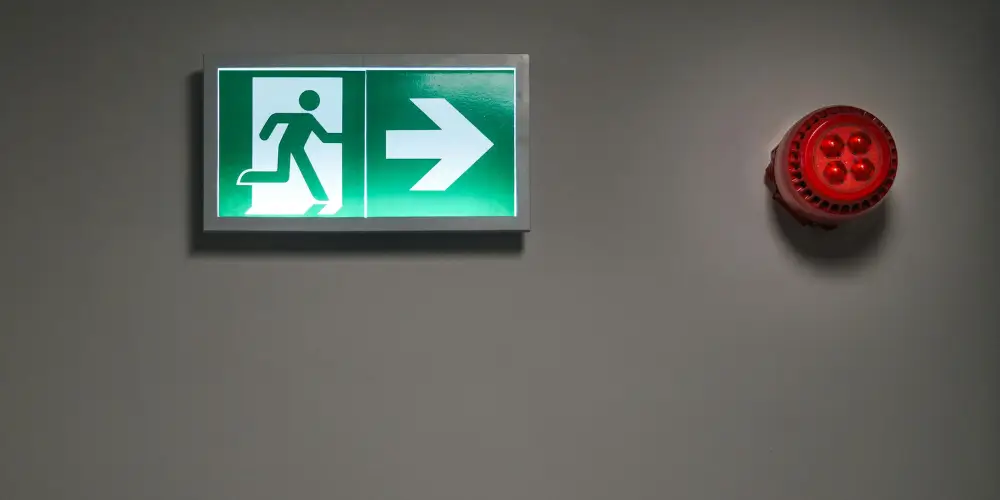
Placement is equally prescriptive: fittings should illuminate all exit routes, changes of direction, stairs, final exits, fire alarm call points, firefighting equipment, and high-risk task areas, with careful attention to obstructions and to the visibility of signage.
Responsibilities sit with the “responsible person” under fire safety legislation, typically the employer or building owner, who must guarantee design suitability, routine testing, prompt repairs, and accurate logbooks.
Competent contractors may deliver the work, but accountability cannot be delegated.
Frequently Asked Questions
Can Maintained Fittings Be Dimmed During Normal Operation to Save Energy?
Yes, maintained fittings can often be dimmed during normal operation, but only if the driver and control gear support dimming. Any dimming must preserve required emergency output, comply with standards, and avoid impairing testing.
How Long Do Emergency Lighting Batteries Typically Last Before Replacement?
Emergency lighting batteries typically need replacement every 3–5 years, though some last 7–10 years, depending on type, temperature, and testing regime. Regular monthly checks and annual discharge tests reveal declining capacity and failures.
Are LED Emergency Lights Compatible With Existing Central Battery Systems?
Yes, many LED emergency lights can work with existing central battery systems, but compatibility depends on voltage, wiring method, and driver type. They should be verified against system specifications, load calculations, and relevant safety standards.
What’s the Difference Between Self-Test and Manual-Test Emergency Luminaires?
Self-test emergency luminaires automatically run periodic functional and duration checks, indicate faults via LEDs or logs, and reduce staff workload. Manual-test luminaires require planned inspections and simulated power failures, relying on personnel, records, and discipline.
Can Emergency Lighting Be Integrated With Fire Alarm or Building Management Systems?
Yes, emergency lighting can integrate with fire alarm or building management systems via relays, digital inputs, or networked controls. Integration enables central monitoring, test scheduling, fault reporting, and coordinated responses, provided compatibility, code compliance, and cybersecurity are addressed.
Conclusion
Maintained and Non-Maintained Emergency Lighting. Selecting between maintained and non-maintained emergency lighting depends on how a building is used, who occupies it, and the risks during power loss. Maintained fittings provide continuous illumination, supporting busy public areas and clearly marking escape routes at all times. Non-maintained units remain off until mains failure, suiting workplaces and back-of-house spaces where normal lighting is sufficient. Regular monthly function checks and annual full-duration tests, alongside correct placement and documentation, remain essential for compliance.