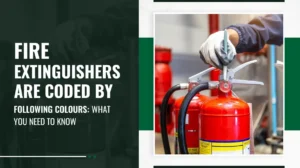
Fire Extinguishers Are Coded by the Following Colours. UK fire extinguishers are usually red with a coloured panel showing the agent, helping users quickly match it to the fire. Water (red) is for Class A solids only. Foam (cream) suits Class A and B liquids. Dry powder (blue) covers A, B, and C gases but creates a messy residue. CO2 (black) is commonly used on electrical risks. Wet chemical (yellow) targets Class F cooking oils. Older full-body colours may still appear, and clear labels matter; further guidance expands on safe use.
Key Takeaways
- UK extinguishers are usually red with a coloured panel showing the extinguishing agent for quick identification in emergencies.
- Colour panels typically mean: Water (red), Foam (cream), Dry Powder (blue), CO2 (black), Wet Chemical (yellow).
- Older extinguishers may use full-body colours, so recognise both older schemes and modern red-with-panel designs.
- Match the extinguisher to the fire class: A (solids), B (liquids), C (gases), D (metals), F (cooking oils).
- Check labels and colour panels are visible and legible, and never use water or foam on live electrical equipment.
Fire Extinguisher Colour Codes (UK): Quick Guide
A visual shorthand, UK fire extinguisher colour codes help identify an extinguisher’s contents and intended use at a glance.
Modern UK units are typically red with a coloured panel or band indicating the agent, keeping choices fast and personal responsibility clear during emergencies. Older full-body colour schemes may still appear, so knowing both conventions supports confident action.
Water is marked with a red label; foam uses cream; dry powder uses blue; carbon dioxide (CO2) uses black; wet chemical uses yellow.
Fire Extinguishers Are Coded by the Following Colours. The coloured section is usually placed on the front label and around the neck, and the pictogram and text should be read even when the colour seems obvious. Standardised coding reduces confusion in workplaces and public venues, helping people act without waiting for permission. Regular checks guarantee labels remain legible, and bands are not obscured by repainting, grime, or aftermarket sleeves.
Fire Classes A–F: Match the Fire First
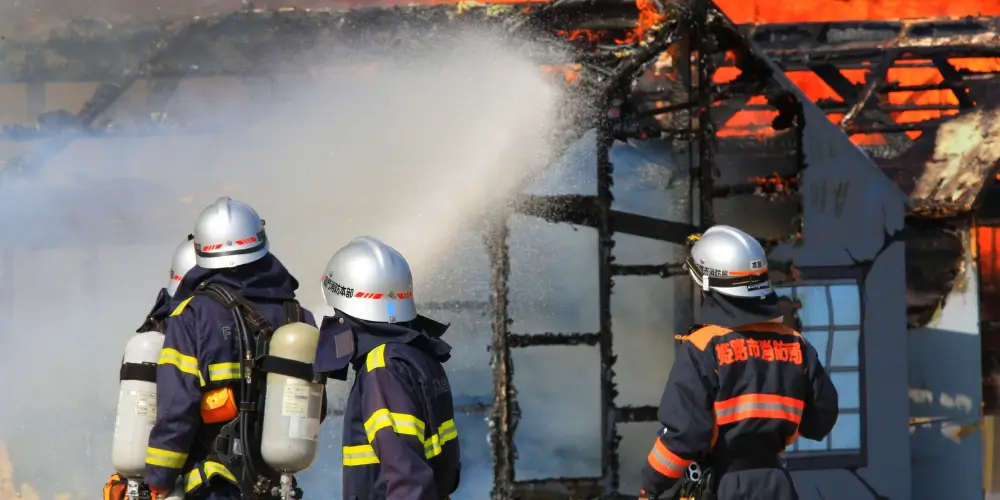
Colour codes help identify what is inside an extinguisher, but the safer choice still begins with identifying what is burning.
UK fire classes A–F label the fuel, not the flame size, and the right match prevents escalation and collateral damage.
Class A covers ordinary solid combustibles such as wood, paper, and textiles.
Class B involves flammable liquids like petrol, solvents, and paints.
Class C refers to flammable gases, where stopping the leak can matter as much as suppressing flames.
Class D includes combustible metals, which are rare but high-risk in workshops.
Electrical fires are treated as “energised electrical equipment”; the aim is a non-conductive approach until power is isolated.
Class F covers high-temperature cooking oils and fats common in commercial kitchens.
A quick scan of fuel type, power status, and escape route lets people act decisively, protect their space, and prevent a minor incident from escalating into a forced evacuation.
Water Fire Extinguisher (Red): Class A Only
Simplicity defines the red water fire extinguisher: it cools and soaks Class A fuels, wood, paper, cardboard, and textiles until heat is removed and re‑ignition is unlikely.
It suits homes, offices, schools, and storerooms where ordinary combustibles dominate, offering a straightforward tool that lets people act fast without complicated steps.
For confident, independent use, three checks keep control in the user’s hands:
- Confirm that the label shows “Water” and “Class A only”.
- Aim at the base of the flames and sweep steadily, feeding water onto the burning material.
- Keep a clear exit behind the operator and stop if flames spread beyond a small, manageable area.
It must not be used on live electrical equipment, flammable liquids, gases, cooking oils, or reactive metals, where water can intensify danger.
Stored upright and inspected routinely, it remains a reliable, no‑nonsense option.
Foam Fire Extinguisher (Cream): Class A and B
Marked with a cream band, the foam fire extinguisher forms a smothering blanket that both cools Class A materials such as wood and paper and seals the surface of Class B liquid fires like petrol, oil, and solvents, suppressing vapours and preventing re‑ignition.
Fire Extinguishers Are Coded by the Following Colours. It is suited to workshops, garages, warehouses, and vehicles where solids and flammable liquids may be present, offering broad protection without overcomplication. Application should be controlled: aim at the base of the flames and sweep to lay foam gently across the fuel, avoiding splashing that can spread burning liquid.
Foam should not be used on live electrical equipment; power should be isolated before discharge, and the area should then be monitored for flare-ups.
Users retain control by keeping access routes clear, checking pressure gauges, and selecting the correct size extinguisher for the risk.
Routine servicing and staff familiarisation help guarantee swift, confident action when seconds matter most.
Dry Powder Fire Extinguisher (Blue): What It Covers (and the Mess)
Unlike foam units that must be kept away from live electrics, the blue‑band dry-powder fire extinguisher is valued for its wide coverage of Class A, B, and C fires and for being non‑conductive when used correctly. It suits mixed‑risk spaces where people want a single tool that doesn’t tie their hands when the exact fuel is unclear.
Dry powder works by smothering flames and disrupting the chemical chain reaction. It can knock down fast‑moving liquid or gas fires and can also tackle burning solids, though re‑ignition remains possible if heat stays trapped.
Its trade‑off is the aftermath: fine powder spreads everywhere, reducing visibility, irritating breathing, and contaminating machinery and food areas.
- Covers: wood, paper, textiles; flammable liquids; flammable gases.
- Use with intent: short bursts, sweeping at the base, and keep an escape route.
- Expect cleanup: isolate the area, ventilate, and plan professional restoration.
CO2 Fire Extinguisher (Black): Best for Electrical Fires?
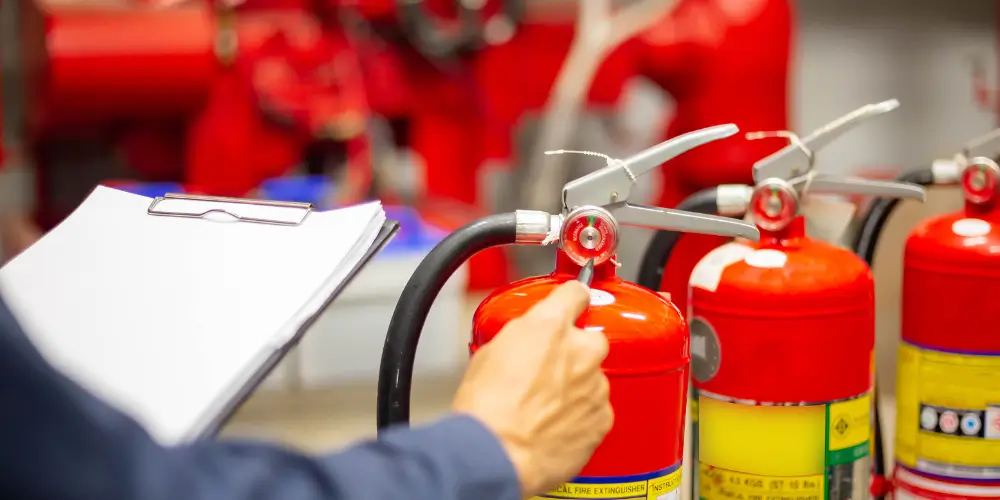
Why does the black‑band CO2 fire extinguisher so often sit beside server racks, switchboards, and plant control panels?
CO2 is non‑conductive and leaves no residue, so it can knock down a fire around live electrical equipment without soaking circuitry or coating components in powder. It works by displacing oxygen and cooling the flame front, making it most effective on small, contained Class B flammable‑liquid fires and on electrical faults caught early.
Its limits matter. CO2 does not “kill” deep‑seated embers in ordinary combustibles, and re‑ignition is possible once the gas disperses.
In cramped rooms, it can also reduce the amount of breathable air, so users should maintain an exit route, avoid prolonged discharge, and ventilate after use.
Because the jet is extremely cold, contact can cause frost injury; aim at the base, use short bursts, and maintain distance. If you want to know more about using of fire extinguishers in electrical fires, visit what fire extinguishers for electrical fires.
Wet Chemical Extinguisher (Yellow): Cooking Oil (Class F)
A chip pan flare‑up is where the yellow wet chemical extinguisher earns its place. Built for Class F fires, it tackles burning cooking oils and fats that can defeat water and turn a kitchen into a hazard. The agent cools and reacts with hot oil to form a soapy layer that seals the surface, choking vapours and cutting re‑ignition.
- Where it shines: commercial kitchens, food trucks, and home cooking areas with deep‑fat frying.
- What it targets: cooking oil and fat fires (Class F), and often limited Class A use on nearby combustibles.
- Why it matters: it stops the violent flare and buys precious time to keep exits open and choices free.
Yellow coding makes it easy to spot the right tool fast, so the response is controlled rather than chaotic, and the situation stays on the cook’s terms.
Before You Use an Extinguisher: Key Safety Checks + Don’ts
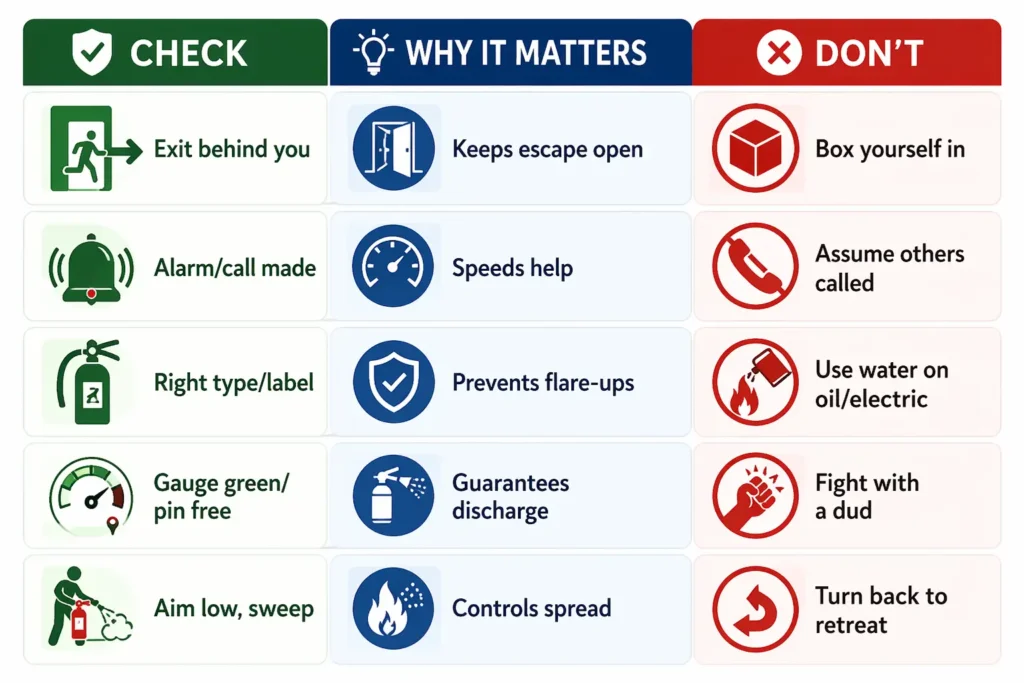
Even with the correct colour-coded unit, such as a yellow wet chemical extinguisher for a chip pan fire, safe use depends on a few quick checks and clear don’ts. A person stays in control by confirming that the fire is small, the alarm has been raised, and an exit remains behind them. They check the pin and tamper seal, the gauge is in the green, the hose and nozzle are intact, and the label matches the fire class. If smoke thickens, heat surges, or the room feels trapped, they leave freedom first, heroics last.
Frequently Asked Questions
Do Fire Extinguishers Have Expiry Dates or Service Deadlines?
Yes, fire extinguishers have service deadlines and sometimes expiry dates. They must be inspected monthly, serviced annually, and hydrostatically tested periodically. Manufacturers list replacement intervals. Following schedules preserves readiness and supports personal responsibility and choice.
Can I Bring a Fire Extinguisher on an Aeroplane or in Checked Luggage?
Generally, no: passengers cannot bring a fire extinguisher in carry-on or checked luggage due to pressurised contents. Only certain small units may be allowed with airline approval and strict regulatory compliance. Always verify policies before travelling.
Where Should Extinguishers Be Mounted, and at What Height?
Extinguishers should be wall-mounted on brackets, visible, unobstructed, near exits and hazards, along escape routes. Typical guidance places the handle about 1.0–1.5 m above the floor, with the base at least 100 mm.
How Do I Dispose of or Recycle an Old Fire Extinguisher Safely?
He should contact local hazardous-waste or fire-equipment services for take-back, never puncture or dump it. If empty, depressurise per manufacturer, remove head, recycle metal cylinder where accepted. Freedom means disposing responsibly without needless bureaucracy.
Are Colour Codes and Labels the Same Outside the UK?
No, colour codes and labels differ outside the UK. Many countries prioritise labels, pictograms, and standards like ISO/EN or NFPA. They should check local rules and follow the extinguisher’s label for confident compliance.
Conclusion
Fire Extinguishers Are Coded by the Following Colours. Understanding UK fire extinguisher colour codes helps guarantee the correct extinguisher is chosen quickly and safely. Each colour relates to a specific agent and fire class, from water for Class A materials to wet chemical for cooking oil fires. CO₂ and dry powder may suit electrical risks, while foam can tackle mixed fuel fires. However, correct selection is only part of safe use: check pressure, read instructions, keep an exit behind, and never attempt to fight an uncontrolled fire.