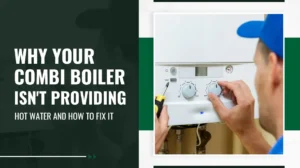
No hot water from combi boiler may stop due to low system pressure, a power/timer issue, a gas supply problem, or an error lockout shown on the display. The pressure gauge should typically sit around 1.0–1.5 bar; if it’s low, topping up via the filling loop can restore operation. A frozen condensate pipe in winter can also trigger faults and needs gentle thawing. If heating works but hot water doesn’t, a diverter valve or flow sensor may be at fault. Further practical checks and next steps are outlined below.
Key Takeaways
- Check other taps and mixer valves; a blocked aerator or faulty tap cartridge can mimic a boiler hot-water fault.
- Verify the boiler has power, correct timer/programmer settings, and no persistent error codes; reset once if safe.
- Confirm system pressure is around 1.0–1.5 bar; top up via the filling loop slowly, then close valves firmly.
- Ensure the gas supply is on and that other gas appliances work; if you smell gas or see scorch marks, shut down and call an engineer.
- In freezing weather, thaw a frozen condensate pipe with warm water, then reset; ongoing issues may indicate diverter valve or sensor failure.
Table of Contents
Combi Boiler No Hot Water: Quick Safe Checks
Although a combi boiler can stop delivering hot water for several reasons, a few quick, safe checks can help narrow down the cause before any further action is taken.
First, confirm other taps are cold too; a single outlet may have a blocked aerator or faulty mixer valve. Check the boiler display for error codes and note any flashing lights; resetting once, following the manual, is often a low-risk step. Verify the no hot water from combi boiler issue by ensuring the boiler has power at the fused spur, the timer/programmer is calling for hot water, and any room controls are not set to “off” or “holiday.”
Verify the gas supply is on and that other gas appliances work. If water runs only lukewarm, reduce the hot-water flow rate at the tap to let the boiler keep up. Unusual smells, scorch marks, or repeated lockouts warrant shutting it down and calling an engineer.
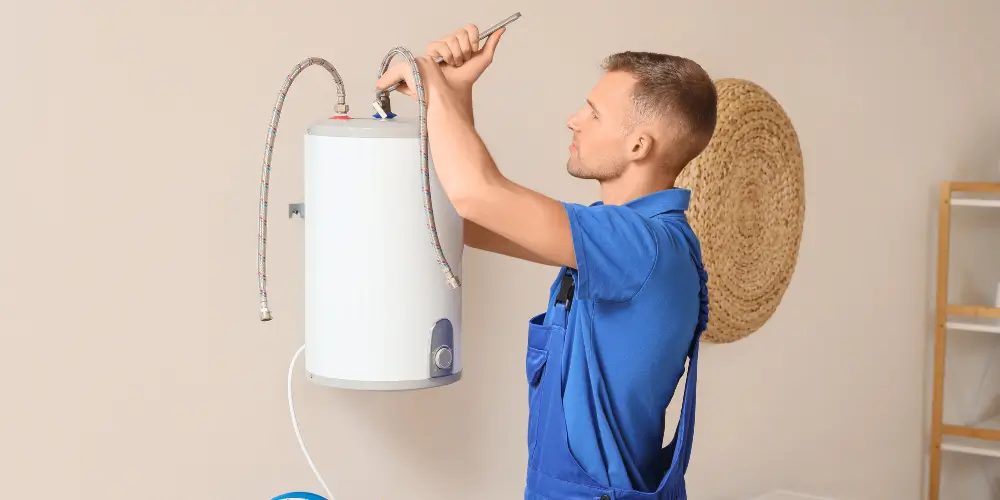
Combi Boiler Pressure Low? How to Top Up
Many combi boiler hot-water and heating problems trace back to low system pressure, typically shown on the gauge or display as being below the normal cold range (often around 1.0–1.5 bar, depending on the model).
When pressure drops, the no hot water from combi boiler issue may occur, causing the boiler to refuse to fire or deliver weak, intermittent hot water. Topping up is usually straightforward and restores control without a call-out. First, switch the boiler to standby and let it cool. Locate the filling loop: a silver braided hose with one or two small valves, often beneath the boiler. Open the valves slowly, listening for water movement, and watch the gauge rise
Stop at the manufacturer’s target (commonly 1.0–1.5 bar cold), then close both valves firmly. Remove a detachable loop if the model requires it. If pressure falls again, the system may have a leak or a failing expansion vessel; repeated top-ups should not be routine.
Seek a professional diagnosis promptly.
Combi Boiler Error Codes and Reset Checks
When hot water drops out, or the boiler refuses to fire, the display’s error code is often the quickest clue to what the appliance has detected and why it has locked out. The code should be matched to the manual or the manufacturer’s online list, because meanings vary by model.
Common lockouts relate to ignition failure, overheating, fan/air-proving faults, or poor water circulation—each pointing to a specific check rather than guesswork. Before calling out, a homeowner can reclaim control by running safe reset checks. Confirm the boiler has power, the programmer is calling for hot water, and the gas supply is on.
Verify that system pressure is within the normal range and that any isolation valves are open. Use the reset button once, then wait; repeated resets can mask faults. If the code returns, note it and contact a qualified engineer with that exact reference.
Frozen Condensate Pipe Stopping Hot Water?
A recurring lockout code in cold weather can point away from ignition parts and towards the boiler’s condensate drain freezing.
Condensing combi boilers produce acidic water that exits through a plastic condensate pipe; when that pipe freezes, the boiler shuts down to protect itself, often leaving no hot water.
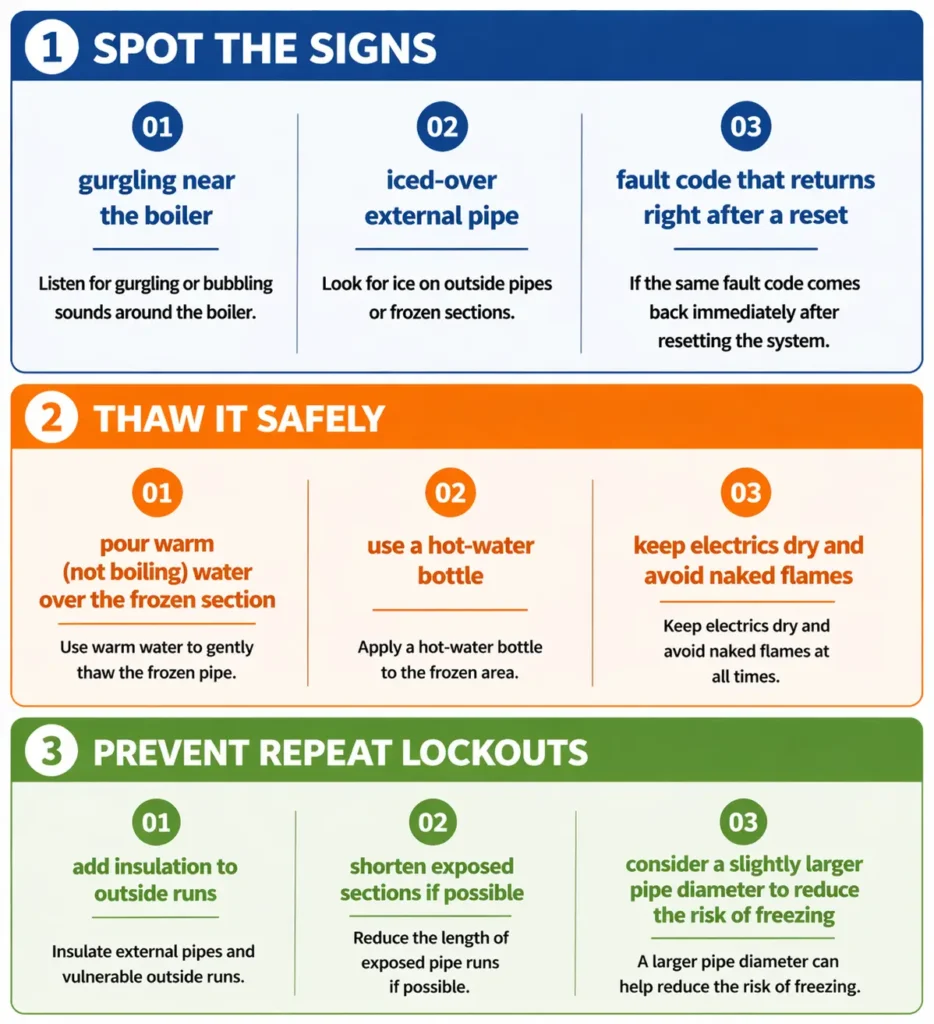
After thawing, a reset may restore service. If the pipe re-freezes or leaks, a Gas Safe engineer should be booked promptly.
No Hot Water but Heating Works (Diverter Valve)
Another common reason a combi boiler delivers heating but no hot water is a sticking or failed diverter valve, the internal part that switches flow between the radiators and the hot-water plate heat exchanger.
When it jams in the “heating” position, the boiler fires and circulates through radiators, but little or no heat is routed to domestic hot water, so taps stay cold or lukewarm. Typical clues include radiators warming whenever hot water is requested, fluctuating tap temperature, or a brief burst of warmth that fades. This can result in no hot water from combi boiler despite the system running.
Some valves stick due to sludge, limescale, or worn seals; motorised heads can also fail. A homeowner who values independence can check system pressure, listen for actuator movement, and try resetting power, but internal parts sit behind the case.
If the diverter is suspected, a Gas Safe engineer can confirm by temperature checks and replace the cartridge or actuator, restoring proper switching without compromising safety or warranty.
Taps Running Cold? Check the Flow Sensor
Why does a combi boiler seem to fire yet the taps still run cold? Often, the boiler is not “seeing” water demand because the flow sensor is stuck, dirty, or failing. This small component detects mains water flow and tells the control board to prioritise domestic hot water; if it misreads the flow, the boiler may briefly ignite, then revert or deliver lukewarm output. This can lead to no hot water from combi boiler. Restoring accurate sensing puts control back in the user’s hands.
- Confirm the symptom: open a hot tap fully; if the display shows no tap icon/flow rate, the sensor signal is missing.
- Check simple causes: isolation valves fully open, inlet filter/strainer clear, and adequate mains pressure.
- Inspect the sensor: power off, isolate water, remove and clean the turbine/reed switch, check wiring plugs, and replace if worn.
A competent engineer can test continuity and live readings to verify a clean, decisive fix.
No Hot Water From Limescaled Heat Exchanger
Even with a healthy flow sensor confirming demand, a combi boiler can still deliver cold or weak hot water when limescale has choked the domestic hot water heat exchanger. Scale acts like insulation, reducing heat transfer and narrowing waterways, so the boiler may fire yet fail to lift the outlet temperature. Symptoms include fluctuating temperatures, longer warm-up times, kettling noises, and reduced hot flow at multiple taps.
Freedom from this fault starts with confirming hardness-related buildup: check if cold flow is strong but hot is restricted, and compare performance across outlets. A practical fix is to descale the plate heat exchanger using an approved flushing kit and inhibitor, then fit or service a scale-reduction device on the incoming mains.
Cleaning inlet filters and restoring correct system pressure can also help maintain stable heat exchange. Regularly topping up the inhibitor and scheduling periodic descaling help prevent repeat blockages and keep the hot water responsive.

When to Call a Gas Safe Engineer Now
When should a Gas Safe engineer be called immediately for combi boiler hot water problems? When safety, legality, or persistent failure blocks a simple reset, a qualified professional protects the household’s freedom from risk and repeat breakdowns.
Gas appliances are not DIY territory; only Gas Safe-registered work keeps control in the homeowner’s hands without gambling on carbon monoxide or fire.
- Gas smell, fumes, or alarms: Any gas odour, sooting, headaches, or a carbon monoxide alarm means shut the boiler off, ventilate, and call an engineer now.
- Repeated lockouts or error codes: If the boiler keeps shutting down after bleeding radiators, checking pressure, or resetting, deeper faults may exist (fan, gas valve, PCB).
- Water leaks or overheating: Visible leaks, banging, kettling, or boiling noises can indicate failed components, scaled internals, or unsafe temperatures needing proper tools.
Calling promptly prevents bigger bills and restores reliable hot water fast.
Frequently Asked Questions
Why Does Hot Water Run Out Quickly on a Combi Boiler?
Hot water runs out quickly on a combi boiler when demand exceeds its instant-heating capacity, due to a low flow rate, a cold inlet, an undersized unit, scaling, faulty sensors, or pressure issues, limiting steady output and user choice.
Can a Faulty Thermostat Cause No Hot Water From a Combi Boiler?
Yes, a faulty thermostat can stop a combi boiler from delivering hot water. It may misread temperature, prevent firing, or trigger safety lockouts. Replacing or recalibrating restores control. Users should verify wiring and seek qualified help.
Why Does My Combi Boiler Make Banging Noises When Hot Water Is Used?
A combi boiler may bang during hot water use due to kettling from limescale, trapped air, low pressure, or a failing pump/heat exchanger. For safe autonomy, bleeding radiators and checking pressure helps; persistent noise needs servicing.
Does Low Mains Water Pressure Stop a Combi Boiler from Producing Hot Water?
Yes, low mains pressure can prevent a combi boiler from delivering hot water by failing flow or pressure thresholds, triggering safety cutouts. Restoring adequate supply, clearing inlet filters, or fitting a booster can help reclaim control.
How Often Should a Combi Boiler Be Serviced to Prevent Hot Water Failures?
A combi boiler should typically be serviced annually to reduce hot water failures; some manufacturers require this to keep warranties valid. Regular checks protect choice and control, spotting pressure, sludge, and component wear early.
Conclusion
A combi boiler that fails to deliver hot water often has a simple cause, such as low system pressure, a lockout error, or a frozen condensate pipe. In other cases, faults with the diverter valve, flow sensor, or a limescaled heat exchanger can prevent hot water from reaching the taps even when heating still works. This results in no hot water from combi boiler. After completing safe checks and any manufacturer-approved reset or top-up steps, persistent problems should be referred to a Gas Safe engineer.