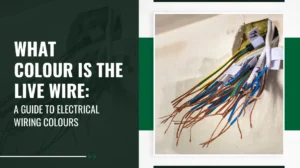
Live wire colour varies by country and standard. In the UK/EU and Australia/NZ, live is typically brown, though older systems may use red. In the United States and Canada, life is usually black, with red often used as a second hue. Neutral is commonly blue (IEC) or white/grey (North America), while earth/ground is green-yellow or green/bare. Colour alone cannot confirm a wire is energised, so voltage testing is essential; further details explain key exceptions. Always know what colour is the live wire to ensure safety.
Key Takeaways
- Live wire colours vary by country: the US/Canada use black (red as additional live), while the UK/EU and Australia/NZ typically use brown.
- In India and some regions, red is commonly used; newer installations may follow IEC standards using brown for live.
- Neutral is usually blue (IEC) or white/grey (North America), and earth/ground is green-yellow (IEC) or green/bare copper (North America).
- Wire colour alone doesn’t confirm a conductor is live due to switching, backfeeds, repurposing, or faded insulation.
- Always verify with a two-pole voltage tester or multimeter before touching wires, especially in older or mixed-standard installations.
Table of Contents
Live WireColourr (Quick Answer by Country)
Although standards vary by region and installation date, the live (hot) conductor is typically identified by specific insulation colours that signal where energised voltage is present. In the United States and Canada, modern branch circuits commonly use black for the live conductor, with red often used as an additional live conductor in multi-wire or 240-volt circuits.
Across the United Kingdom and most of Europe, under IEC practice, brown is used for live in newer installations, while older UK wiring may show red as live. In Australia and New Zealand, brown is the usual live colour in current standards, with legacy systems sometimes using red. In India and many other countries influenced by older British conventions, red is frequently encountered as live, though newer work may align with IEC brown.
Because renovations, mixed standards, and re-identification can occur, testing with an approved voltage tester is recommended before touching any conductor. Always isolate power where possible.
Live vs Neutral vs Ground Wire Colours
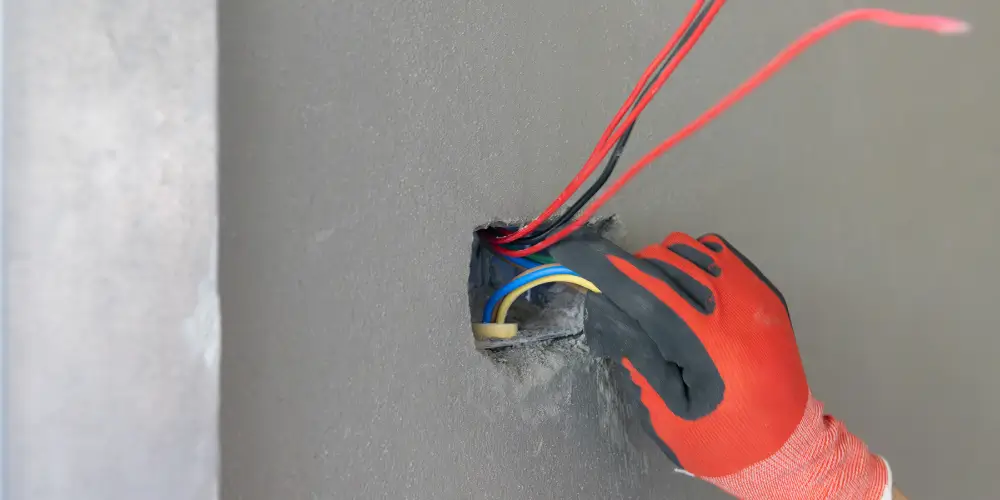
A wiring colour code acts as a visual map that distinguishes the three conductors found in most AC circuits: live (hot), neutral, and ground (earth). The live conductor delivers voltage from the supply to the load, so it is commonly coloured brown (IEC regions), black (North America), or red/yellow/blue (older systems).
The neutral conductor returns current to the source under normal operation and is typically blue (IEC) or white (North America). The ground/earth conductor provides a fault path to reduce shock risk and is standardised as green-yellow (IEC) or green/bare copper (North America).
- Live (hot): switched and fused conductor; often brown/black/red.
- Neutral: grounded return; typically blue or white/grey.
- Ground/Earth: protective bonding; green-yellow, green, or bare.
These conventions help ensure safe identification of conductors during installation, maintenance, and troubleshooting across appliances, outlets, and distribution panels.
Why Colour Alone Doesn’t Prove a Wire Is Live
Standard colour codes make conductors easier to identify, but colour alone cannot confirm whether a wire is actually live at a given moment.
Power status depends on switching, breakers, control circuits, and upstream connections, not just insulation colour. A normally energised conductor can be de-energised by a disconnected feed, an open switch, a tripped protective device, or a failed splice. Conversely, a wire expected to be inactive may become energised through backfeed from generators, inverters, multiway switching, shared neutrals, or miswired connections. Understanding what colour is the live wire is crucial in identifying power status and ensuring safety.
Colour also becomes unreliable when insulation is repurposed, re-identified with tape, faded by heat and age, or replaced during repairs by whatever cable is available. Installations can mix standards, especially in older buildings or modified panels. For these reasons, safe identification requires testing with an approved meter or voltage tester and verifying the circuit is isolated before contact.
US Live Wire and Neutral Colours. Colour coding in U.S. residential and commercial wiring acts as a quick map for identifying conductors: hot (live) wires are typically black or red (with blue and other colours also used for additional hots), while the neutral is white or grey.
In common 120/240-volt systems, black often serves as the primary hot, red may indicate a second hot or a switched leg, and white/grey returns current under normal operation. Green or bare copper is reserved for equipment grounding, not as a current-carrying neutral. Because wiring can be re-identified or altered, colours should be treated as guidance and verified against the circuit purpose.
- Black/Red (Hot): feeds power from the breaker to loads and switches.
- White/Grey (Neutral): completes the circuit back to the service neutral bar.
- Green/Bare (Ground): provides a fault path to trip protection devices safely.
UK and EU Live Wire Colour Standards
Although regional practices vary, the UK and much of the EU follow harmonised conductor colours under IEC conventions: brown identifies the live (line) conductor, blue denotes neutral, and green/yellow is reserved for protective earth (ground). In fixed wiring and flexible cords, this scheme helps reduce misidentification when equipment crosses borders or is serviced by different trades.
In typical single‑phase circuits, the brown conductor carries the energised supply to switches, outlets, and loads, while the blue conductor provides the return path under normal operation. The green/yellow conductor is not intended to carry current except under fault conditions; it bonds exposed metal parts so protective devices can disconnect power quickly. In three‑phase installations, additional line conductors are commonly black and grey alongside brown, with blue remaining neutral. Because colours can be obscured by sleeving, dirt, or ageing, verification with a tester and adherence to local regulations remain essential.
Old WireColourr Codes (Still Found in Homes)
Because many properties predate today’s harmonised standards, older wire colour codes are still frequently encountered in homes, especially where circuits were never fully rewired or were extended over time. In the UK, pre-2004 fixed wiring commonly used red for live, black for neutral, and green (later green/yellow) for protective earth. In parts of Europe, legacy palettes also appear, including grey or white neutrals and different phase colours in three‑phase systems.
When inspecting older cables, identification should rely on more than insulation colour, since ageing, paint, or heat can distort shades.
Typical checks include:
- Confirming conductor function with a two‑pole voltage tester, not a non-contact pen.
- Verifying earth continuity and bonding at the consumer unit or distribution board.
- Labelling any legacy colours to prevent confusion during future maintenance.
Where mixed old and new colour schemes coexist, clear documentation and professional verification reduce wiring mistakes and improve safety.
Switched Live and Traveller Wires (Common Exceptions)
While standard colour conventions help identify live, neutral, and earth conductors at a glance, switched live and traveller wires are common exceptions, where a “live” core may be energised only under specific switch positions. A switched live is a conductor that leaves a switch to feed a lamp or load; it is not permanently live, yet it must be treated as possibly live because it can become energised when the switch closes. Knowing what colour is the live wire in these cases is essential for safety.
Traveller wires appear in two-way or three-way lighting circuits where two switches control one light. In these setups, the “common” terminal carries either the incoming supply or the switched output, while two traveller conductors alternately carry the live path between switches.
Because travellers can swap roles depending onthe switch position, colour alone may not reveal their function. Good practice is to mark re-identified conductors (often with brown/red sleeving or tape) to show they are being used as live conductors.
How to Test Which Wire Is Live Safely
Colour codes and re-identified conductors can still leave doubt in circuits with switched lives and travellers, so function should be confirmed by testing rather than appearance.
Safe verification starts with preparation: insulated tools, dry hands, and a clear plan for where power is supplied and where it is controlled. De-energising at the breaker is preferred before any contact, but identifying a live conductor requires controlled energising and non-contact checks.
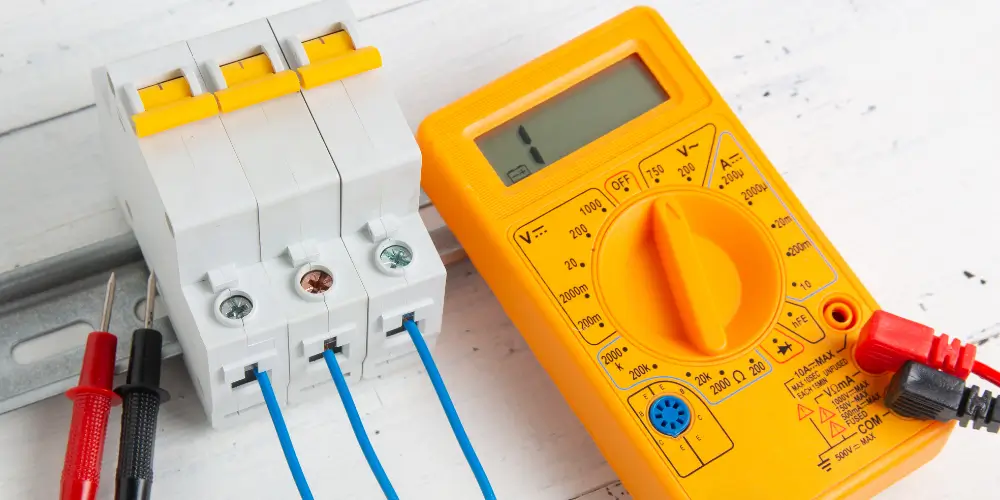
- Confirm the tester: prove a non-contact voltage tester and multimeter on a known live receptacle, then recheck afterwards.
- Use the right reference: with a multimeter set to AC volts, measure suspected conductors to neutral and to equipment ground; a true live typically reads near nominal line voltage. Minimise exposure: keep one hand away, avoid touching bare metal, stand on a dry surface, and turn off the power immediately after identification.
Frequently Asked Questions
What Wire Colour Is Used for Low-Voltage Doorbell and Thermostat Circuits?
Low-voltage doorbell and thermostat circuits commonly use red and white, or paired conductor colours like red/green, though no universal standard exists. They are typically 18–22 AWG, and labelling matters more than jacket colour.
Do Wire Colours Differ for Three-Phase Electrical Systems in Homes?
Yes, wire colours can differ for three-phase home systems, depending on national standards. Phases may be labelled brown/black/grey or other sets, while neutral is blue/white and ground green-yellow/bare. Verify locally.
How Do Wire Colours Work Inside Extension Cords and Power Strips?
Inside extension cords and power strips, conductors follow standard colour codes: live (black/brown), neutral (white/blue), and ground (green or green-yellow). Colours should match local standards; internal wiring mirrors appliance cords.
Are WireColourr Codes the Same for DC Systems, Such as Solar Panels?
DC wire colour codes aren’t universally the same; solar systems often use red for positive and black for negative, but standards vary by country and manufacturer. Verification by labelling, documentation, and polarity testing remains essential.
Can Wire Colours Vary Between Manufacturers of Appliances and Light Fixtures?
Yes, wire colours can vary between manufacturers, especially for internal appliance leads and fixtures. They should follow applicable standards, but exceptions occur. Verification by wiring diagrams, labelling, and testing is recommended over assumptions.
Conclusion
Live wire colour varies by country and wiring era, but it is commonly black or red in the US and brown in the UK/EU. Neutral and ground colours are more standardised, yet exceptions and legacy schemes remain common in older homes. Because colour can be misleading, especially with switched lives, travellers or DIY alterations, identification should never rely on insulation alone. Correct verification requires appropriate testing and safe isolation procedures before any work begins. Always be sure to know what colour is the live wire to ensure safety.