
Fire doors in the UK typically range in weight from 30 kg for lighter interior doors to over 100 kg for heavier exterior options, with most weighing between 35 kg and 60 kg. Factors such as material composition, required fire resistance level, and door dimensions influence a fire door’s weight. These doors play a pivotal role in fire safety compliance in residential and commercial buildings, adhering to British Standard BS 476 to ensure they meet the required fire resistance criteria. Understanding “ how heavy is a fire door” can help select the right fire door to enhance safety and compliance in any building environment.
Key Takeaways
- Fire doors in the UK range from 30 kg for light interior doors to over 100 kg of heavy exterior ones.
- The average fire door weight is generally between 35 kg and 60 kg, suitable for both residential and commercial use.
- Heavier doors, often weighing up to 100 kg, offer better fire resistance and are commonly used in commercial settings.
- Compliance with British Standard BS 476 is essential for ensuring the fire door’s effectiveness and safety.
- Regular inspections and maintenance are crucial to uphold fire safety standards and ensure the door functions properly in emergencies.
Table of Contents
How Heavy is a Fire Door in the UK?
Weighing the options for safety, fire doors in the UK typically range from about 30 kilograms for lighter, interior doors to over 100 kilograms for heavier, externally facing models. This variance in weight is primarily due to differences in materials and the scale of protection required in different settings.
Fire Doors: A Critical Defence Mechanism in Building Safety, Preventing the Spread of Fire and Smoke
The construction of fire doors involves the use of robust, fire-resistant materials such as solid timber, steel, or a combination of materials including glass elements. The core of these doors is often engineered to resist fire for a specified duration, typically 30, 60, 90, or 120 minutes.
The weight of the door not only affects its fire resistance but also the ease of operation and installation. In residential settings, lighter doors may suffice, offering a balance between functionality and safety without being overly cumbersome.
In contrast, commercial and industrial environments, which are potentially more hazardous, typically require heavier, sturdier doors to provide greater protection. These doors must adhere to strict safety regulations and standards set by UK building codes and fire safety guidelines.
Understanding the Weight of Fire Doors: A Crucial Consideration for Architects, Builders, and Safety Inspectors to Make Informed Decisions
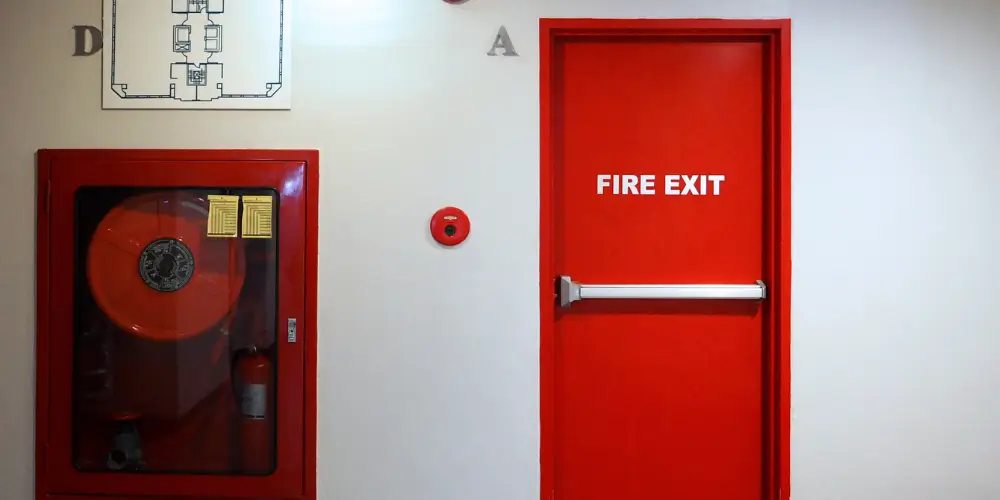
Average Weight and Standard Thickness of Fire Doors
Fire doors play an important role in building safety, with their weight and thickness tailored to meet specific regulatory standards and property requirements.
The average weight of a fire door for residential and commercial buildings can vary widely depending on the presence of materials such as asbestos, especially in older buildings like offices, restaurants, and warehouses.
Understanding these factors is essential for ensuring that fire doors function effectively under the demands of different environments.
Factors That Affect Fire Door Weight in Different Properties
Although the primary function of fire doors is to prevent the spread of fire and smoke, their weight can vary considerably due to several factors. These variations are essential for ensuring that the doors not only meet safety regulations but are also practical for their intended settings, whether in residential or commercial buildings.
The weight of a fire door is influenced primarily by:
- Material Composition: Fire doors can be made from a variety of materials, including wood, steel, and glass. Each material has different properties affecting the door’s weight. Steel doors, for example, are heavier than wooden doors, providing potentially higher fire resistance but requiring stronger supporting frames.
- Core Type: The core of a fire door can be solid, hollow, or filled with a fire-resistant material. Solid-core doors are generally heavier but offer better insulation against heat and sound. Lightweight cores might use materials like vermiculite or gypsum.
- Size and Thickness: Typically, the larger and thicker the door, the heavier it will be. Standard fire doors are often 44mm thick, but those required to withstand fire for longer periods may be up to 54mm thick, increasing their weight.
Understanding these factors helps in choosing the right fire door that balances safety requirements with functional needs.
Asbestos Hotspots in Offices, Restaurants, and Warehouses
Within offices, restaurants, and warehouses, identifying asbestos hotspots is vital, particularly when considering the installation of fire doors, which typically weigh between 40 and 120 kilograms and are usually 44mm to 54mm thick.
Asbestos, once a popular building material for its heat resistance, can still be found in older buildings. It poses serious health risks, including lung diseases and cancers, making its identification and management critical in any renovation or construction project involving fire safety enhancements.
The common areas where asbestos may be present include old insulation materials, ceiling tiles, floor tiles, and around old heating systems.
In the context of fire doors, it’s important to check the surrounding infrastructure, including frames and supports, for asbestos. If asbestos is suspected, professionals trained in its safe handling should be engaged. They can conduct thorough assessments and, if necessary, perform safe removal or encapsulation before any fire door installation proceeds.
This preemptive approach not only guarantees compliance with health and safety regulations but also enhances the overall safety of the building’s occupants by mitigating the risk of asbestos exposure during routine use or in the event of a fire.
Understanding Fire Door Ratings and Materials
To grasp the variability in weight among fire doors, it is essential to contemplate their ratings and the materials from which they are constructed. Fire doors are integral components of building safety, designed to resist the spread of fire and smoke between separate compartments of a structure, thereby allowing occupants more time to escape.
The weight of a fire door depends on both its fire-resistance rating (typically 20 minutes to 3 hours) and the materials used in its construction.
Fire door ratings indicate the duration for which a door can withstand exposure to fire conditions. These ratings are assigned by recognised testing agencies based on rigorous testing procedures that simulate actual fire conditions.
The materials used in fire doors are chosen for their ability to withstand heat and maintain structural integrity at high temperatures. Common materials include:
- Steel: Widely appreciated for its strength and resistance to warping. Steel doors are often heavier, offering robust fire resistance.
- Wood: Particularly versatile and aesthetically pleasing, but must be treated with fire-retardant chemicals to enhance resistance.
- Composite: A blend of materials such as metal, wood, and gypsum, offering a balance of weight, durability, and fire-resistance.
Understanding these factors is vital for selecting the appropriate fire door for a given location within a building, ensuring both compliance with safety regulations and effective fire safety management.
The choice of material not only affects the door’s fire-resistance but also its weight, influencing installation processes and the building’s structural requirements.
Fire Door Weight Requirements Under UK Fire Safety Regulations
Fire door weight requirements under UK fire safety regulations ensure a minimum level of safety and performance.
These regulations specify minimum compliance criteria for fire doors in both residential and commercial properties, focusing on their ability to withstand fire under test conditions.
Property owners and builders need to understand and adhere to these specifications to secure the best protection and legal compliance.
What the Building Regulations and BS 476 Standards Say
Although the specific weight of fire doors can vary, the Building Regulations and BS 476 standards provide stringent requirements to confirm their effectiveness in fire safety.
These regulations are part of a thorough approach to guaranteeing that buildings are equipped to prevent the spread of fire and smoke, thereby protecting lives and property. The Building Regulations Part B (Fire Safety), and the British Standard BS 476, which specifies methods for fire tests on building materials and structures, set criteria that influence the construction and performance of fire doors.
Key aspects covered by these regulations and standards include:
- Fire Resistance Performance: Fire doors must meet minimum fire resistance performance standards, measured by their ability to withstand fire for a specified duration, typically 30 to 120 minutes.
- Integrity and Stability: These standards ensure that fire doors maintain their integrity and stability at high temperatures, preventing them from collapsing or failing prematurely during a fire.
- Material Specifications: The regulations specify the materials that may be used in the construction of fire doors, confirming that they contribute to the door’s overall fire resistance.
These requirements are designed to provide a uniform level of safety across different types of buildings while addressing the specific needs posed by varying building designs and uses.
Minimum Compliance Criteria for Residential and Commercial Properties
Under UK Fire Safety Regulations 2022, both residential and commercial properties must meet specific minimum compliance criteria for the weight and construction of fire doors. These regulations are essential to ensuring that buildings meet safety standards that prevent the spread of fire and smoke, thereby safeguarding occupants.
Fire doors are an integral part of a building’s passive fire protection system and must be correctly specified, installed, and maintained. Regarding weight, fire doors should generally weigh between 35 kg (77 lbs) and 60 kg (132 lbs), depending on the required fire resistance rating and the materials used in their construction. The weight of the door contributes to its ability to withstand fire for a specified period, typically ranging from 30 to 120 minutes.
The UK Building Regulations Part B require fire doors to be self-closing and fitted with intumescent seals. These doors must meet the performance criteria set out in British Standards BS 476-22 or the European equivalent, EN 1634-1, which outline the methods for determining the fire resistance and smoke control capacities of doors.
Regular inspections of fire doors are mandated to ensure these doors continue to perform their critical function throughout their lifecycles. This includes checking the integrity of seals, hinges, and the door’s overall structure.
Average Weight of a Fire Door for Residential and Commercial Buildings
The average weight of fire doors can vary considerably between residential and commercial properties, reflecting the diverse requirements of these environments.
For instance, fire doors in flats and houses in multiple occupation (HMOs) may differ from those used in office buildings in terms of weight, materials, and design.
Selecting the appropriate fire door for a specific building type is essential, taking into account factors such as the potential fire load and the building’s overall fire safety strategy.
Comparing Fire Door Weights in Flats, HMOs, and Offices
Fire doors, integral to safety protocols in various building types, vary considerably in weight depending on their application. In residential and commercial settings, the weight of a fire door serves as a vital factor for both compliance and functionality.
In flats, lighter fire doors are often adequate, given the lower fire risk and shorter evacuation routes. Typically, these doors weigh between 30 and 40 kilograms, providing the necessary fire resistance while ensuring ease of daily use for residents.
Houses in Multiple Occupation (HMOs), with their higher occupancy density and greater fire risk, require more robust fire doors. These usually weigh between 40 and 55 kilograms. The added weight guarantees a higher fire resistance rating, which is essential given the complexity of evacuation and the number of inhabitants.
In commercial buildings like offices, where the scale and potential intensity of a fire can be substantial, fire doors are the heaviest. They often weigh between 50 and 70 kilograms. This weight enhances structural integrity and prolongs fire resistance, crucial for safe evacuation.
- Flats: Typically 30-40 kg; balance between safety and usability.
- HMOs: Generally 40-55 kg; increased weight for higher fire resistance.
- Offices: Usually 50-70 kg; maximum durability and protection.
Understanding these variations helps select the appropriate fire door for each setting, ensuring both regulatory compliance and practical usability.
Choosing the Right Fire Door for Your Property Type
Why should you carefully consider the weight of a fire door when selecting one for your property? The weight of a fire door plays an essential role in its functionality and effectiveness. Heavier doors generally offer better resistance to fire and smoke, guaranteeing a higher level of protection.
However, the specific needs of your property type —whether residential or commercial —must guide your choice to balance safety with practicality.
For residential buildings, especially private homes and apartments, fire doors need to be manageable yet robust enough to provide adequate safety. Typically, these doors weigh between 30 and 60 kilograms. This range guarantees that the doors are light enough for daily use without compromising on safety standards set by fire regulations.
In contrast, commercial buildings such as offices or industrial sites often require heavier, more durable fire doors due to higher traffic and stringent safety requirements. These doors can weigh anywhere from 40 to over 100 kilograms, designed to withstand intense usage and offer extended periods of fire resistance.
Choosing the right fire door involves understanding your property’s specific fire safety needs and balancing them with the door’s weight, ensuring compliance and safety without sacrificing functionality.
How Fire Door Weight Affects Installation and Maintenance
Understanding how a fire door’s weight affects its installation and maintenance is vital to ensuring safety and functionality. Fire doors are inherently heavier than standard doors due to the materials used to enhance their fire-resistant properties. This increased weight has several implications for the installation process and ongoing maintenance requirements.
The weight of a fire door requires careful consideration during installation to ensure the door functions correctly and safely. Heavier doors require more robust hardware, such as hinges and door frames, to support the additional weight. This not only influences the type of materials used but also impacts the installation techniques employed.
For example, installers may need specialised tools or techniques to manoeuvre and safely secure a heavy fire door in place.
Moreover, the maintenance of heavy fire doors also presents unique challenges:
- Regular Inspection: Heavier doors can cause increased wear and tear on hinges and frames. Regular inspections are vital to identify early signs of stress or failure in these components.
- Adjustment and Alignment: Over time, the weight of the door may lead to sagging, which can affect its closure and seal. Periodic adjustments are necessary to guarantee the door remains aligned and functional.
- Replacement Parts: Due to the strain placed on hardware by heavier doors, components such as hinges and closers might need more frequent replacement.

Landlord Responsibilities for Installing Compliant Fire Doors
Landlords have a significant responsibility to ensure that fire doors installed in their properties comply with relevant safety regulations. This duty is not only a legal obligation but also a critical factor in ensuring the safety of tenants and property. Compliance involves several key steps, starting with selecting appropriate fire doors that meet the required fire-resistance rating specified in building codes and safety standards.
The process begins with understanding the specific requirements for fire doors in different areas of a building. For instance, doors leading to stairwells or between different sections might need higher ratings due to their essential roles in preventing the spread of fire and smoke.
Landlords must verify that these doors are not only fire-rated but also properly fitted with intumescent seals and appropriate hardware that also comply with regulations.
Moreover, fire doors must be installed by qualified professionals. Incorrect installation can compromise the door’s integrity and effectiveness in preventing fire and smoke spread. Landlords need to verify the credentials and experience of the installers to ensure the installation complies with all safety standards.
Additionally, the responsibility extends to documentation. Landlords should maintain thorough records of the purchase, installation, and specifications of all fire doors. This documentation can be significant for inspections, insurance claims, and future maintenance.
Fire Door Inspections and Maintenance in Mixed-Use Buildings
Regular inspections and diligent maintenance of fire doors are particularly important in mixed-use buildings, where residential and commercial spaces coexist.
These structures face unique challenges due to the diverse nature of their occupancy and use patterns. Confirming the functional integrity of fire doors in such environments not only complies with fire safety regulations but also considerably enhances the safety of all occupants.
Fire doors in mixed-use buildings must withstand higher usage frequencies, particularly on the commercial floors, which often see more foot traffic. This increases wear and tear, necessitating more frequent checks and maintenance to guarantee they continue to perform their essential role during a fire.
Responsibility for these inspections and maintenance tasks is typically shared among property managers, tenants, and, in some cases, third-party safety consultants.
To effectively manage fire door safety in mixed-use buildings, several key practices should be implemented:
- Regular Inspection Schedules: Establish and adhere to a schedule that accounts for the varying door usage across the building.
- Immediate Repairs: Address any damage or operational issues immediately. Delayed actions can compromise the door’s integrity and effectiveness in preventing the spread of smoke and fire.
- Documentation and Compliance: Keep detailed records of all inspections, maintenance, and repairs. This documentation is essential for legal compliance and can be critical in insurance claims and safety audits.
Adopting these practices ensures that fire doors remain in optimal working order, providing a crucial safety barrier and helping protect lives and property in the event of a fire.
Frequently Asked Questions
Can Fire Doors Be Painted or Refinished?
Fire doors can be painted or refinished, but it is essential to use non-combustible, fire-rated paint and adhere to manufacturer specifications to maintain the door’s integrity and compliance with fire safety regulations.
How Do Weather Conditions Affect Fire Door Performance?
Weather conditions, particularly humidity and temperature fluctuations, can affect fire door performance by causing expansion, contraction, or warping, potentially compromising the door’s integrity and its ability to maintain a fire-resistant barrier.
Are There Eco-Friendly Fire Door Options Available?
Yes, eco-friendly fire door options are available, utilising sustainable materials such as recycled wood and non-toxic, fire-resistant coatings. These doors meet safety standards while supporting environmental sustainability in both residential and commercial constructions.
What is the Process for Recycling Old Fire Doors?
The recycling process for old fire doors involves dismantling them to separate metal components from non-recyclable materials, which are then processed in accordance with environmental standards to minimise waste and promote sustainable disposal practices.
How Do Fire Doors Integrate With Modern Smart Home Systems?
Fire doors can integrate with modern smart home systems via connected devices that monitor door status, control access, and link to fire alarms, enhancing safety and operational efficiency in emergencies.
Conclusion
To summarise “how heavy is a fire door in the UK”, the weight of fire doors is a critical factor in ensuring compliance with UK fire safety regulations. Both residential and commercial buildings must adhere to specific standards regarding door weight, thickness, and materials to enhance fire protection. Regular inspections and maintenance are required to uphold safety measures, with landlords bearing significant responsibility for compliance. Adhering to these standards not only promotes safety but also facilitates efficient installation and maintenance of fire doors.