4 types of fire risk assessment are pivotal in the strategic planning of safety protocols within residential and commercial buildings. Each assessment progressively addresses more complex and hidden aspects of fire safety, from basic visual inspections to in-depth structural examinations. This tiered approach not only prioritises the safety of tenants and employees by identifying potential hazards but also helps in aligning with legal safety standards to mitigate risks effectively. Understanding the specific distinctions and applications of each type can significantly enhance the effectiveness of the protective measures in place.
Key Takeaways
- Type 1 Assessment ensures basic fire safety compliance in common areas, protecting tenants and employees.
- Type 2 Assessment uncovers hidden hazards in structures, enhancing property safety.
- Type 3 Assessment extends to private spaces, providing comprehensive risk insights to support occupants’ safety.
- Type 4 Assessment provides a detailed, destructive analysis to secure complex or historical buildings against fire risks.
- Regularly conducting these assessments meets legal requirements, maintains safety standards, and minimises liability.
What Is a Fire Risk Assessment and Its Types
A fire risk assessment is a structured inspection that evaluates a building’s fire safety measures, identifies potential hazards, and ensures the premises comply with UK fire safety laws. Its primary purpose is to protect lives and property by assessing the likelihood of a fire starting, how it could spread, and whether people can escape safely. Every building, from residential blocks to offices and warehouses, is legally required to have an appropriate fire risk assessment under the Regulatory Reform (Fire Safety) Order 2005.
There are 4 types of fire risk assessment. Each type reflects the level of detail in the inspection, from a simple visual check to a more in-depth survey that looks behind walls and floors.
Type 1 covers visible common areas; Type 2 adds limited destructive checks; Type 3 includes private dwellings; and Type 4 is the most detailed, examining hidden fire safety features. After the assessment, a detailed report and documentation are provided outlining findings and recommendations. This report should be reviewed regularly to keep safety measures up to date and ensure continued compliance with UK fire safety laws.
Type 1 Fire Risk Assessment: The Basic Visual Inspection
While primarily focused on safety, the Type 1 Fire Risk Assessment identifies potential fire hazards in a building’s common areas.
This basic visual inspection is a non-invasive approach designed to evaluate the visible and accessible parts of premises, including hallways, stairwells, and lobbies. The assessment focuses on identifying clear, immediate risks, such as obstructed escape routes, faulty fire doors, and the condition of fire safety equipment, including extinguishers and alarms.
The purpose of this level of assessment is to ascertain that common areas are free of obvious hazards that could impede safe evacuation or contribute to the rapid spread of fire. It is typically conducted by a qualified fire safety professional, who will also verify compliance with current fire safety legislation.
The findings and recommendations are documented in a detailed report, which provides the basis for any necessary remedial actions.
Although it is limited to common areas and does not involve a structural investigation, the Type 1 Fire Risk Assessment is vital for maintaining basic fire safety standards. It can significantly enhance the overall safety of a building’s occupants.
Type 2 Fire Risk Assessment: Partial Destructive Survey
Building on the foundation set by the Type 1 Fire Risk Assessment, the Type 2 Fire Risk Assessment introduces a more invasive level of inspection. This assessment identifies fire risks that are not visible during the basic visual inspections of a Type 1 assessment. It involves limited destructive investigation, such as opening walls, floors, or ceilings to expose potentially concealed hazards.
This type of assessment is particularly valuable in older buildings or those with a history of structural modifications, where changes might have created hidden compartments or voids that could pose significant fire risks. During a Type 2 assessment, professionals might remove panels, cladding, or parts of the building fabric to inspect the integrity and fire-stopping measures of structural elements.
This can reveal problems such as faulty wiring, compromised fire doors, or the degradation of fire-resistant materials that are not apparent during a non-invasive survey.
The goal of a Type 2 Fire Risk Assessment is to provide a deeper understanding of the property’s fire safety status, ensuring that hidden dangers are identified and addressed. Recommended actions following this assessment include repairs, enhancements of fire protection systems, or further invasive investigations if potential risks are identified.
Type 3 Fire Risk Assessment: Covering Common Areas and Private Dwellings
The Type 3 Fire Risk Assessment greatly expands the scope of inspection beyond the communal areas to include individual flats or private dwellings within a building. This thorough approach is essential in multifamily residential structures where the risk of fire may not be confined to shared spaces. By extending into private areas, assessors can identify potential hazards that could compromise the entire building’s safety in the event of a fire.
In executing a Type 3 assessment, professionals typically review both the maintenance of fire safety systems and the adherence to safety practices within individual living spaces. This might include checking the proper installation and functionality of smoke detectors, ensuring that fire doors are present and fully operational, and verifying that escape routes are clear and accessible.
The assessment also assesses the condition and compliance of electrical systems, heating equipment, and cooking appliances, which are familiar sources of fire.
Landlords and property managers find Type 3 assessments particularly valuable as they provide a holistic view of fire risk. This enables them to enforce safety regulations more effectively and make informed decisions about necessary improvements or repairs, thereby enhancing overall safety for tenants and property alike.

Type 4 Fire Risk Assessment: The Most Comprehensive Inspection
Advancing beyond the scope of earlier assessments, the Type 4 Fire Risk Assessment represents the most thorough evaluation, involving complete destructive testing to uncover hidden fire safety defects throughout the building. This level of assessment is particularly vital in structures with complex designs or historical buildings where modifications over time may have obscured critical elements.
Type 4 assessments are characterised by their intrusive nature; experts systematically dismantle parts of the building to access areas typically concealed from plain view. This might include opening up walls, floors, and ceilings to inspect insulation, structural supports, and internal wiring. Such an approach is fundamental in verifying the integrity and compliance of fire safety measures that cannot be reviewed superficially.
The objective of this inspection is to guarantee that no potential hazards are overlooked. It provides a detailed understanding of the fire risks, allowing property managers and safety officers to implement more effective, targeted measures to mitigate them.
Although this type of assessment can be disruptive and more costly, its depth and precision offer invaluable insights, greatly enhancing the safety and security of occupants and the property.
How the 4 Types of Fire Risk Assessment Apply to Different Property Settings
Having outlined the key differences between the 4 types of fire risk assessment, it becomes apparent that the appropriate application of each can greatly enhance safety across various property settings.
Here’s how each type applies to residential, commercial, and public buildings:
- Type 1 Assessments – Basic Fire Risk Assessments: These are ideal for smaller residential settings or low-risk commercial areas, such as small retail shops. They involve a straightforward evaluation of escape routes and fire detection mechanisms without detailed inspections of structural elements.
- Type 2 Assessments – Detailed Non-Destructive: This type is suited for larger residential complexes and medium-risk commercial properties such as offices and restaurants. It includes a thorough review of fire safety records and a more extensive check of fire prevention systems to confirm they meet legal standards.
- Type 3 Assessments – Full Non-Destructive: Applicable to high-risk areas in public buildings such as schools and hospitals, this assessment delves deeper into the operational and management aspects of fire safety, examining all fire safety features without structural alterations.
- Type 4 Assessments – Fully Destructive: This is necessary for historical or architecturally complex structures where hidden spaces need checking. It’s vital to confirm that modifications haven’t compromised the building’s fire integrity.
Each type provides tailored strategies that address specific vulnerabilities and compliance needs in different settings.
Who Should Carry Out the Fire Risk Assessment
The selection of a qualified individual to conduct fire risk assessments is paramount to guaranteeing the safety and compliance of any property. The person tasked with this critical responsibility must possess a robust blend of theoretical knowledge and practical experience in fire safety.
A competent assessor should be well-versed in identifying potential fire hazards, evaluating the effectiveness of existing fire prevention measures, and recommending enhancements in line with current standards and best practices.
Credentials are key in this field. The ideal candidate will generally hold certifications from recognised fire safety and risk management institutions. These credentials confirm that the assessor has undergone rigorous training and adheres to the latest methodologies and regulatory requirements.
Furthermore, ongoing education is essential as fire safety regulations and technologies continue to evolve.
Experience across residential, commercial, and industrial settings equips an assessor with a thorough understanding of diverse fire risk scenarios. This versatility enables them to tailor their assessments and advice according to the specific characteristics and needs of each property.
Employing a qualified and experienced fire risk assessor is not just a regulatory formality but a critical step in safeguarding lives and property.
Legal Framework Supporting Fire Risk Assessments in the UK
In the United Kingdom, the Regulatory Reform (Fire Safety) Order 2005 serves as the cornerstone of legal requirements for conducting fire risk assessments on most non-domestic premises. This pivotal legislation streamlined previous fire safety laws, placing the responsibility for fire safety squarely on the shoulders of the ‘responsible person’, usually the employer or premises owner.
Compliance with this Order is mandatory, and non-compliance can result in significant penalties, including fines and imprisonment.
The legal framework for fire safety and risk assessments in the UK includes several key components:
- Regulatory Reform (Fire Safety) Order 2005: Mandates regular fire risk assessments to identify risks and hazards in premises.
- Health and Safety at Work etc. Act 1974: Underpins the general duties to ensure the safety of employees and the public affected by work activities, indirectly supporting fire safety obligations.
- Management of Health and Safety at Work Regulations 1999: Requires systematic management of health and safety risks, including fire safety.
- Building Regulations 2010: Enforce standards for building construction and design, including provisions for fire safety, such as escape routes and fire resistance.
These laws, taken together, ensure a comprehensive approach to managing fire risk and safeguarding occupants, employees, and property.
Common Fire Safety Issues Identified During Each Assessment Type
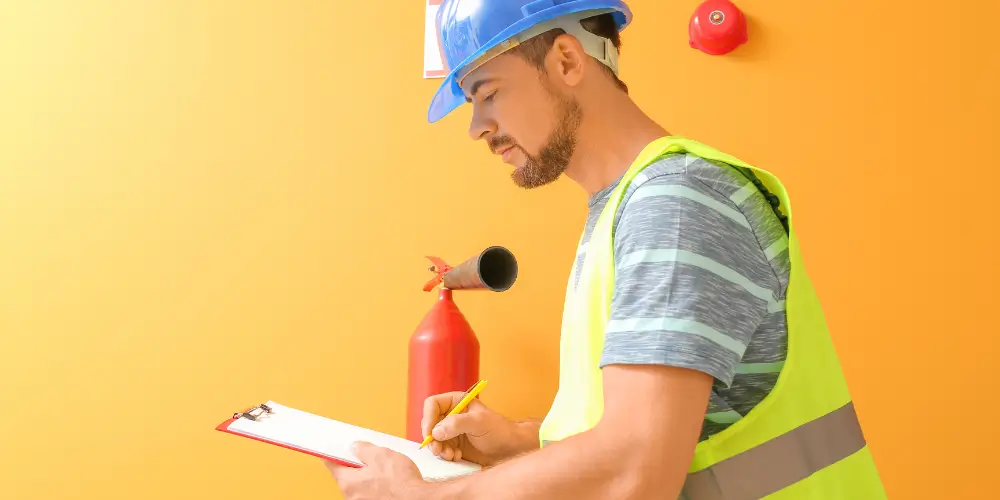
Several common fire safety issues occur across different types of fire risk assessments, each potentially compromising a facility’s safety and legal compliance. Among the most frequently identified issues is poor compartmentation. This refers to the failure to prevent the spread of fire and smoke through inadequate barriers, such as walls and floors. Such deficiencies can considerably increase the risk of fire spreading uncontrollably within a building.
Blocked exits are another critical safety hazard often spotted during assessments. Exits that are obstructed or not clearly marked can severely hinder evacuation efforts during an emergency, putting lives at risk. All escape routes need to remain clear and accessible at all times.
Additionally, damaged seals on fire doors and windows can compromise the integrity of fire resistance in building compartments. These seals are designed to expand in the event of a fire, thereby preventing the passage of smoke and flames. When they are impaired, the effectiveness of a fire door or window in withholding fire is drastically reduced, endangering the structure and its occupants.
Addressing these issues promptly guarantees a higher level of safety and compliance with fire safety regulations, protecting both property and lives.
Book Your Fire Risk Assessment with Landlord Safety Experts
As a property owner, ensuring your tenants’ safety and compliance with fire safety regulations is paramount. To achieve this, partnering with Landlord Safety Experts is beneficial. Our assessors not only identify potential hazards but also provide tailored solutions to mitigate risks, ensuring your property complies with the latest safety standards.
Booking a professional fire risk assessment is a proactive step towards safeguarding your investment and the well-being of those who reside or work in your buildings. Our team of experienced fire safety experts specialises in comprehensive assessments tailored to a property’s unique needs.
We cover all types of residential and commercial buildings across the UK, employing the latest methods and technologies to deliver detailed and reliable results.
Take action today by scheduling a consultation with one of our certified fire safety specialists. Our service includes a thorough inspection of your premises, a detailed report outlining any issues, and practical recommendations for improving safety measures.
Guarantee peace of mind knowing that your property is compliant and your tenants are protected.
Contact us now to secure a safer future for your properties and fulfil your legal obligations with confidence.
Frequently Asked Questions
How Often Should Fire Risk Assessments Be Updated?
Fire risk assessments should be updated regularly, at least annually, or whenever significant changes occur in the building structure, occupancy, or associated risks, to guarantee continued safety and compliance with regulatory requirements.
What Are the Costs Associated With Each Type of Assessment?
The costs of fire risk assessments vary by complexity and scope. Basic assessments may cost a few hundred dollars, while extensive evaluations for larger facilities can run into thousands. Expertise and location also influence pricing.
Can Tenants Request a Higher Level of Fire Risk Assessment?
Tenants can request a higher level of fire risk assessment to guarantee enhanced safety measures are in place. However, such requests must typically be approved by the property owner or management.
What Happens if a Fire Risk Assessment Fails?
If a fire risk assessment fails, immediate corrective measures are required. The responsible entity must address all identified deficiencies to comply with fire safety regulations, ensuring the safety of the building’s occupants and property.
Are There Any Exemptions to Mandatory Fire Risk Assessments?
Generally, there are no exemptions from mandatory fire risk assessments, as they are essential for ensuring safety in buildings where people reside, work, or gather, and for adhering to universal legal and safety regulations.
Conclusion
In summary, the systematic implementation of the 4 types of fire risk assessment is essential for ensuring the safety of tenants and employees while protecting property. Each assessment type, from basic visual inspections to thorough destructive evaluations, plays a pivotal role in identifying fire hazards and complying with regulatory frameworks. Engaging professional fire risk assessors enhances the effectiveness of these assessments, thereby significantly mitigating potential risks and fostering a secure environment.